
Is the Entire Load Really at the Same Temperature?
Is the Entire Load Really at the Same Temperature?
Why a correct controller reading does not guarantee consistent results for every product
The key point:
The temperature at the control thermocouple, the temperature distribution within the usable furnace space and the temperature inside the load are related—but they are not the same thing.
The controller shows the required temperature and the programme has completed without reporting a fault. Yet products from different positions within the load are not the same: some require reworking, others fail inspection, and the next batch behaves slightly differently from the previous one.
In this situation, the first question is not whether the controller is “measuring correctly”. You first need to determine what temperature it is actually monitoring, where it is measuring it and whether this value corresponds to what you need to know about the product.
Confusing the different temperature values can result in an insufficient holding time, inconsistent results within the same batch or the purchase of a furnace that reaches the required temperature but is unsuitable for the actual process.
The controller shows 600 °C. What does that actually tell you?
The controller works with the reading from the control thermocouple. This thermocouple is installed at a specific position in the furnace and measures the temperature in its immediate surroundings. When the display shows 600 °C, it means that the control system has reached the required value according to this sensor.
On its own, however, this does not confirm that every component, the core of each component or every position within the working space has reached 600 °C at the same time.
| What you are monitoring | What the value tells you | What it does not prove on its own |
|---|---|---|
| Set temperature | The value requested by the programme or operator | That the furnace or load has reached this temperature |
| Control thermocouple reading | The temperature measured by the sensor used to control the furnace | That the temperature is the same throughout the chamber and in every product |
| Temperature field within the usable space | How temperature is distributed between measured positions under defined conditions | The core temperature of a specific component without appropriate measurement |
| Load temperature | The temperature at the measured position on a product or within the load | The temperature of every component and every position inside it |
The controller may be working correctly
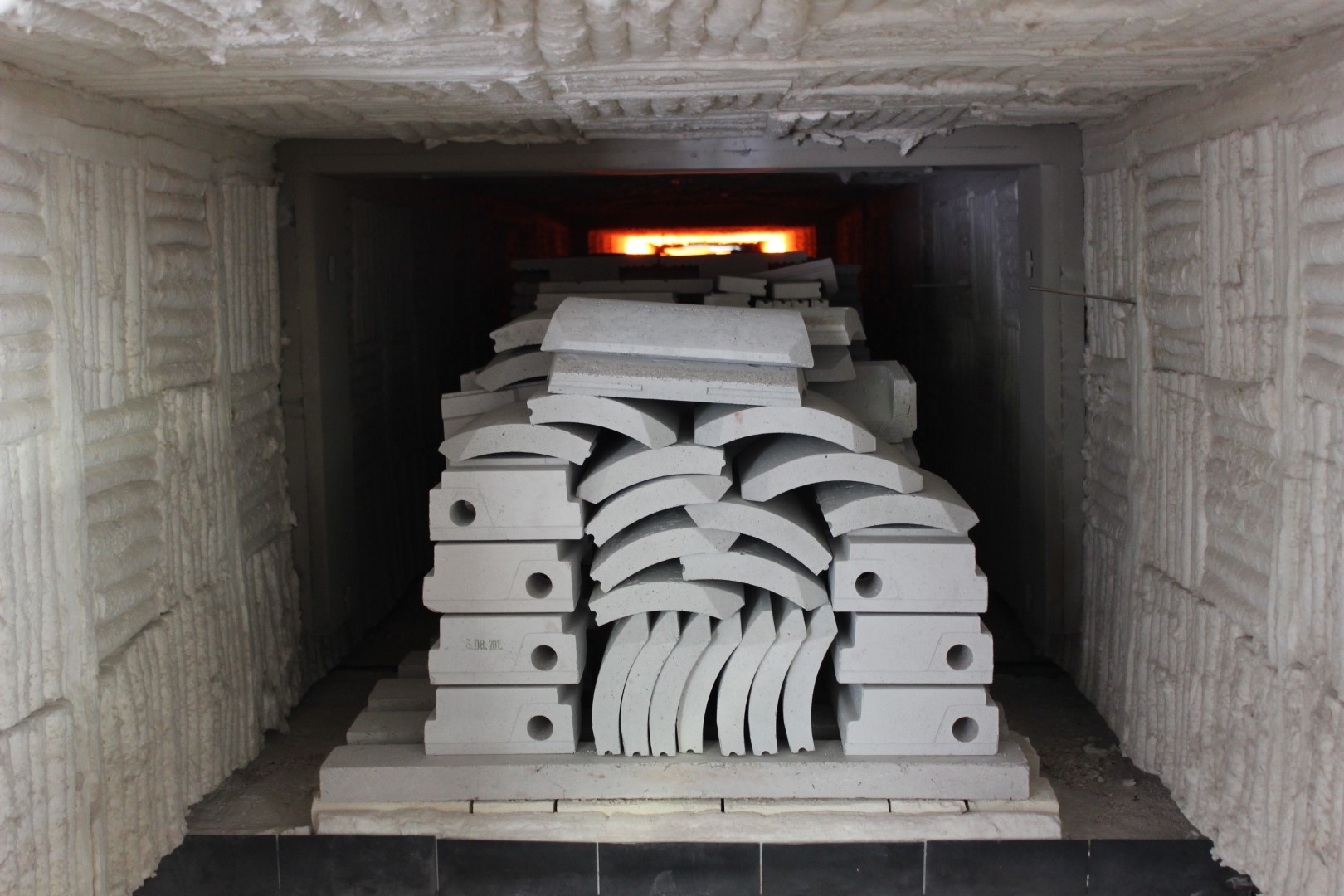
A heavy component may still heat more slowly than a light one, a product in the centre of a densely packed load may behave differently from one at the edge, and the lower level of the load may heat differently from the upper level.
Why different parts of the load heat differently
Each product absorbs heat according to its properties and its position inside the furnace. The result is affected particularly by:
- the material, dimensions, shape and weight of the individual components,
- the total load weight, including baskets, grates and fixtures,
- the spacing between products and their position in relation to the airflow or heating elements,
- products or fixtures shielding other parts of the load,
- the heat-transfer method used in the furnace,
- the temperature of the load when it enters the furnace,
- the time for which the process continues after the set temperature has been reached.
The difference does not necessarily have a single cause. A heavy fixture, for example, must first heat up itself and will affect the components resting on it. Products packed too closely together may restrict airflow between them. A mixed load containing both light and heavy components will not have one common heat-through time.
When inconsistent results occur repeatedly, comparing controller records alone is not enough. The composition and loading arrangement of individual batches must also be compared.
When should the holding time begin?
A common source of problems arises when the operator starts the holding time immediately after the set temperature has been reached. At that point, the control thermocouple may have reached the required temperature while the load is still heating through.
The correct start of the holding time depends on the process specification. It may require a particular furnace-atmosphere temperature, a specified temperature at the product surface or full heating of a defined position within the product.
Before defining the holding time, establish:
- what must reach the required temperature,
- where the temperature must be assessed,
- how reaching this condition will be verified,
- whether the same loading arrangement and load weight are used for every batch.
Simply extending the programme may sometimes reduce the differences, but it is not a universal solution. It can lengthen the cycle without proving that the actual cause has been eliminated.
An empty furnace is not the same as a loaded furnace
A temperature-uniformity value is meaningful only when accompanied by the conditions under which it was established. LAC datasheets therefore specify the usable space, measurement temperature and, for selected configurations, the fact that temperature-field optimisation according to DIN 17052-1 is performed in an empty furnace.
Example: PK series
Optional equipment for the standard PK series includes temperature-field optimisation to ΔT 20 °C within the internal usable space, measured in an empty furnace at 980 °C, including a measurement report.
Example: PP series
For the PP series, an option specifying ΔT 10 °C within the internal usable space, measured in an empty furnace at Tmax, is available.
These values cannot be transferred between different furnace series or automatically applied to an arbitrarily loaded furnace. A survey performed in an empty furnace describes the behaviour of the furnace under defined measurement conditions.
Once products are loaded, the thermal mass, airflow and shielding conditions within the working space all change.
An empty-furnace measurement verifies the equipment under defined and repeatable conditions. It does not automatically prove the behaviour of every possible production load.
What does ΔT mean and why should you always ask about the conditions?
The ΔT value expresses the temperature spread across a defined space under defined conditions. The number alone is incomplete.
When comparing temperature-uniformity values, ask:
- which part of the working space the value applies to,
- at what temperature it was measured,
- whether the furnace was empty or loaded,
- what equipment or fixtures were inside,
- whether it is a declared parameter, an optimised configuration or the result of a specific measurement,
- whether a measurement report is included in the delivery.
If your production is subject to an internal specification, audit or industry standard, state this requirement at the enquiry stage.
Depending on the furnace series, LAC documentation includes options such as temperature-field optimisation according to DIN 17052-1, thermocouple feedthroughs for temperature uniformity surveys (TUS), calibration of the measuring loop and, for selected equipment, configurations with a TUS report for AMS2750 or CQI-9 requirements.
The suitability and exact scope of these options must always be confirmed for the specific furnace and process.
Does forced circulation help?
Forced circulation improves heat transfer between the furnace atmosphere and the surface of the load. It also helps mix the atmosphere within the working space. This makes it particularly important for processes requiring good temperature distribution at low and medium temperatures.
A fan is not a guarantee by itself
If airflow paths are obstructed, the load is packed too tightly or the individual components differ significantly in weight, their heating behaviour may still vary.
The furnace design, airflow direction, usable space and actual loading arrangement must therefore be assessed together.
The difference between forced circulation and radiant heating will be covered in a separate article in this series.
How to determine whether the problem is caused by the furnace, the load or the loading arrangement
Begin by comparing what actually changed between a successful and an unsuccessful batch. It is useful to record:
- the number, weight and dimensions of the products,
- their exact positions and spacing,
- the baskets, grates, shelves and fixtures used,
- the initial temperature of the load,
- the programme, actual cycle profile and the point at which the holding time began,
- the positions where inconsistent results occurred.
The next step may involve surveying the temperature field or verifying the load temperature using a suitably positioned sensor. The measurement method must be appropriate for the temperature, equipment, required accuracy and any applicable standard.
Sensors and cables not designed for the relevant conditions should not be used as an improvised solution.
Depending on the furnace series, LAC can provide equipment such as a thermocouple feedthrough for TUS testing, a temperature-uniformity measurement report, measuring-loop calibration or a charge thermocouple.
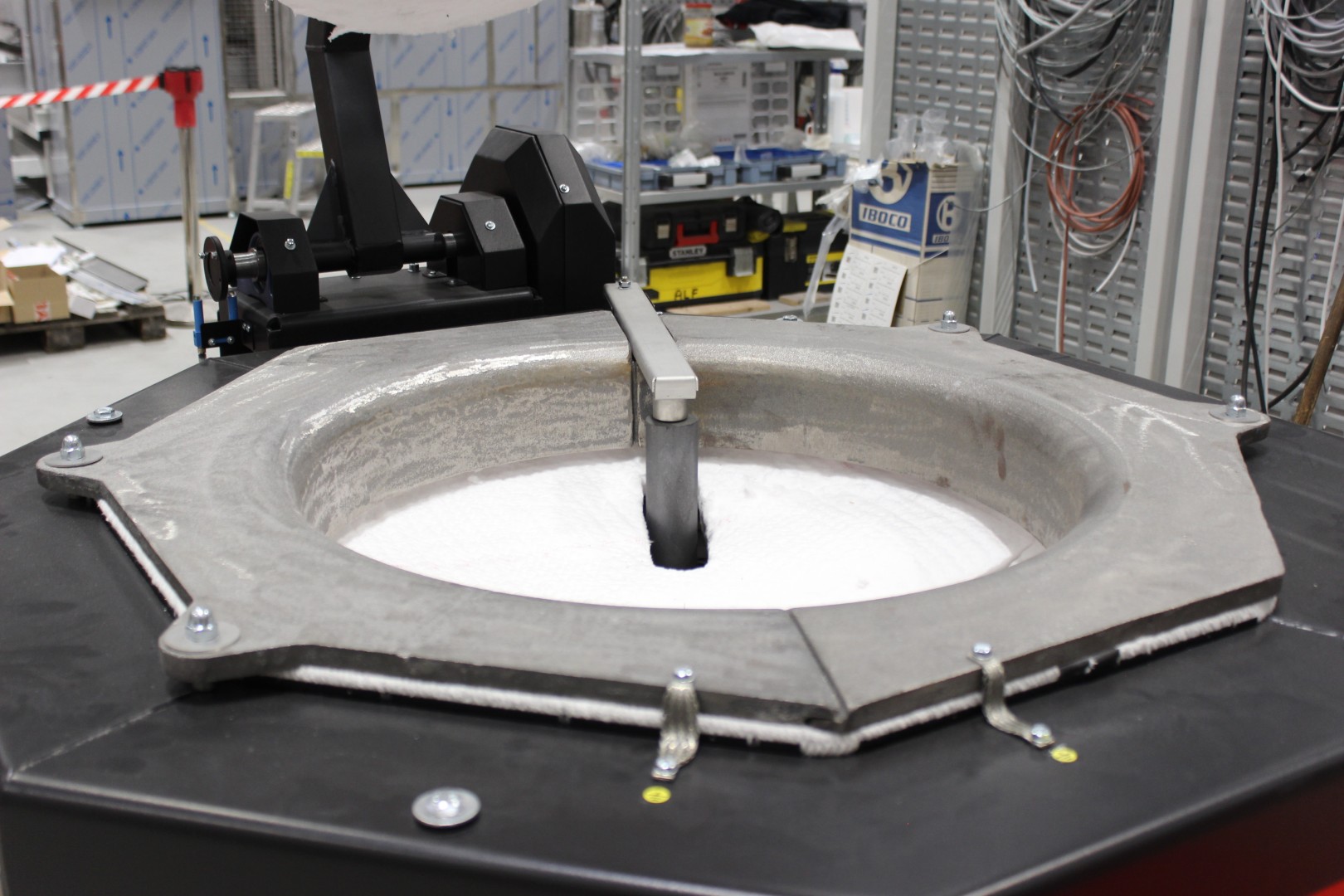
Datasheets for melting and holding furnaces explicitly distinguish between a thermocouple in the furnace chamber and optional measurement using a charge thermocouple in the melt or a thermocouple in the crucible wall. This clearly illustrates why the temperature measured in the chamber may not correspond to the temperature of the material being processed.
What to include in your enquiry
A statement such as “we need a uniform temperature” is not enough for a technical assessment. Please provide:
- the material and required process result,
- the operating temperature and complete temperature programme,
- the dimensions and weight of one product,
- the number of products and total weight of one load,
- a drawing or photograph of the loading arrangement, including fixtures,
- the required temperature tolerance and the space across which it must apply,
- whether the requirement applies to the furnace atmosphere, the product surface or a defined position within the product,
- the required standard, measurement method and documentation, if applicable,
- the cycle frequency and required production capacity.
If you are introducing a new process, test a representative load
If you do not yet know all the necessary parameters, testing can be arranged at the LAC testing centre. A trial using a representative load can help verify the process and provide additional information for the equipment design.
Keep the test conditions in mind
The result of an individual test must always be considered in relation to the products, loading arrangement and settings used. If these conditions change, the heating behaviour may change as well.
Explore LAC industrial furnaces and process testing
Do you need consistent results across the entire load?
Send us information about the product, load weight, loading arrangement, required temperature tolerance and applicable process standard. This makes it possible to assess the suitable heating method, measurement arrangement and furnace configuration.
What to remember
A correct controller reading confirms the temperature at the control sensor. It does not automatically confirm the temperature of every product in the load.
When consistent results matter, define where the required temperature must be reached, what deviation is acceptable, how the load will be arranged and how the result will be verified.