
LZ Ashing Furnace or LG Gravimetric Furnace? It Depends on What You Need to Measure
LZ Ashing Furnace or LG Gravimetric Furnace? It Depends on What You Need to Measure
How to choose between final ash content determination and continuous monitoring of weight changes during heating
Key insight:
The LZ creates conditions for sample oxidation and ash content determination, while the LG continuously records changes in weight in relation to temperature and time.
Do you need to determine how much solid residue remains after a sample has been ashed? Or do you want to monitor how its weight changes during heating?
In the first case, an LZ ashing furnace may be suitable. In the second, it is worth considering an LG gravimetric furnace, which combines a chamber furnace with a laboratory balance and software.
Both units operate at high temperatures and may be used in connection with sample weight loss. However, they are not designed for the same type of measurement.
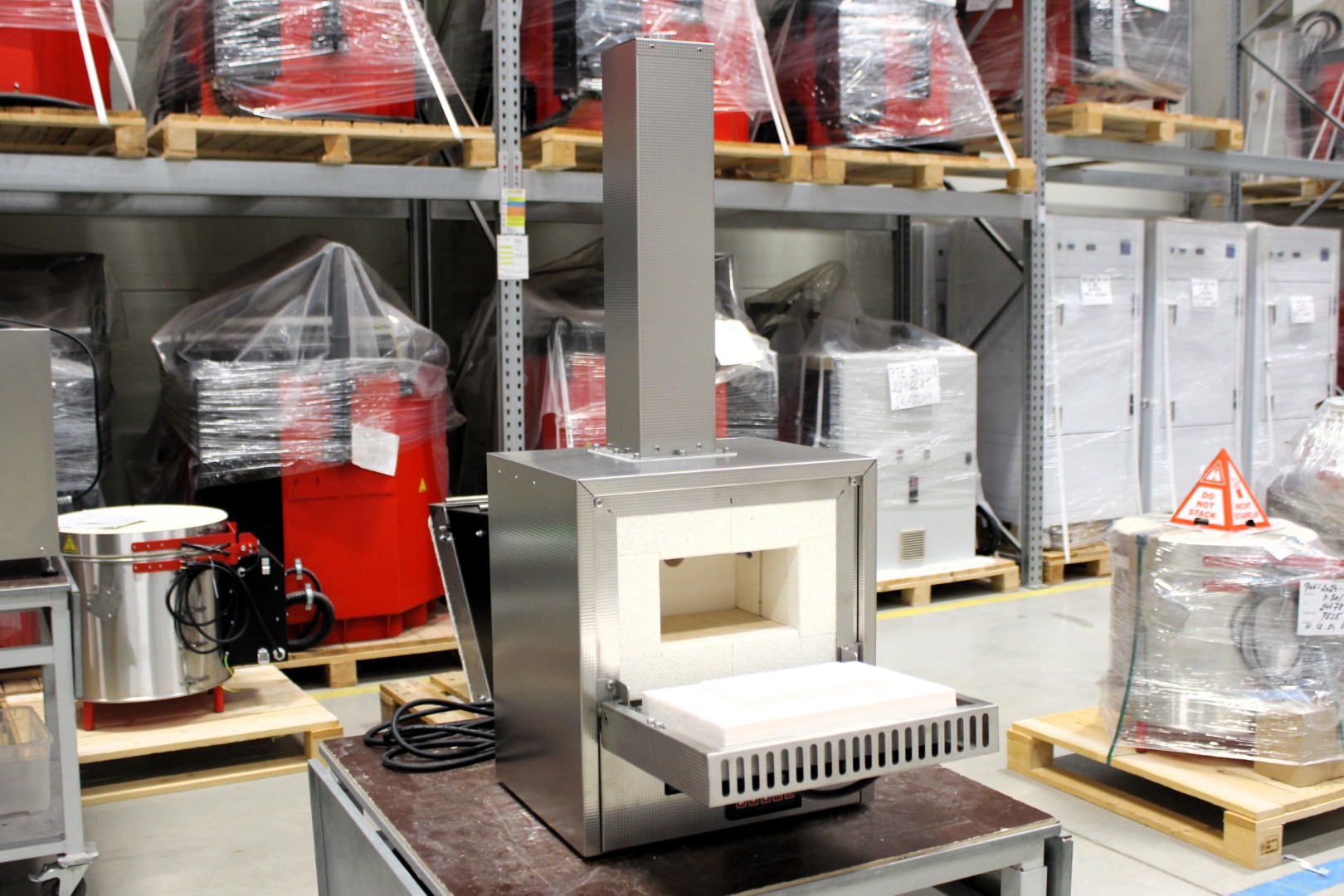
The basic difference in one sentence
The LZ creates conditions for sample oxidation and ash content determination, while the LG continuously records changes in weight in relation to temperature and time.
With an LZ, the sample or crucible is generally weighed outside the furnace before and after the process. In an LG, the sample remains mechanically connected to the balance during the thermal cycle, allowing its weight to be monitored continuously.
Do not begin your selection by asking which furnace is more accurate or more versatile. First determine what measurement output you actually require.
What is the LZ ashing furnace designed for?
According to current LAC documentation, the LZ furnace is intended primarily for:
- Oxidation of the load
- Ash content determination tests
- Other processes requiring an adequate supply of fresh air and removal of the furnace atmosphere
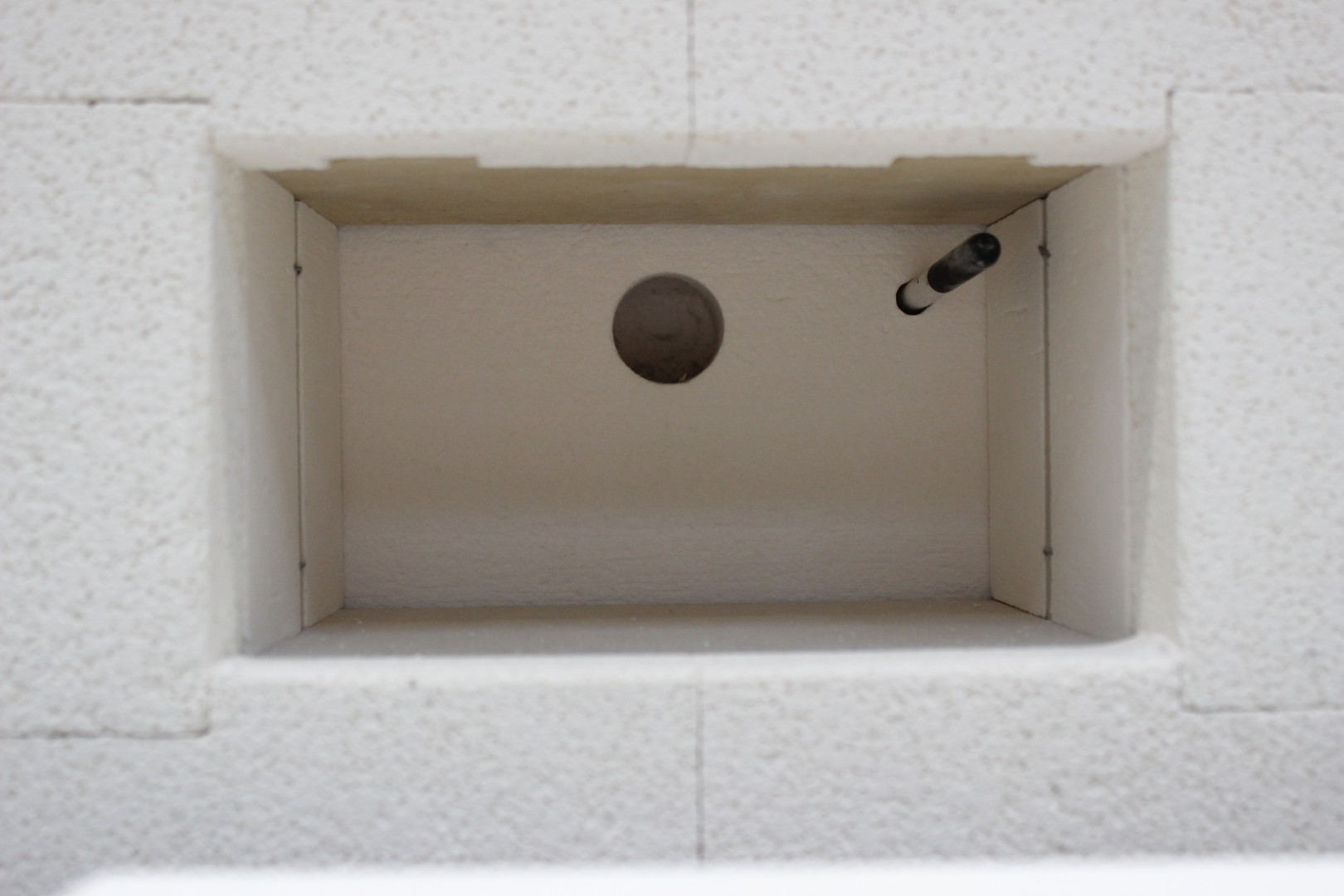
Its design provides intensive air exchange inside the chamber. Fresh air passes through intake channels, is preheated before reaching the samples, and the resulting atmosphere leaves through a double-wall stainless-steel chimney.
According to the current data sheets, the entire chamber volume is exchanged approximately six to twelve times per minute, depending on the temperature.
This oxygen supply is essential for oxidation processes. The LZ is therefore more than a standard chamber furnace fitted with a chimney.
How is a measurement performed with an LZ?
The LZ does not weigh the sample itself. The laboratory method determines how the result is obtained.
A typical procedure may include:
- Preparing the sample and container
- Initial weighing
- Running the thermal cycle in the furnace
- Further handling prescribed by the method
- Final weighing and calculation of the result
The exact conditions cannot be specified generally. They depend on the material and the laboratory or standardised procedure used.
The advantage of the LZ is its design for intensive oxidation. However, if you need to know how the weight changes during individual stages of the cycle, weighing only before and after the process will not provide this information.
What is the LG gravimetric furnace designed for?
The LG 09/12 gravimetric furnace combines:
The software records temperature and weight in relation to time. The resulting curve shows the sample’s weight loss during the thermal process.
It can show, for example:
- At which stage of the cycle the weight began to change
- How the change progressed as the temperature increased
- When the change slowed down or stabilised
- How the measured temperature, time and weight relate to one another
Interpreting the curve requires knowledge of the material and process. A decrease in weight alone does not automatically identify which particular component left the sample or which chemical reaction took place.
What data does the LG actually record?
According to the data sheet, the PC software displays and records:
- Temperature in relation to time
- Weight in relation to time
The temperature is measured by the S-type control thermocouple. It is not automatically the temperature inside the sample. The actual temperature of a heavier or larger load, in particular, may respond with a delay.
It is equally important to interpret the balance specification correctly. The data sheet specifies a readability of 0.01 g. This must be considered in relation to:
- The expected weight change
- The initial sample weight
- The sensitivity required by the method
- The effects of airflow and temperature
- How the results will be corrected
The LG may therefore not be suitable for an application in which changes below its stated capabilities need to be detected.
What weight can be measured in the LG?
According to the design description, the standard balance is rated for a maximum load of 0.2 kg. Optional versions with a maximum capacity of 3 or 7 kg are available.
The balance load must include everything suspended from or placed on the measuring system:
- The sample itself
- The container
- The holder
- Other parts of the measuring assembly
A higher weighing capacity is not automatically more suitable. It must correspond to both the expected weight and the required measurement sensitivity. The specific combination must be selected according to the application.
Why must LG balance results be corrected?
The LG data sheet draws attention to an important influence: as the temperature rises, airflow develops inside the furnace and affects the balance measurement.
The measured values must therefore be corrected according to the process temperature.
This means that a balance reading cannot simply be treated as pure material loss. Changes in the working-chamber conditions during heating may also affect the result.
The exact correction method must correspond to the measuring assembly, temperature cycle and procedure used. Without it, part of the recorded change could be incorrectly attributed to the sample itself.
Why is the balance position important?
The balance position in an LG must be checked regularly. The data sheet warns that contact between the ceramic tube and the furnace insulation can distort the results.
The measuring assembly must remain mechanically free. If any part of it rests against the furnace structure, the balance may no longer measure only the sample weight.
Before measuring, check:
- That the furnace is correctly installed
- That the balance is level and correctly adjusted
- That the ceramic tube passes through freely
- That the sample is correctly suspended or supported
- That the maximum weighing capacity is not exceeded
A gravimetric furnace is not simply a standard furnace placed on a balance. It is a measuring assembly whose mechanical arrangement directly affects the result.
How does the air supply differ?
This is one of the most significant differences between the LZ and LG.
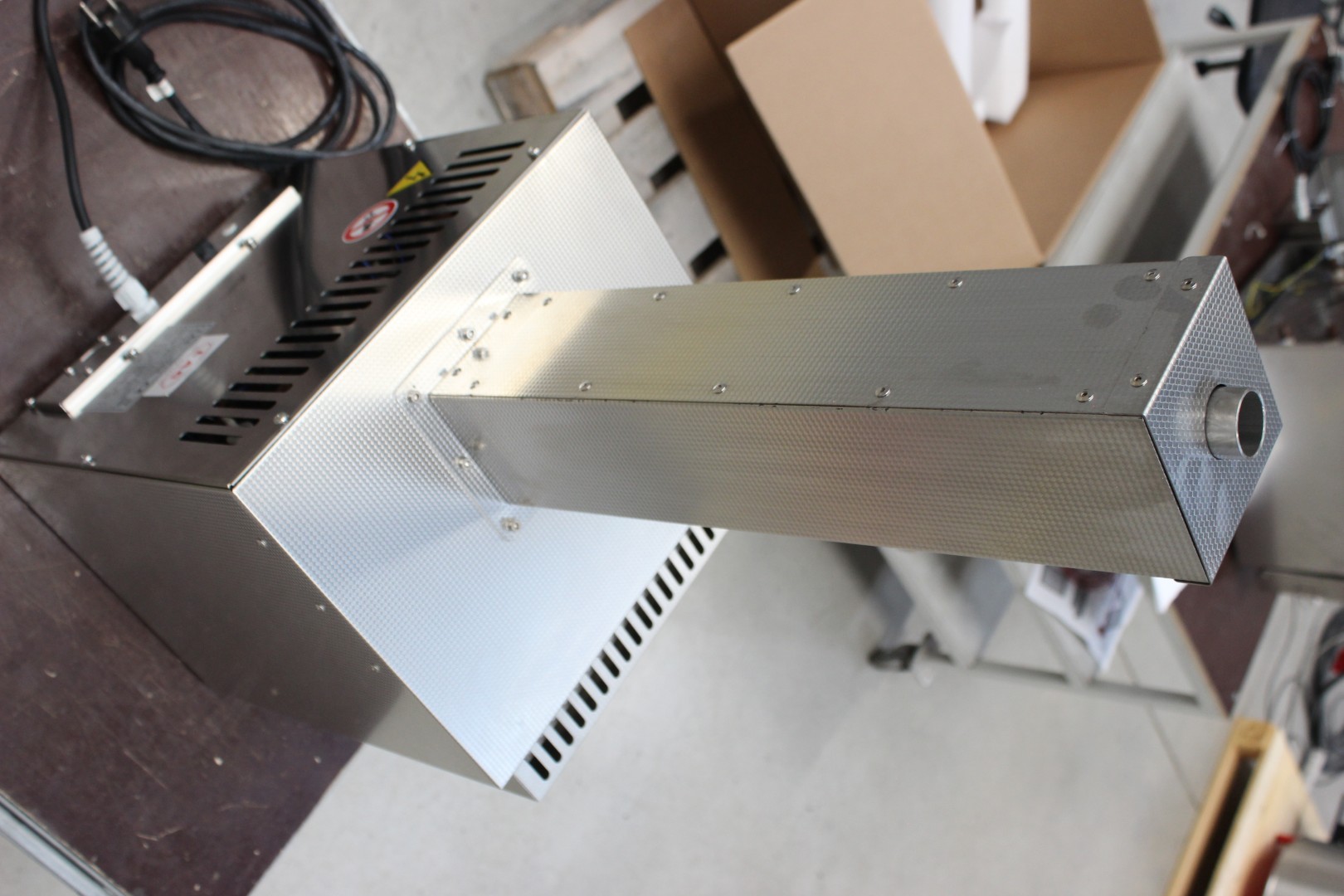
The LG data sheet does not specify the same intensive rate of air exchange as the LZ. It must therefore not be assumed that the LG provides identical oxidation conditions.
Airflow can also influence weighing. The method of air supply and extraction must therefore form part of the measurement design.
Is the LG suitable for ashing?
The LG data sheet classifies:
- Material testing as a suitable application
- Ashing, combustion and loss on ignition as partially suitable applications
This means that the LG may be useful for these processes, but it cannot automatically be recommended as a direct replacement for an LZ ashing furnace.
- If you need to determine final ash content using a method that requires an intensive oxygen supply, the LZ should be considered first.
- If you need to monitor how the weight changes during heating, the LG may be relevant.
Its suitability must still be confirmed according to the sample, required sensitivity and method conditions.
Is the LG the same as a thermogravimetric analyser?
The LG data sheet describes the output as a thermogravimetric curve because it shows weight loss in relation to temperature and time.
This does not automatically mean that the LG can replace every specialised thermogravimetric analyser. Relevant factors include:
- The required sensitivity
- Sample size
- Atmosphere control
- Measurement accuracy and speed
- The requirements of the test method
- How the data will be evaluated
The LG operates with samples and a balance within the ranges defined in its data sheet. If your method specifies a particular type of analytical instrument or substantially more sensitive measurement, its requirements must be compared with the LG specification.
LZ and LG comparison
| Feature | LZ | LG |
|---|---|---|
| Primary purpose | Oxidation and ash content determination | Monitoring weight change during heating |
| Weighing method | Outside the furnace, according to the laboratory method | Continuously, using an integrated balance |
| Main output | Final result evaluated according to the method | Temperature and weight curves over time |
| Air supply | Intensive supply of preheated air | Adjustable inlet controlled by a damper |
| Air exchange | 6–12 chamber volumes per minute, depending on temperature | No equivalent value specified in the data sheet |
| Exhaust | Double-wall stainless-steel chimney | Ventilation chimney; optional ejector with fan |
| Standard sizes | 3, 5, 9 and 15 l | One standard 9.4 l model |
| Tmax | 1,200 °C | 1,200 °C |
| Operating specification | Recommended range of 700–1,050 °C | Continuous operating temperature of 1,100 °C |
| Weight measurement | Not integrated into the furnace | Balance readability of 0.01 g |
| Important limitation | Sample suitability and fume extraction | Temperature correction and balance-position checks |
The values are based on the currently available data sheets. The final configuration must be confirmed in the quotation for the specific equipment.
When are you likely to choose an LZ?
Consider the LZ if:
- The main objective is ashing or oxidation
- You need a substantial oxygen supply
- The required result is the weight before and after the process
- You work according to a method requiring an appropriate rate of air exchange
- You need to process several crucibles in one cycle
- You do not require a continuous weight-change curve
Even in these cases, the choice is not automatic. The operating temperature, crucible dimensions, chemical composition of the sample and fume extraction must be checked.
When are you likely to choose an LG?
Consider the LG if:
- You need to monitor the weight during heating
- You are interested in the point or temperature range at which the loss occurs
- The expected change is within the capabilities of the balance
- You can apply the required correction to the results
- You do not require the intensive air-exchange conditions characteristic of the LZ
- Your method permits this type of measurement
It is advisable to assess or test the particular sample and required output before ordering.
What information should you include in your enquiry?
To decide between the LZ and LG, we need to know:
- The sample material and composition
- The primary measurement objective
- The initial sample weight
- The expected weight loss
- The required weighing sensitivity
- The operating temperature and complete cycle
- The oxygen-supply requirement
- The process fumes generated
- The method or standard used
- The number of samples or crucibles
- The required data output
- Calibration and documentation requirements
The most important question:
Do you need to know only the weight before and after the process, or the complete progression of the change?
The answer will narrow the selection considerably.
Frequently asked questions
Which furnace is more accurate?
They cannot be compared in such general terms. The LZ and LG measure in different ways and serve different purposes. The accuracy of the result depends on the entire method, balance, calibration, sample and laboratory procedure.
Can the LZ calculate ash content automatically?
No. The LZ provides the thermal process and air supply. Weighing and calculation of the result are performed outside the furnace in accordance with the laboratory method.
Can the LG show when the sample began to lose weight?
The software records weight, temperature and time, allowing their progressions to be compared. Interpreting the cause of the change, however, requires knowledge of the material and process.
Does the LG provide the same oxygen supply as the LZ?
No. The LG data sheet does not specify the intensive exchange of 6–12 chamber volumes per minute characteristic of the LZ. The LG has an air-supply damper and a ventilation chimney.
Why do LG measurements need to be corrected?
The airflow generated during heating affects the balance reading. The data sheet therefore expressly requires measured values to be corrected according to the process temperature.
Can I place a 5 kg sample in the LG?
Only with the appropriate balance version and after accounting for every part of the measuring assembly. According to the design description, the standard version is rated for 0.2 kg; optional 3 or 7 kg versions are available.
Can the LG replace a laboratory TGA analyser?
Not automatically. The sensitivity, weight range, atmosphere control and requirements of the specific analytical method must be compared.
Which furnace is more suitable for routine ash content determination?
If the method requires an intensive oxygen supply and final weighing before and after the process, the LZ should be considered first. The final recommendation depends on the sample and exact procedure.
Choose according to the required result, not the furnace name
The LZ and LG may process the same or similar material, but each answers a different question.
The LZ helps create the conditions required for oxidation and determination of the final ash content. The LG shows how the sample weight changes during the temperature cycle.
Explore LAC specialised laboratory furnaces
Compare furnaces for oxidation, ash content determination and continuous monitoring of sample weight changes during thermal processing.
👉 Explore specialised laboratory furnaces
👉 Explore LAC laboratory furnaces
👉 View the complete range of LAC laboratory furnaces and dryers
Not sure whether your process requires an LZ or LG furnace?
Send us details of your sample, method, expected weight loss and required output. LAC technicians will assess whether an LZ ashing furnace, an LG gravimetric furnace or another solution is the best match for your measurement.
👉 Contact us about your laboratory measurement requirements.
What to remember
The LZ and LG serve different measurement objectives even when they process similar samples.
Choose the LZ when the priority is oxidation and final ash content under an intensive oxygen supply. Consider the LG when you need a continuous weight-change curve during heating.