
Ashing and Ash Content Determination in a Laboratory Furnace: Why Air Supply Matters
Ashing and Ash Content Determination in a Laboratory Furnace: Why Air Supply Matters
Why temperature alone is not enough and how oxygen supply, air exchange and process fumes affect ashing
Key insight:
Correct ashing requires more than a sufficient operating temperature. The process also needs an adequate oxygen supply, removal of the furnace atmosphere and compliance with the analytical method used.
You need to determine the ash content of a sample. You select a laboratory furnace with a sufficient temperature range, place the crucibles inside and start the programme. Does that mean you have chosen the right equipment?
Not always. Operating temperature is not the only decisive factor in ashing. The process also requires an adequate supply of oxygen and removal of the atmosphere generated during the process. A standard chamber furnace with a small ventilation opening may therefore not provide the same conditions as a furnace designed specifically for sample oxidation.
The particular analytical method is equally important when determining ash content. It defines the sample preparation, temperature cycle, holding time, containers and weighing procedure. The furnace alone cannot guarantee a correct result: it must meet the requirements of the selected method.
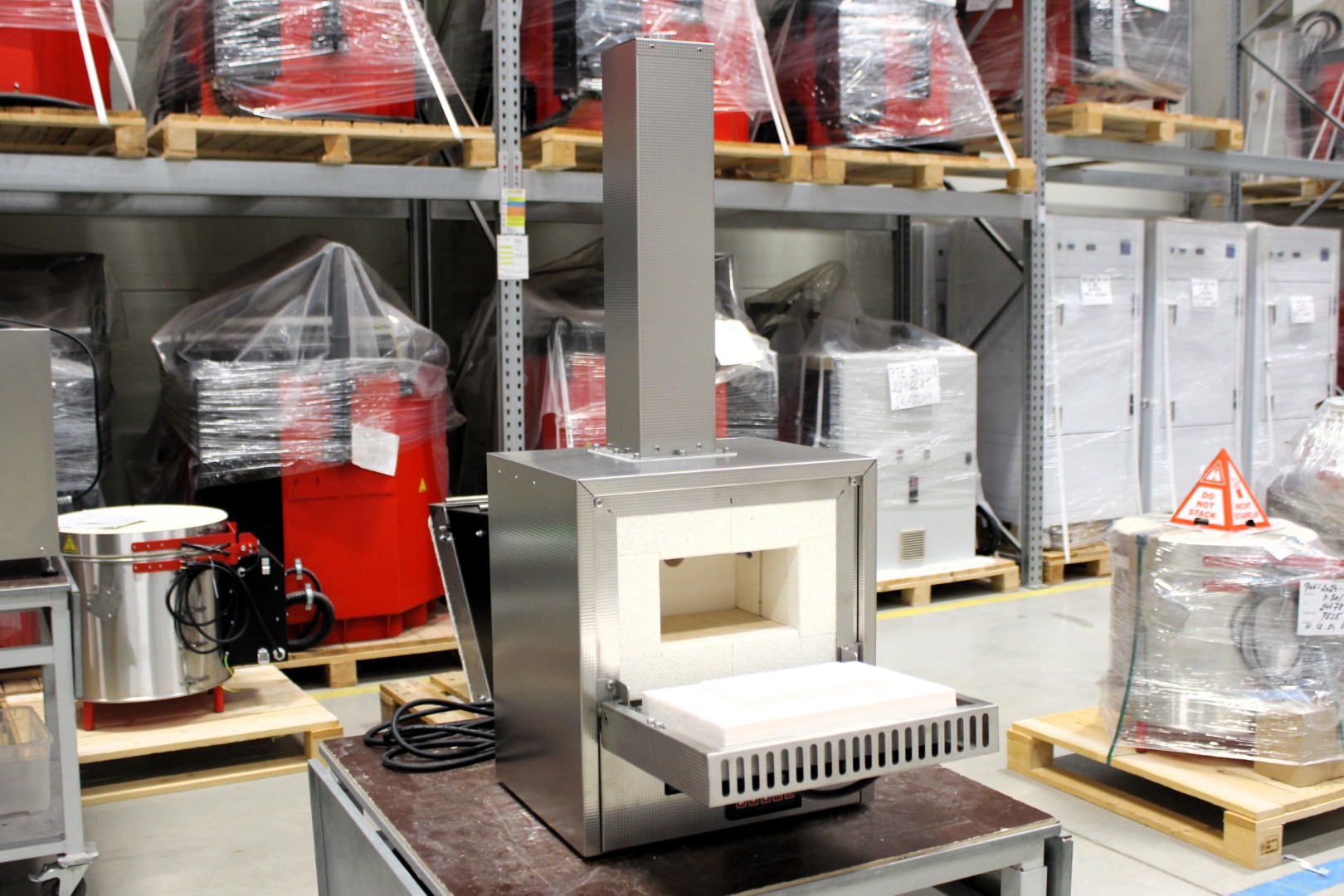
What is ashing?
During ashing, the combustible components of a sample are oxidised under defined conditions. Once the process is complete, a solid residue remains and is evaluated in accordance with the relevant laboratory or standardised procedure.
This is a simplified description of the principle; the specific procedure varies between materials and methods.
Different conditions may be required for materials such as:
- Food
- Biomass
- Fuels
- Plastics and other polymeric materials
- Paper
- Construction or mineral materials
- Waste
- Laboratory and production samples
There is no single universal ashing temperature or duration for all materials. These values must be based on the method used for the specific sample.
Why does the process require oxygen?
Oxidation of the combustible part of the sample consumes oxygen. If too little oxygen enters the working chamber, the process conditions may change.
The rate and progress of ashing are influenced by factors including:
- The fresh-air supply
- The quantity and composition of the sample
- The shape and fill level of the crucible
- The number of samples in the chamber
- The operating temperature
- The holding time
- The removal of process fumes
The air enclosed in the chamber may not be sufficient for the entire process. Furnaces intended for ashing therefore provide a continuous supply of fresh air and removal of the furnace atmosphere.
More air does not automatically produce a better result. Excessive airflow may be problematic for fine or lightweight samples, for example, if it causes particles to disperse. The furnace conditions must be appropriate for both the method and the physical properties of the sample.
How does an LZ ashing furnace differ from a standard chamber furnace?
The LZ laboratory furnace is based on the L series design but modified for processes requiring an intensive air supply.
According to current LAC documentation, it is intended primarily for:
- Oxidation of the load
- Ash content determination tests
- Other applications requiring an adequate supply of fresh air and extraction of the furnace atmosphere
Its standard design includes:
It is therefore more than a standard furnace with a larger ventilation opening. Air supply and removal are integral parts of the equipment design.
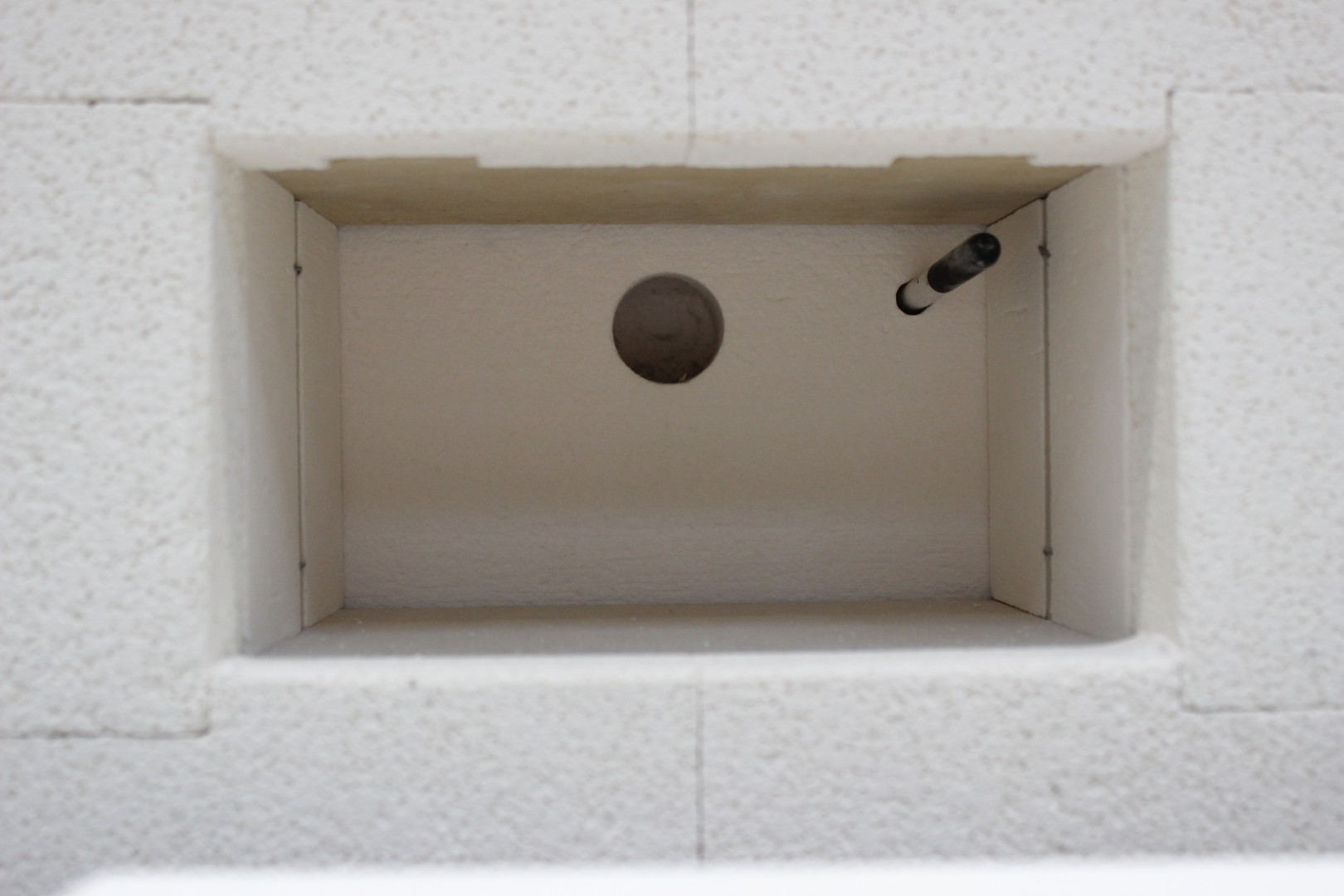
How frequently is the air exchanged in an LZ furnace?
According to the current data sheets, the entire internal chamber volume of an LZ furnace is exchanged approximately six to twelve times per minute, depending on the temperature.
This value describes a feature of the LZ design under the conditions specified by the manufacturer. It cannot automatically be applied to other laboratory furnaces fitted with a chimney or ventilation damper.
The intensive air exchange supplies oxygen to the sample and removes the atmosphere generated during the process. At the same time, it creates a thermal load because the incoming air must be heated to the chamber temperature.
The air entering an LZ furnace is therefore preheated before it reaches the working chamber.
Why is the incoming air preheated?
If cold ambient air entered the furnace chamber continuously and directly, it would affect the temperature conditions inside.
In the LZ series, air passes through channels around the heating elements, where it is heated before entering the chamber containing the samples. This reduces the direct effect of cold air on the working chamber.
Preheating is also important because the LZ operates with a substantially higher rate of air exchange than a standard laboratory furnace with natural ventilation.
This design alone does not define the exact temperature deviation at every point in the chamber. If your method requires specified temperature uniformity, the measured space, operating temperature, sample arrangement and other verification conditions must be defined.
What is the operating range of LZ furnaces?
Current documentation for standard LZ models specifies:
- A maximum temperature of 1,200 °C
- A recommended operating temperature range of 700–1,050 °C
A Tmax of 1,200 °C does not mean that the furnace is intended for continuous operation at this temperature. The required ashing temperature should fall within the recommended operating range of the specific model.
It must also comply with the method used for the particular material. LAC cannot specify one universal ashing temperature without knowing the sample and analytical procedure.
How should you choose the LZ size?
The standard range includes four sizes:
| Model | Volume | Internal dimensions | Maximum floor load |
|---|---|---|---|
| LZ 03/12 | 3 l | 180 × 100 × 140 mm | 4 kg |
| LZ 05/12 | 5 l | 230 × 130 × 170 mm | 6 kg |
| LZ 09/12 | 9 l | 230 × 170 × 240 mm | 6 kg |
| LZ 15/12 | 15 l | 250 × 170 × 340 mm | 6 kg |
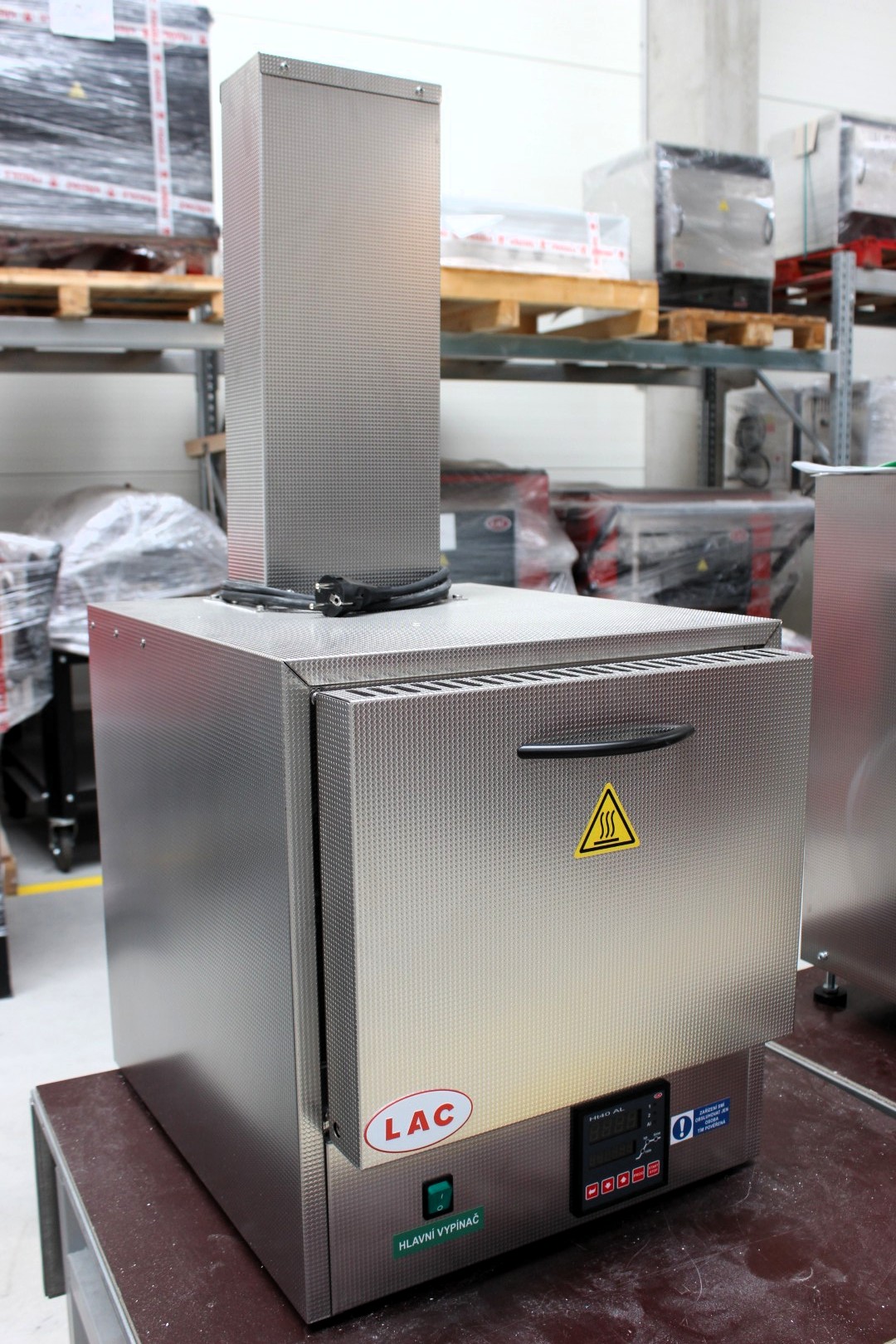
Do not select the size solely according to the total sample volume. You need to know:
- The crucible dimensions
- The number of crucibles in one cycle
- The total load weight
- How the crucibles will be arranged
- The space required between containers
- How they will be loaded safely
Crucibles should not be arranged in the chamber solely according to how many will physically fit. Their arrangement may affect both access to air and the thermal conditions.
The exact arrangement must comply with the method used and the conditions under which results are intended to be comparable.
Which controller do you need?
The standard LZ documentation specifies an Ht40AL controller with one programme, two ramps and two holds.
This may be sufficient for a simple cycle. However, if the method requires:
- More temperature levels
- Several holds
- Multiple stored programmes
- Data recording and transfer
- Automatic control of other accessories
A more advanced option will need to be considered.
The current documentation lists the Ht205 controller, with 30 programmes of 15 steps each, as an accessory. Selected communication interfaces and the HtMonit EV set are also available.
Choose the controller according to the actual method profile, rather than simply by the number of functions it offers.
Is recording the controller temperature sufficient?
The controller record describes the temperature measured by its thermocouple. It does not automatically confirm:
- The temperature inside the sample
- The same temperature in every crucible
- Complete oxidation
- The correctness of the entire analytical procedure
The result of ash content determination also depends on sample preparation, weighing, containers, post-firing handling and the evaluation method.
If you need to document the measuring chain, the current LZ documentation provides for calibration covering the control thermocouple and controller. This calibration is not, however, the same as measuring the temperature distribution throughout the chamber.
Calibration and documentation requirements must be based on your quality system and the method used.
Is an LZ suitable for every sample?
No. The furnace is designed for intensive air supply and oxidation processes. This does not mean that it is automatically suitable for every substance you wish to burn.
Before use, assess:
- The chemical composition of the sample
- The quantity of organic and volatile components
- The type and quantity of process fumes
- The possibility of hazardous substances being generated
- Foaming, spitting or changes in volume
- The risk of fine particles being dispersed
- The suitability of the crucible
- How fumes will be removed from the workplace
Flammable, explosive, toxic or otherwise hazardous substances require a specific assessment. The general description “ashing furnace” does not in itself confirm the safety of a particular process.
What can happen to a fine or lightweight sample?
The LZ series operates with intensive air exchange. With fine powders or lightweight particles, it is therefore necessary to check whether the airflow could cause material to escape from the container or part of the sample to be lost.
The weighing result could then be affected not only by oxidation but also by mechanical sample loss.
The risk depends on:
- Particle size
- The amount of sample
- The shape and fill level of the crucible
- The material’s behaviour during heating
- The prescribed procedure
There is no universal solution without practical knowledge of the sample. A preliminary test or an adjustment to the procedure in accordance with the relevant method may be appropriate.
Where do the process fumes go?
The LZ chimney removes the atmosphere from the working chamber. This does not mean that the resulting fumes may be released freely into the laboratory.
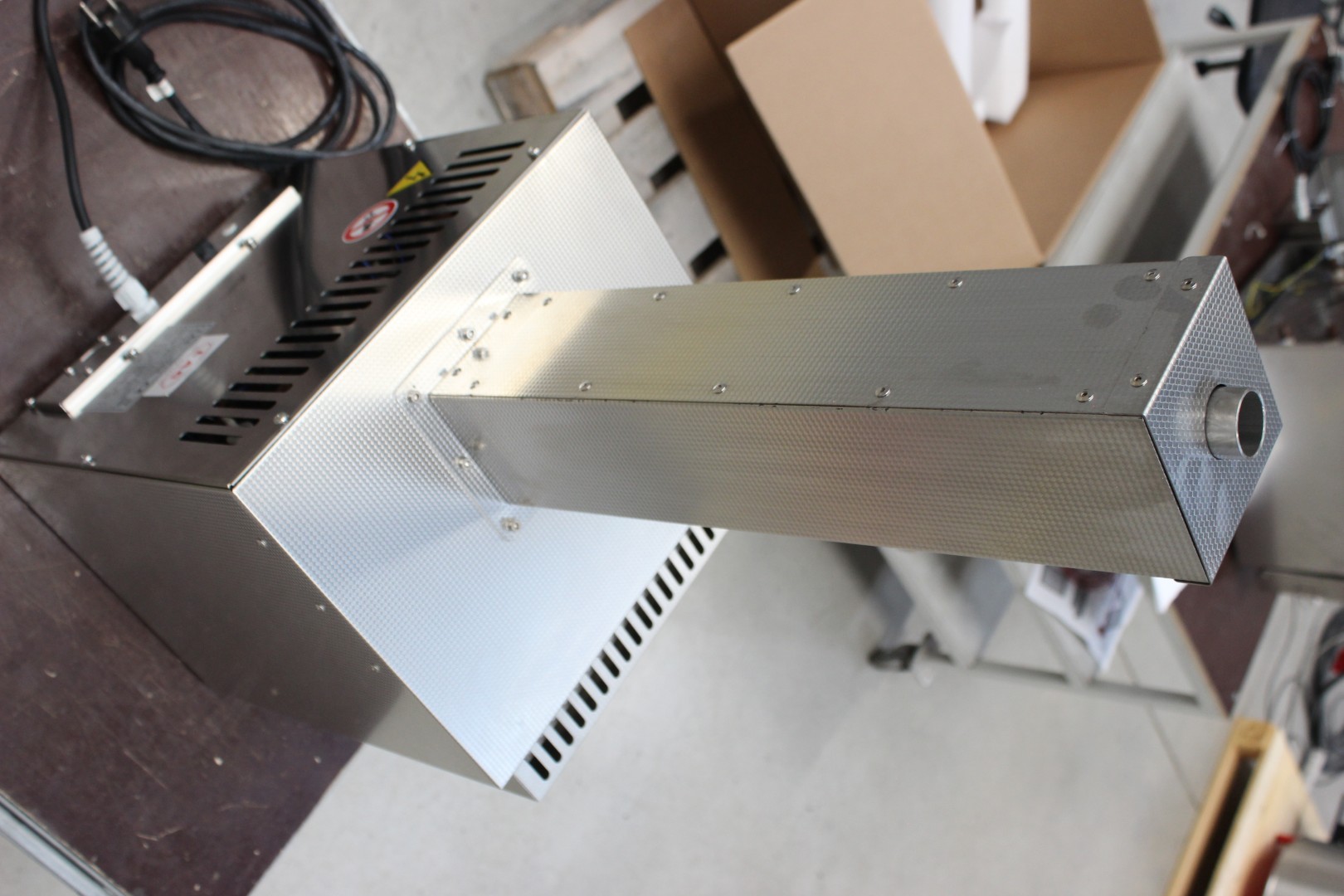
Depending on their properties, the furnace may need to be connected to:
- Local extraction
- A laboratory fume cupboard
- A separate ventilation system
- Other equipment designed for the relevant type of fumes
The connection method must be assessed for the specific furnace. An excessively powerful external extraction system may alter the airflow and temperature conditions inside the chamber.
The furnace and extraction system should be planned together. The furnace manufacturer needs information about the sample and process, while the ventilation-system design must also comply with the conditions at the workplace.
LZ or LG gravimetric furnace?
Both furnaces may be associated with monitoring weight changes during a thermal process, but their primary purposes differ.
If the principal objective is standard ashing with a high oxygen supply, the LZ should be considered first. If you need a continuous weight-change curve, the LG may be relevant.
The differences between the LZ and LG are covered in greater detail in a follow-up article.
What information should you include in your enquiry?
To assess the appropriate furnace, prepare the following information:
- Sample material and composition
- The safety data sheet, if available
- The method or standard used
- The required operating temperature
- The complete temperature cycle
- The quantity of sample in each crucible
- The number and dimensions of the crucibles
- The total load weight
- The anticipated process fumes
- How frequently the test will be performed
- Recording and calibration requirements
- The extraction system available at the workplace
If you use a specific standard, state its exact designation and current edition. Without this information, it is not possible to confirm that the proposed configuration will meet every requirement of the procedure.
Frequently asked questions
Can ash content be determined in a standard chamber furnace?
This depends on the method requirements and the design of the specific furnace. A sufficient temperature alone is not enough. An adequate supply of oxygen and removal of the furnace atmosphere are also required.
Why is opening a ventilation port not sufficient?
A standard ventilation opening may not provide the air-exchange rate and pattern required for the process. The LZ has a dedicated design for supplying and preheating air.
What is the correct ashing temperature?
There is no single universal temperature. It is defined by the method for the specific material. According to current documentation, the recommended operating range of the LZ is 700–1,050 °C. If the required method operates outside this range, different equipment may be needed.
How many samples can I process at the same time?
This depends on the furnace size, crucible dimensions, total weight and required arrangement. The number must not be based solely on how many containers physically fit inside the chamber.
Does the LZ guarantee complete ashing of the sample?
No. The furnace provides process conditions within the limits of its design and the selected programme. The result also depends on the material, sample preparation, method, temperature, holding time and evaluation.
Can I ash plastics or waste?
Suitability must be assessed according to the exact composition, quantity and resulting fumes. General descriptions such as “plastic” or “waste” do not provide enough information for a safe recommendation.
Does the LZ chimney replace a laboratory extraction system?
No. The chimney removes the atmosphere from the working chamber, but its subsequent safe discharge must be addressed by the workplace according to the properties of the substances generated.
Do I need calibration?
This depends on the method used and the laboratory’s quality system. Calibration of the measuring loop, verification of temperature distribution and balance calibration are separate procedures.
High temperature alone is not enough for ash content determination
Correct ashing requires a combination of a suitable operating temperature, an adequate oxygen supply, removal of the furnace atmosphere and a precisely defined laboratory procedure.
The LZ furnace is designed for these processes with an intensive supply of preheated air and an exhaust chimney. However, its suitability for the particular sample and method must always be verified separately.
Explore LAC furnaces for ashing and laboratory analysis
Compare specialised laboratory furnaces for oxidation, ash content determination and monitoring sample weight changes during thermal processing.
👉 Explore specialised laboratory furnaces
👉 Explore LAC laboratory furnaces
👉 View the complete range of LAC laboratory furnaces and dryers
Do you need to select an ashing furnace for a specific sample or method?
Send us the sample composition, method used, temperature cycle and number of crucibles. LAC technicians will assess the appropriate LZ furnace size, controller and requirements for removing the resulting process fumes.
What to remember
Ashing depends on temperature, oxygen supply, air exchange, sample behaviour and the requirements of the analytical method.
Choose the furnace according to the complete procedure, crucible arrangement, process fumes and documentation requirements—not only according to its maximum temperature.