
What to Prepare Before Installing a Laboratory Furnace: Space, Power Supply, Extraction and Safe Operation
What to Prepare Before Installing a Laboratory Furnace: Space, Power Supply, Extraction and Safe Operation
How to prepare the delivery route, installation location, electrical connection, ventilation and operating conditions
Key insight:
A suitable operating temperature and chamber size are not enough. Before ordering, verify that the furnace can be delivered, positioned, connected, ventilated and operated safely at the intended location.
You have selected a laboratory furnace based on your sample, operating temperature and required programme. Before placing your order, however, you also need to confirm that the furnace can be safely delivered to its intended location, installed and connected.
The term “bench-top furnace” does not mean that the unit can be placed on any laboratory bench and plugged into the nearest socket. Some bench-top models weigh more than 100 kg, may require a three-phase power supply and release heat into the room during operation.
Installation should therefore be addressed before the furnace arrives. This will help you avoid subsequent modifications to the electrical installation, extraction system or workplace itself.
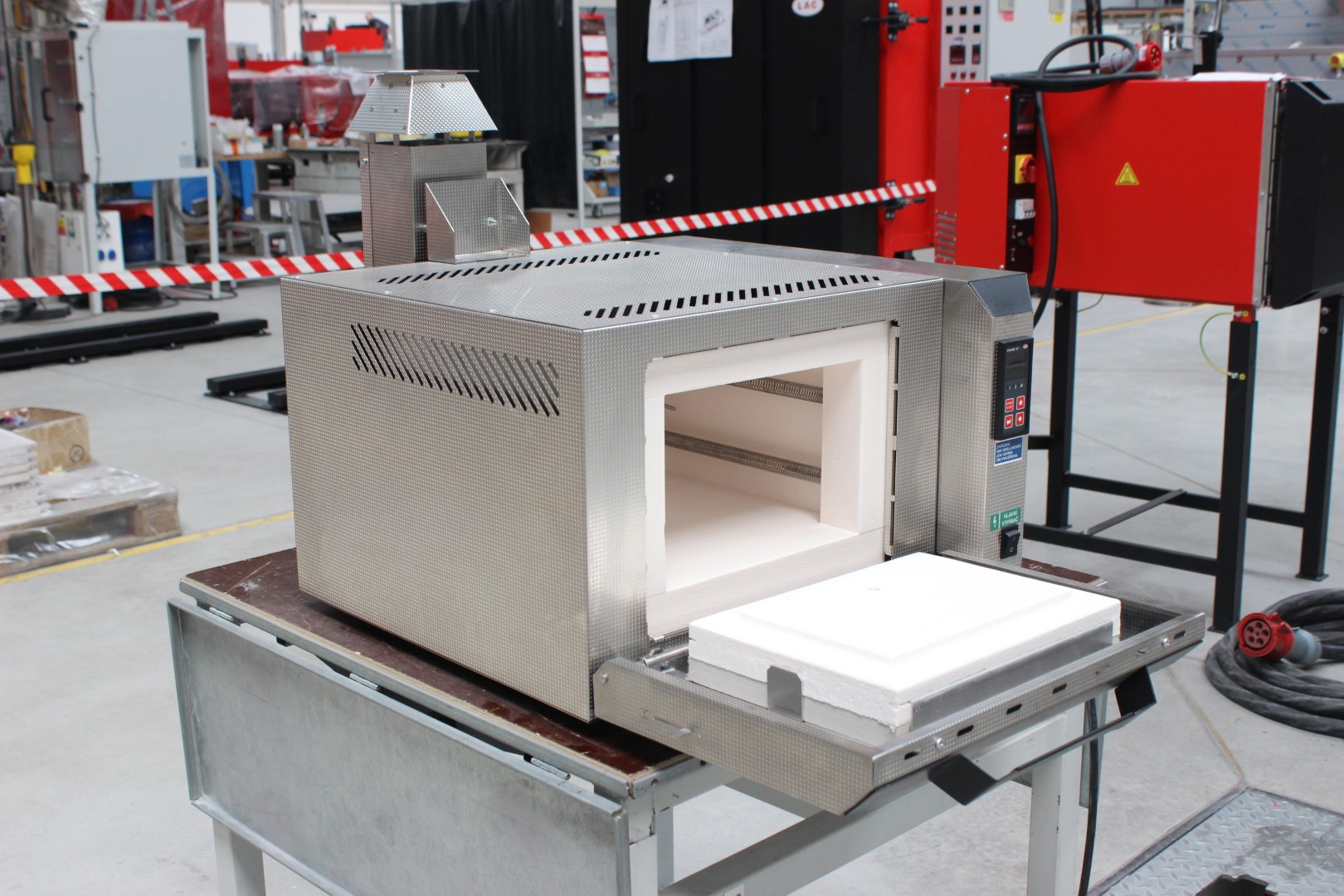
1. Can the furnace reach the installation location?
The external dimensions in the data sheet describe the unit itself under the stated conditions. They do not always include all the space required for transport and operation.
Before ordering, check the entire delivery route:
- Entrance doors to the building
- Corridors and narrow passages
- The lift and its load capacity
- Stairs and landings
- Doors to the laboratory
- The possibility of using handling equipment
- Space for turning the unit
The weight of the furnace must also be considered. For example, LH laboratory furnaces weigh approximately 72–105 kg depending on the model, even though the data sheet describes them as bench-top units. Depending on their size, LHS furnaces weigh approximately 50–100 kg.
Do not carry or lift the furnace in a way that is unsuitable for its weight and construction. Particular care is required with equipment containing fragile insulation, a ceramic muffle or sensitive heating elements.
The LHS data sheet expressly draws attention to the fragility of both the SiC heating rods and the insulation. Incorrect handling can damage the furnace before it is even commissioned.
2. Is the bench suitable for the furnace’s weight and dimensions?
A bench-top design does not automatically mean a small or lightweight furnace.
The bench or stand must safely support:
- The weight of the furnace itself
- The weight of the load
- Containers, trays and other fixtures
- Any accessories
It must also be stable and comply with the requirements in the instructions for the specific unit. An unsuitable bench may bend, transmit vibrations or make it more difficult to load heavier items safely.
When planning the working height, consider how the furnace opens:
The operator must be able to insert and remove samples safely. Installing the furnace too high or too low can make handling unnecessarily difficult.
3. Is there enough space around the furnace?
The external dimensions of the equipment are not the same as the space required for operation.
Allow room for:
- Fully opening the door or lid
- Handling samples
- The power cable
- A separate control cabinet, if used by the furnace
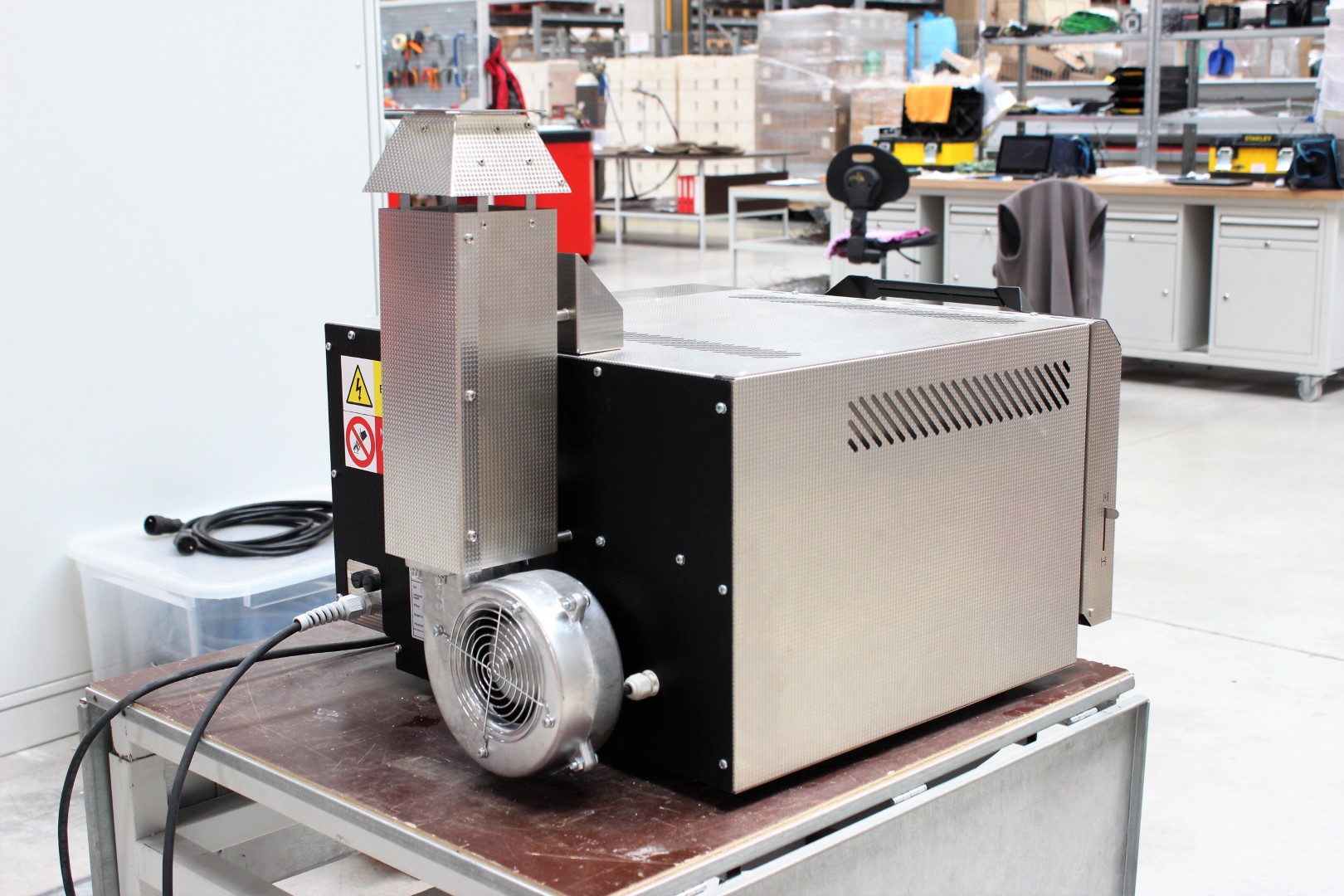
- A ventilation or exhaust chimney
- Extraction ducting and a fan
- A protective-gas supply
- Service access
- The flow of cooling air
The specific safe distances from walls and other equipment must be based on the instructions for the relevant model. One universal clearance cannot be specified for all laboratory furnaces.
Check the space above the furnace as well. This is particularly important for models with upward-opening doors, the vertical LMV muffle furnace and equipment fitted with a top chimney.
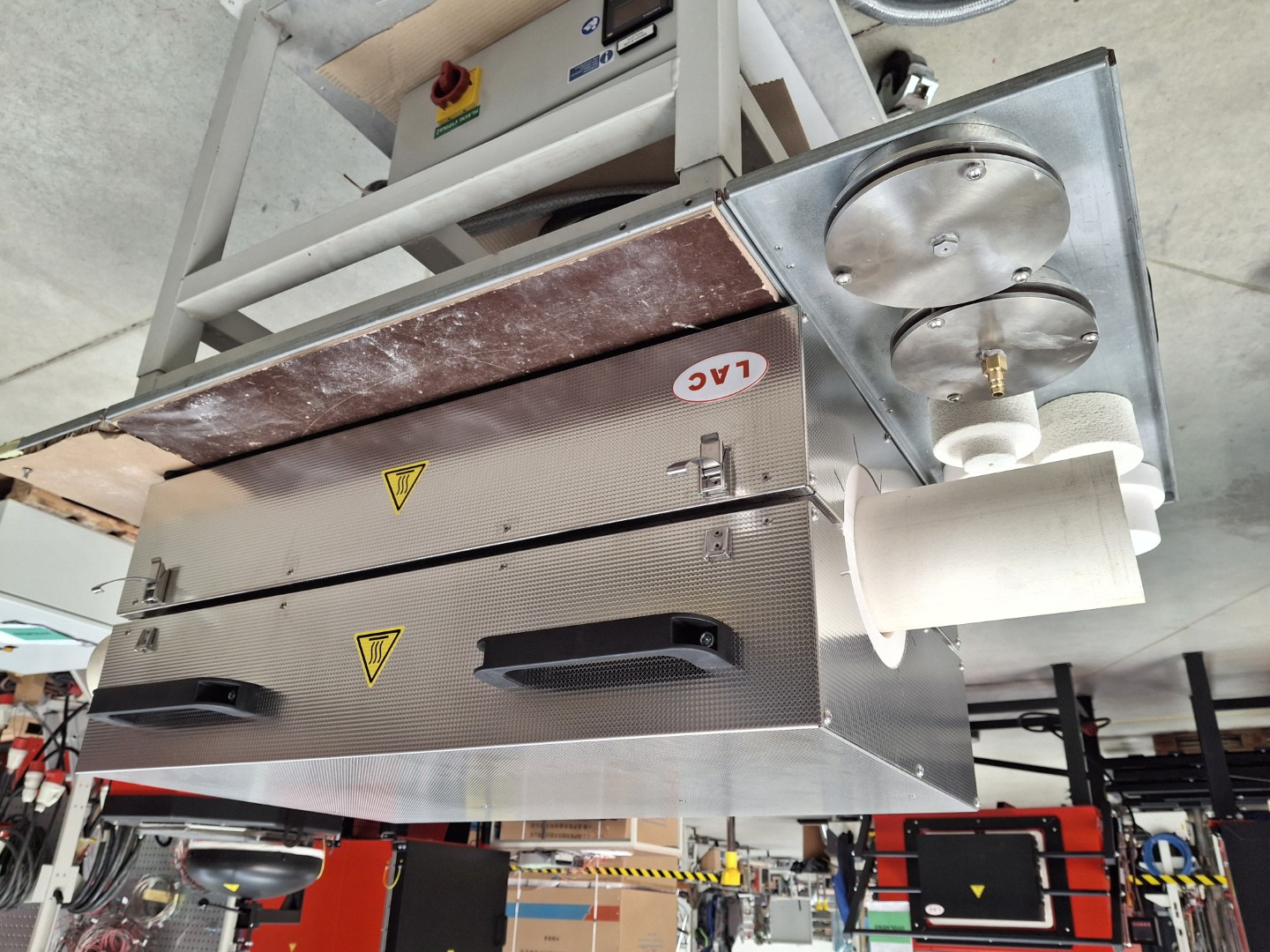
For LT tube furnaces, the working tube must also be taken into account. The data sheet expressly states that the furnace’s external dimensions exclude the tube. The complete installation will therefore be longer than the furnace casing itself.
4. Can the cooling openings operate freely?
A laboratory furnace produces heat during operation. Some remains inside the working chamber, while some is transferred to the casing and the surrounding room.
Some models are cooled by natural air circulation, while others use fans. Ventilation and cooling openings must therefore not be covered or restricted by unsuitable positioning.
The LHS data sheet expressly states that:
- The furnace casing is cooled by fans
- The furnace releases heat into the room
- The cooling openings must not be covered
Airflow also cools the casing or the electrical compartment in other furnace series. Placing the furnace too close to an obstruction or covering an air intake may interfere with its cooling.
The laboratory must also be able to remove the heat released during operation. The actual heat load on the room is not automatically the same as the furnace’s rated power input. It depends on the design, programme, operating temperature and duration of use.
The required room ventilation capacity should therefore be determined for the specific installation, rather than simply adopting the power input stated in the data sheet.
5. Is the electrical connection suitable for the specific model?
LAC laboratory furnaces do not all have the same power-supply requirements.
Smaller models in some series operate at 230 V and are fitted with a single-phase plug. Other models require a 400 V three-phase connection.
| Furnace series | Power-supply information |
|---|---|
| L, LE, LMH, LMV and LH | The listed standard versions use a 230 V supply according to the current data sheets |
| LHS | 400 V; depending on the model, 16/3 or 25/3 circuit protection is required |
| LT | The series includes both 230 V and 400 V models |
| LSP 30/13 | Requires a 400 V supply according to its data sheet |
Always check the exact model and ordered configuration before preparing the connection. Do not rely on the requirements of another size in the same series.
Confirm the following:
- Voltage
- Number of phases
- Rated power input
- Required circuit protection
- Connection method
- Power-cable length and routing
- Any separate control cabinet
The electrical connection must comply with the equipment documentation and the conditions at the installation site. Any required modifications to the electrical installation must be carried out by a qualified person.
6. Is a standard socket sufficient?
Only if the specification for the particular furnace confirms this and the prepared electrical circuit meets its requirements.
Even a single-phase plug does not mean that the unit can be connected without checking to any socket shared with other appliances. The required circuit protection, electrical-circuit load and condition of the installation are decisive.
Do not assess the connection solely by the shape of the cable plug. Always compare:
- The rating plate
- The technical data sheet
- The wiring diagram or operating instructions
- The actual parameters of the electrical supply
If the equipment includes a separate control cabinet, space must also be provided for it and for the connecting cable between the cabinet and the furnace. This arrangement is used, for example, with LT laboratory tube furnaces.
7. Where will process fumes go?
The furnace’s ventilation chimney carries the atmosphere out of the working chamber. This does not mean, however, that all substances generated by the process can be safely released into the laboratory.
If the sample releases vapour, smoke, dust, odours or chemical fumes, you need to know:
- Their composition
- Their approximate quantity
- The temperature at which they are produced
- How frequently the process will be run
- The required method of removal
Depending on the application, you may need:
- Suitable positioning beneath a laboratory extraction system
- An ejector with an exhaust fan
- A draught diverter
- Connection to a separate ventilation system
- Another solution designed for the substances concerned
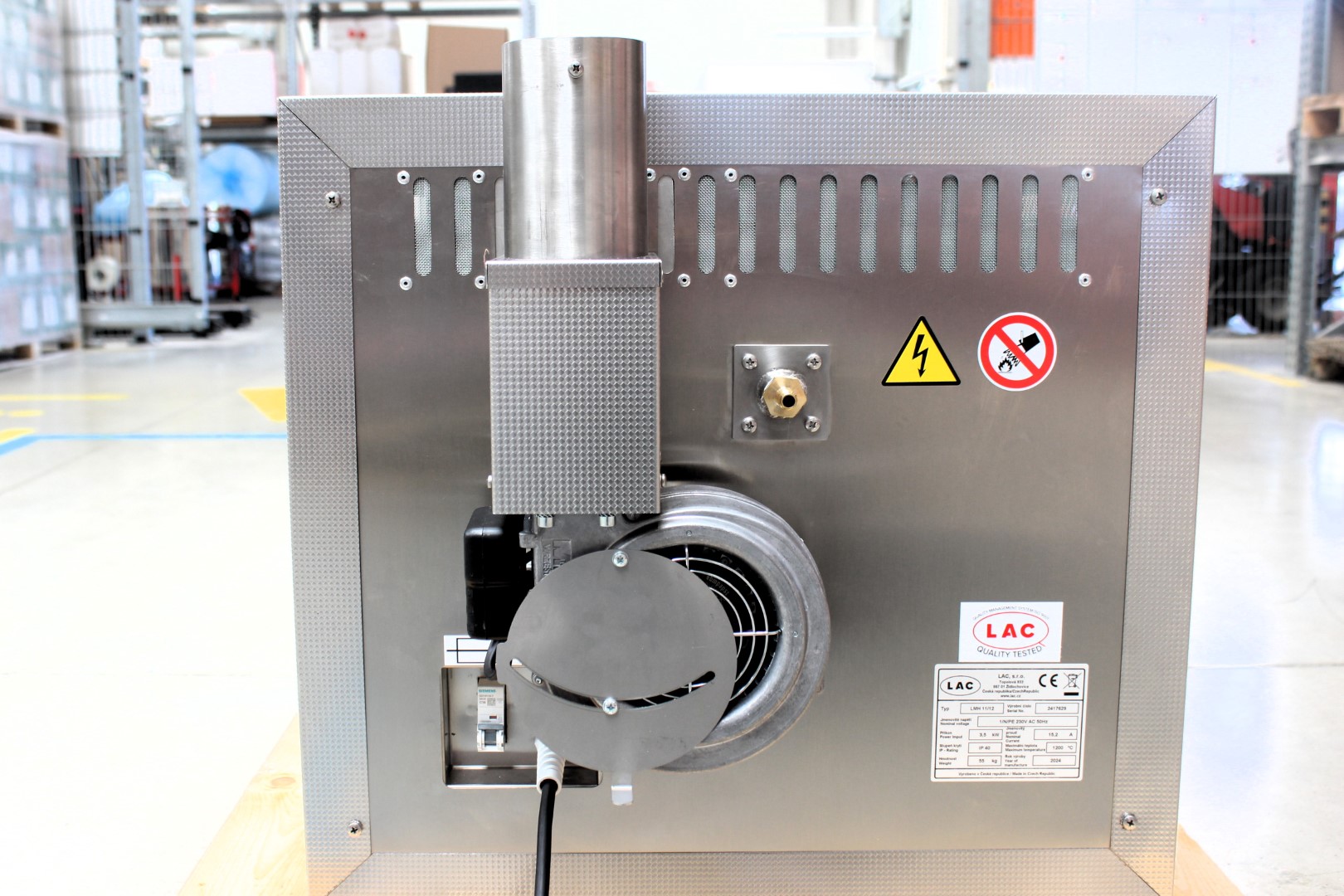
The connection method must be approved for the specific furnace. An arbitrary fan or direct connection to a powerful external extraction system may alter airflow and temperature conditions inside the working chamber. The furnace and extraction system should therefore be planned as one installation.
8. What should be prepared for an LZ ashing furnace?
The LZ series has an intensive fresh-air supply and an exhaust chimney because it is intended primarily for oxidation and ash determination.
The chimney removes process fumes from the working chamber, but their subsequent safe discharge must be appropriate for the particular sample and workplace.
When planning the location, allow for:
- The total furnace height, including the chimney
- Unobstructed space above the chimney
- Connection to the laboratory extraction system
- Access for loading and servicing
- Heat released into the room
The external dimensions stated for an LZ furnace must be read together with the notes in the relevant data sheet or quotation, as the specified equipment height may include the chimney.
9. What if you will be using a protective gas?
A protective-atmosphere inlet is available as optional equipment for selected laboratory furnaces. Installing it requires more than simply running a hose to the furnace.
The following must be defined in advance:
- Which gas will be used
- Where the gas will be supplied from
- How its pressure and flow rate will be controlled
- When it should flow during the programme
- Where it will leave the furnace
- How it will be shut off safely
- Whether the workplace meets the requirements for its use
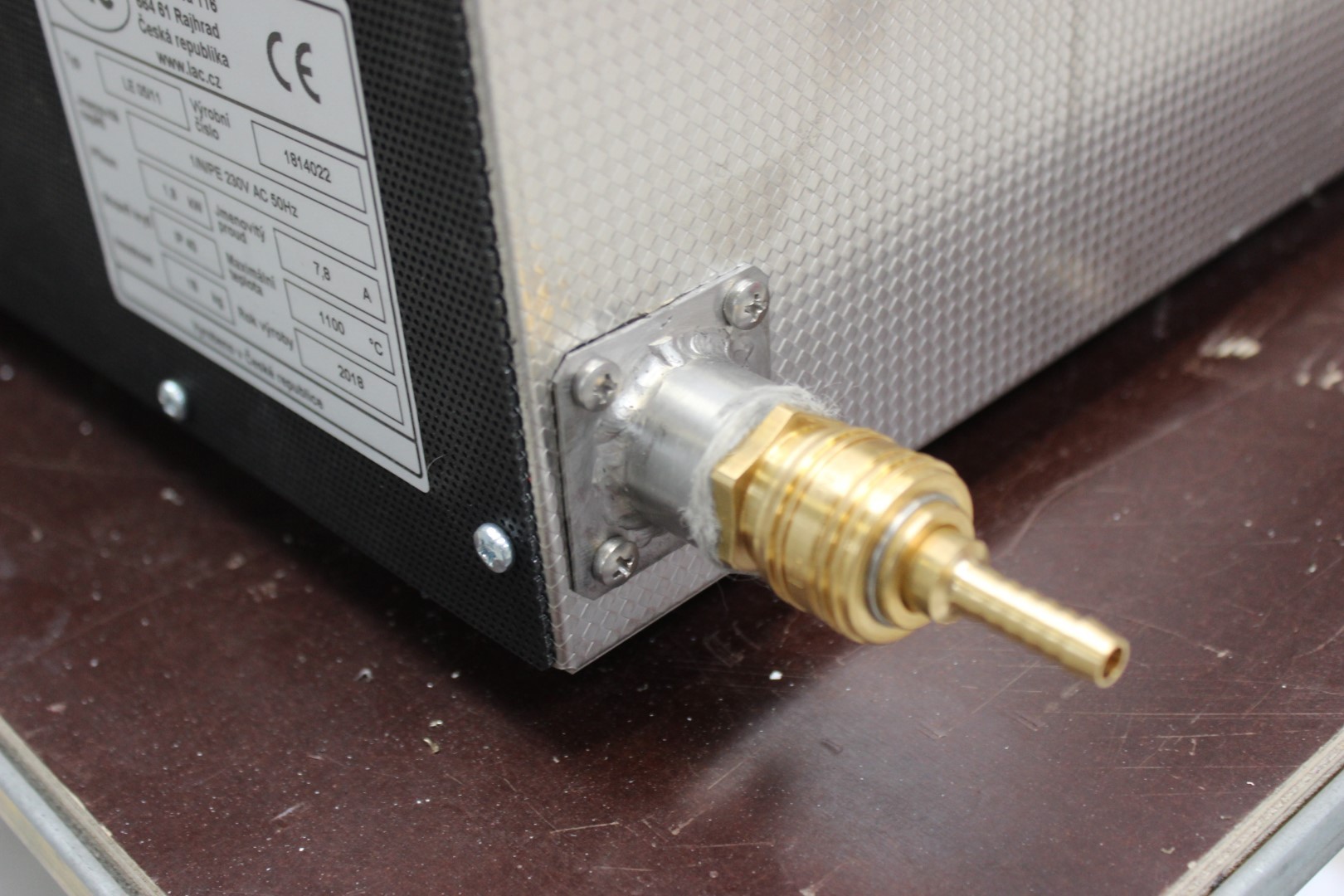
A gas inlet alone does not mean that the furnace is gas-tight. Furthermore, the atmosphere does not disappear after passing through the furnace: it must be discharged safely, taking account of the gas properties and any process fumes.
The specific gas-supply system must be designed by a specialist according to the equipment, gas and local conditions.
10. Does the operator have enough space for safe handling?
When a hot furnace is opened, heat may escape from the working chamber. The door, lid, containers and load may all be at a high temperature.
Before operation begins, establish:
- Who is authorised to operate the furnace
- How the load will be inserted and removed
- Which handling tools will be required
- Where hot containers will be placed
- Which personal protective equipment is appropriate for the specific process
- How the workplace will be marked and secured
- What the operator should do if the process behaves unusually
Suitable equipment depends on the temperature, weight and properties of the load. It is therefore not possible to specify one universal set of tools for every application.
Ergonomics are also important. If an operator has to lift a heavy crucible too high or reach deep into the furnace, a different bench height, loading method or handling aid may be more suitable.
11. What should be checked before the first start-up?
Before commissioning the furnace, follow the supplied instructions and documentation for the specific unit.
In particular, check:
- Whether the furnace was damaged during transport
- The condition of the working chamber, insulation, muffle and heating elements
- That the unit is positioned securely and remains stable
- That ventilation and cooling openings are unobstructed
- That the electrical connection is correct
- That the extraction system is ready
- The connection of any accessories
- The correct installation of the working tube or other removable components
- The controller settings and any temperature limiter
- That operators have been trained
If you find damage to the muffle, insulation, heating elements, cable or any other part, do not start the equipment until it has been assessed by the supplier or a qualified service engineer.
The first cycle and all subsequent operation must comply with the instructions for the specific furnace. A general article cannot replace the manufacturer’s operating and safety instructions.
Installation checklist
| Area | What to check |
|---|---|
| Delivery | Route dimensions, weight and handling method |
| Positioning | Load capacity and stability of the bench or stand |
| Space | Door or lid opening, tube length, chimney and service access |
| Cooling | Unobstructed ventilation openings and removal of heat from the room |
| Electricity | Voltage, phases, power input, circuit protection and connection method |
| Process fumes | Composition, quantity and connection to the workplace extraction system |
| Gas | Gas type, control, supply, discharge and safe shut-off |
| Operation | Handling aids, operator protection and a place for the hot load |
| Documentation | Instructions, rating plate, wiring diagram and operator training |
| First start-up | Condition, connections and equipment settings |
Frequently asked questions
Does a bench-top design mean that the furnace can be placed on an ordinary bench?
Not automatically. The bench must be suitable for the weight of the furnace and load, the thermal conditions and the requirements stated in the instructions. Some bench-top laboratory furnaces weigh more than 100 kg.
Does every laboratory furnace require a three-phase connection?
No. Some models use a single-phase 230 V supply, while others require 400 V. The data sheet and rating plate for the specific version are decisive.
Is it enough to plug the furnace into a socket?
Only if the socket, electrical circuit and circuit protection meet the equipment requirements. The presence of a plug alone is not sufficient confirmation.
Can I cover a ventilation opening so that the furnace releases less heat into the room?
No. Cooling and ventilation openings must remain unobstructed. Covering them may interfere with cooling of the casing or electrical components. The room temperature must be managed by suitable workplace ventilation.
Can the furnace be placed directly against a wall?
The required clearances are specified in the instructions for the particular model and must allow for cooling, connections and servicing. One universal distance cannot be specified for all furnaces.
Do I need extraction if the furnace has a chimney?
Possibly. The chimney carries the atmosphere out of the working chamber, but it may not ensure that process fumes are safely removed from the laboratory. This depends on their composition and quantity.
Do I need to plan for heat released into the room?
Yes. A furnace transfers some heat to its surroundings during operation. Room ventilation and any required cooling must be assessed according to the specific equipment and how it will be used.
Who is permitted to connect the furnace to the electrical supply?
The connection must comply with the equipment documentation and local electrical-installation requirements. Any specialist work required must be carried out by a qualified person.
Plan the installation while selecting the furnace
A suitable operating temperature and chamber volume do not in themselves mean that the equipment can be installed in your laboratory without modifications.
Before ordering, check the delivery route, the load capacity of the intended location, the electrical connection, cooling, extraction and operating conditions. Pay particular attention to tube furnaces, top-loading models, equipment with a chimney and furnaces using a protective gas.
Explore LAC laboratory furnaces
Compare laboratory furnaces with different dimensions, power-supply requirements, loading methods and extraction options.
👉 Explore LAC laboratory furnaces
👉 View the complete range of LAC laboratory furnaces and dryers
Need to check the installation requirements before ordering?
Send us details of the planned installation location, available power supply, extraction system and intended use. LAC technicians will check the requirements of the specific model before it is delivered.
What to remember
Preparing the installation is part of selecting the right laboratory furnace.
Check the delivery route, supporting surface, operating space, electrical supply, cooling, extraction and safe handling conditions before the furnace arrives.