
How to Choose a Laboratory Furnace Controller: Programs, Ramps, Holds and Temperature Recording
How to Choose a Laboratory Furnace Controller: Programs, Ramps, Holds and Temperature Recording
How to match the controller, program capacity, interfaces and data recording to your thermal process
Key insight:
Choose a controller according to the complexity of the complete temperature cycle, the number of different processes and your data-recording requirements—not only according to the furnace’s maximum temperature.
You need to heat a furnace to 800 °C, hold the temperature for two hours and then allow it to cool. Is a basic controller sufficient, or do you need a more advanced model with multiple programs and data recording?
The answer does not depend only on the highest temperature. What matters is the complexity of the complete temperature cycle, the number of different processes you use and whether you need to document the cycle afterwards.
An unnecessarily complex controller can make operation more difficult. A controller that is too simple, on the other hand, may become restrictive when you need to add another ramp or hold, control an exhaust system or store several process profiles.
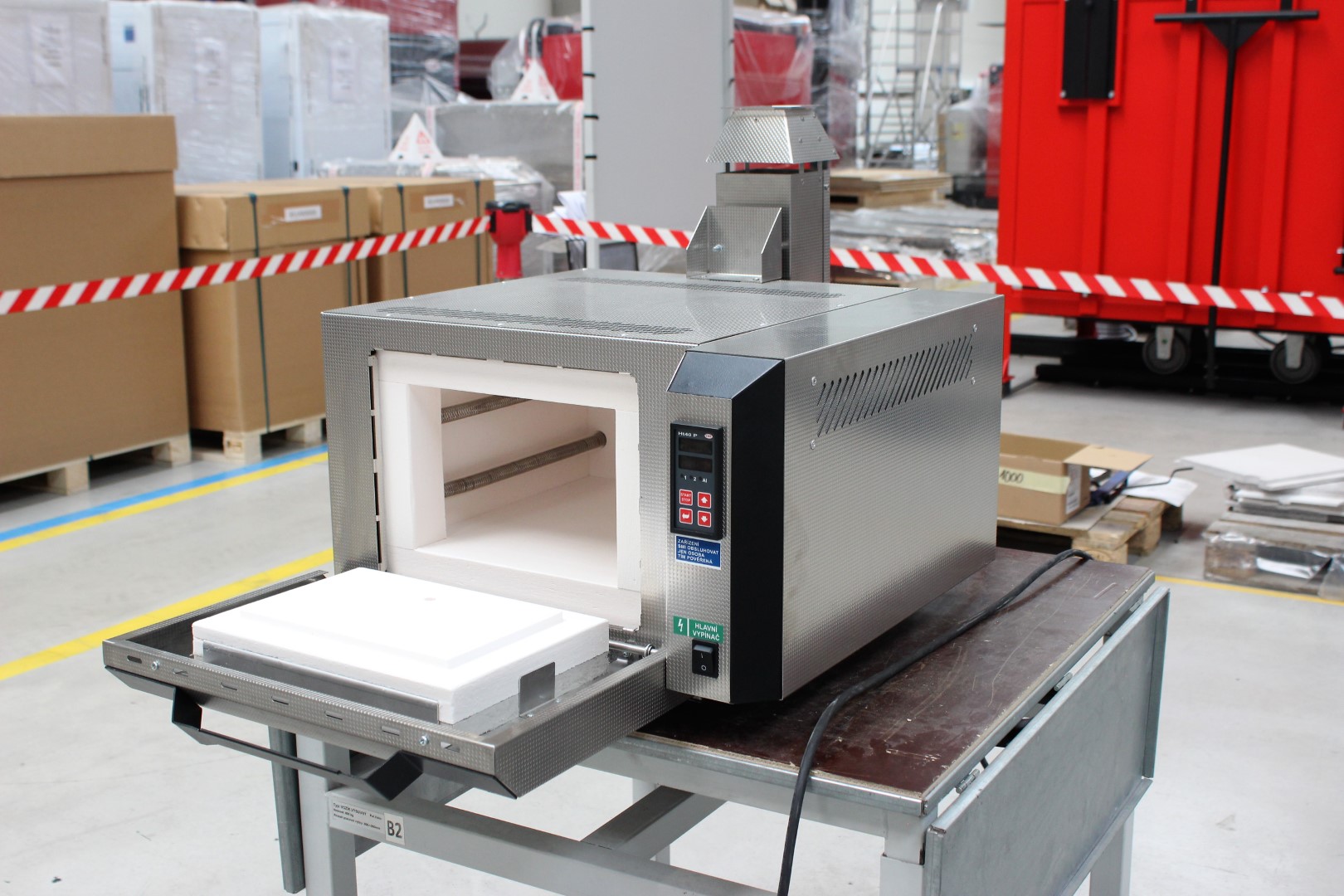
What does a furnace controller actually control?
The controller receives a reading from a thermocouple inside the furnace, compares it with the setpoint and controls the heating according to the deviation.
With a programmable controller, you do not set only one target temperature. You can create a temperature program that specifies, for example:
- How quickly the temperature should rise
- Which target temperature the furnace should reach
- How long it should remain at that temperature
- Whether another heating or cooling ramp should follow
- When the program should end
The controller regulates the temperature profile measured by the control thermocouple. It does not automatically measure the temperature inside the sample or at every point in the chamber.
What do ramp, hold, step and program mean?
You will encounter several basic terms when comparing controllers.
The furnace can follow the specified ramp only if its heating capacity, current temperature, load size and other process conditions allow it. Entering a rate in the controller does not by itself guarantee that the furnace will achieve it under all conditions.
A hold relates to the program and the reading of the control thermocouple. A heavy sample may reach the required temperature later than the atmosphere at the thermocouple position.
The more temperature changes, holds or auxiliary functions a cycle contains, the more steps the controller requires.
The number of programs and the number of steps within one program are two different specifications. A controller may provide enough stored programs, but a particular cycle may still exceed the number of steps available within one program.
Start with the temperature profile, not the controller name
The simplest selection method is to write down the required process section by section.
For example:
- Heat to 200 °C in 60 minutes
- Hold for 30 minutes
- Heat to 800 °C in 180 minutes
- Hold for 120 minutes
- Allow the furnace to cool naturally
This description makes it possible to determine how many ramps and holds the program requires.
Also specify:
- How many different cycles you use
- Whether they will be changed frequently
- Whether the program should start at a specified time
- Whether it needs to control additional equipment during any step
- Whether the process data needs to be stored
You do not need to know the name of the appropriate controller. An actual description of the process is far more useful to a furnace specialist.
When can a simpler controller be sufficient?
A simpler controller makes sense if you use one or only a few straightforward cycles with a limited number of ramps and holds.
In the current documentation for the LZ ashing furnace, for example, the Ht40AL is described as a controller with one program, two ramps and two holds.
This capacity may be sufficient for a cycle such as:
- Ramp to the first temperature
- First hold
- Ramp to the second temperature
- Second hold
If you later need more temperature levels, additional holds or several stored profiles, however, this basic solution may be too limited.
The standard controllers differ between LAC furnace series. According to the datasheet, for example, the LE series uses an Ht60B or Ht40P controller, depending on the configuration.
The specific combination of furnace and controller must therefore be assessed rather than assuming that every model has the same standard equipment.
When do you need more programs and steps?
A more advanced controller is particularly useful when:
- You use several different temperature profiles
- One cycle contains multiple ramps and holds
- Programs need to be recalled repeatedly
- Auxiliary equipment must be controlled during the program
- You require a communication interface or additional recording options
- You expect the laboratory’s requirements to expand
The Ht205, listed in the datasheets as standard or optional equipment for selected LAC series, offers 30 programs with 15 steps each.
According to the LHS datasheet, the Ht200 can also be selected as an accessory for high-temperature furnaces. It offers 30 programs with 25 steps each and a USB interface.
A controller with more steps is not automatically better for every user. For a complex profile, however, check in advance that the complete process fits within the available program capacity.
Can the controller also operate a fan or gas inlet?
In some configurations, yes. An auxiliary controller output can switch additional equipment during individual program steps.
LAC datasheets describe this arrangement, for example, for controlling an exhaust fan on selected furnaces fitted with a compatible controller. Some equipment can also be configured for automatic protective-atmosphere supply.
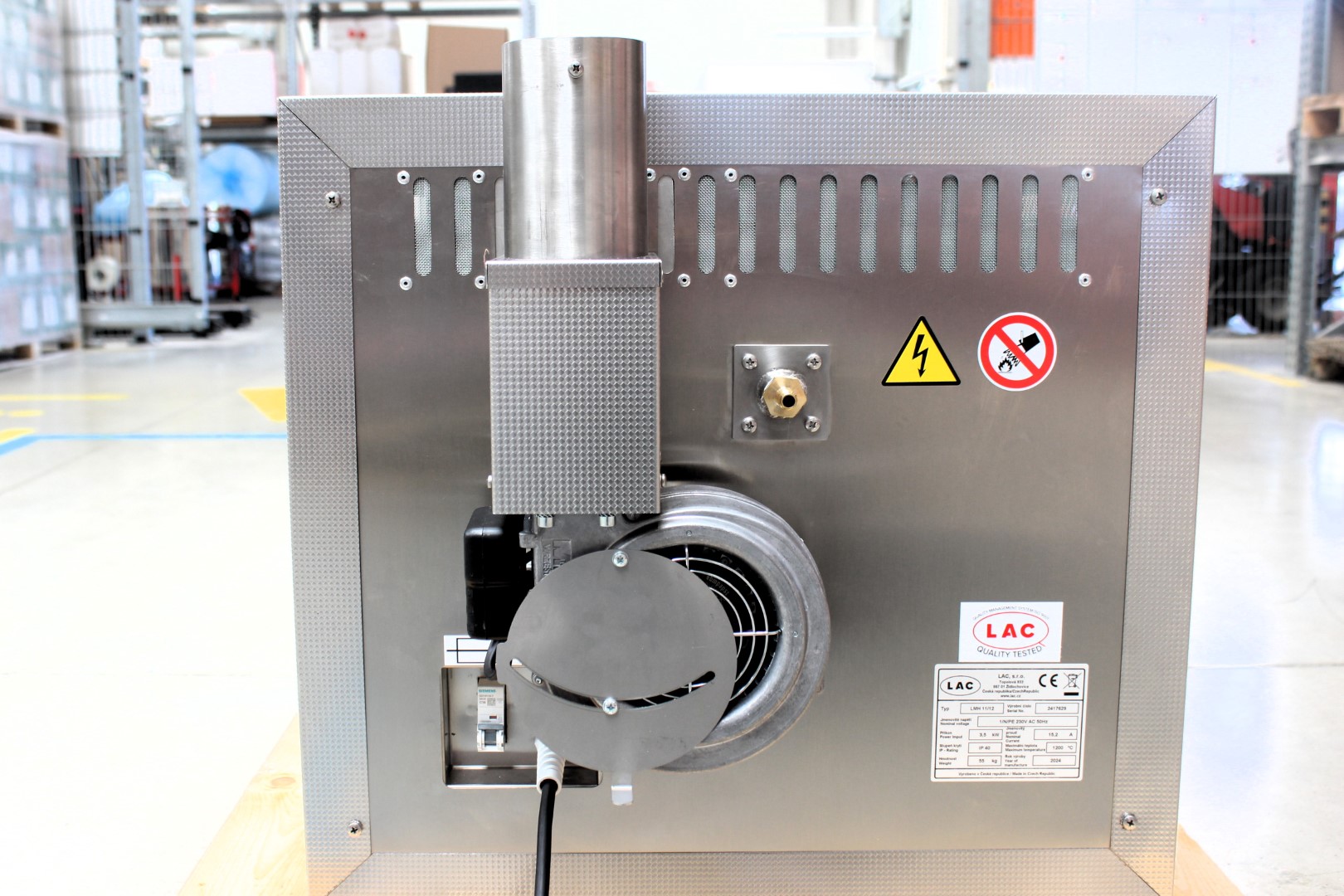
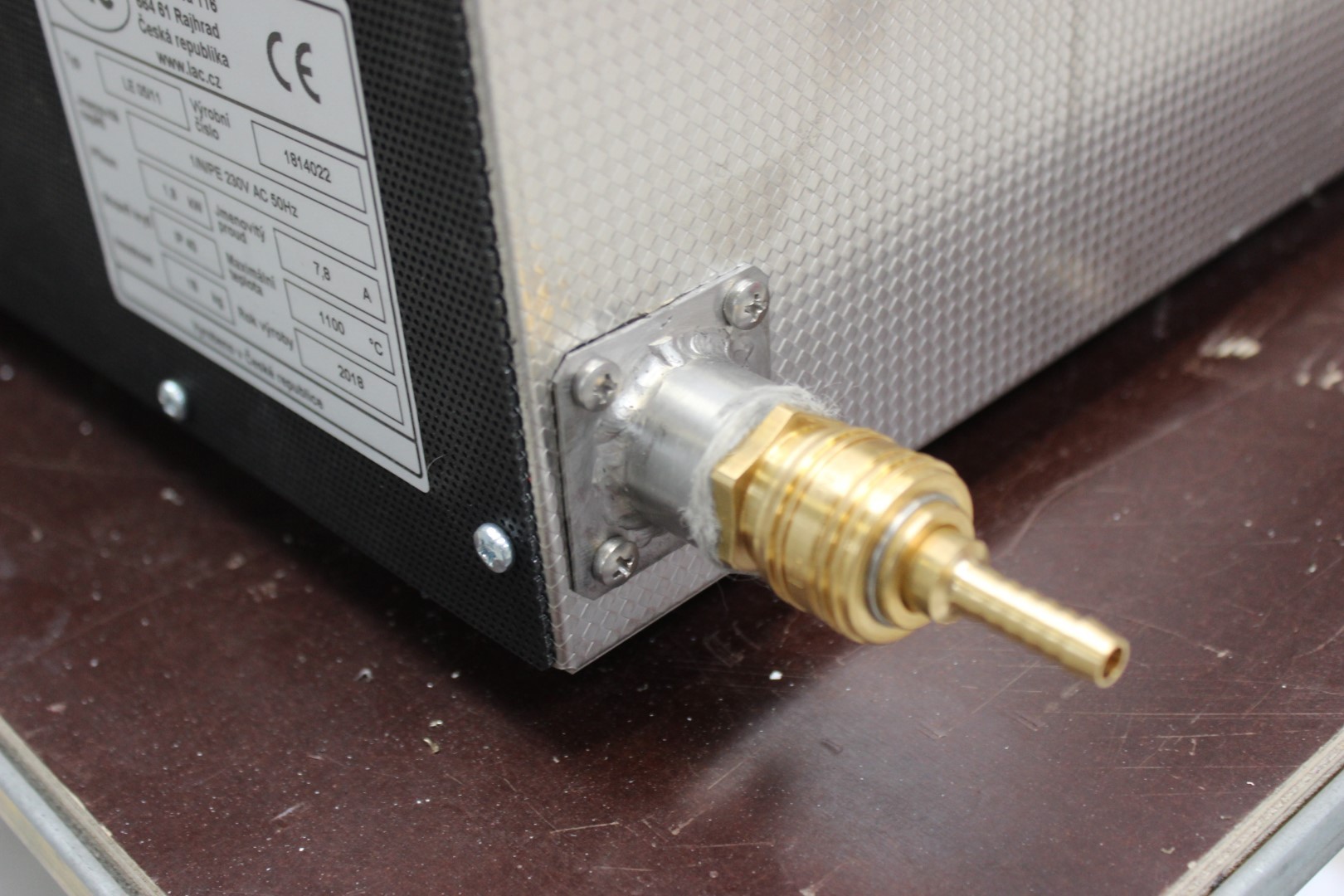
This does not mean that every controller can automatically operate any accessory. You need to verify:
- Whether the selected controller has the required output
- Whether the output is configured for the intended function
- During which steps the device should switch on
- How it should respond when the program ends or is interrupted
- Whether the complete system meets the relevant safety requirements
State any requirement to control a fan, valve or other equipment when placing the order.
Does every controller record temperature data?
No. Three different functions must be distinguished:
A controller that displays temperature and runs a program does not necessarily create a file containing the complete cycle history.
Some advanced controllers have their own memory for measured values. Its capacity and the method of retrieving the data depend on the particular device.
If data needs to be archived, displayed as a graph or processed further, a communication interface and monitoring software may be appropriate.
What does HtMonit provide?
According to the datasheets, an HtMonit set containing software and the appropriate interface is available for selected controllers.
The catalogue description lists functions such as:
- Monitoring connected devices
- Recording values in a database
- Displaying measured values in graphs
- Printing graphs and tables
- Working with program profiles on supported controllers
Available interfaces vary with the particular furnace series and controller. Datasheets mention EIA-485, RS-232, LAN and Ethernet, for example.
The current LMV documentation refers to an HtMonit EV set and the option of an EIA-485 or LAN interface, with LAN linked to the Ht205 controller.
The complete configuration—furnace, controller, interface, software and computer connection—must be checked before ordering.
Recording the controlled temperature is not the same as recording the sample temperature
This distinction is essential.
The software generally stores the value from the thermocouple connected to the controller. This describes the temperature at the furnace measuring point. It may not correspond exactly to the temperature:
- Inside a heavy sample
- On its surface
- Elsewhere in the chamber
- Between several samples positioned in different locations
If you need to demonstrate the temperature of a particular product or material, an additional measurement may be necessary. Its position and design must be suitable for the temperature, atmosphere and furnace construction.
A graph from the controller documents the profile measured by the control sensor. Without further evidence, it does not automatically establish the temperature of the entire load.
The LG gravimetric furnace also records weight
The LG gravimetric furnace is a specific case. It combines a chamber furnace, precision laboratory balance and software for displaying and recording temperature and weight in relation to time.
The output can include a curve showing sample weight loss in relation to temperature and time during the thermal process.
This function cannot be obtained simply by replacing a standard controller with a model offering more programs. It is a separate measuring system comprising the furnace, balance, converter and software.
What does calibration of the measuring input mean?
LAC datasheets list calibration of the controller measuring input as an option for selected furnace series. The current LZ documentation also offers calibration of the measuring loop comprising the control thermocouple and controller.
It is important to define in advance what needs to be calibrated:
- The controller itself
- The thermocouple and controller as a measuring chain
- An additional measuring sensor
- Temperature distribution within the working space
These are not the same measurements.
Calibration of the control measuring chain does not by itself establish that the temperature is identical throughout the furnace volume. Verifying temperature distribution requires measurements at several points under predefined conditions.
If your laboratory works under its own quality system or a specific procedure, state the required scope and form of documentation in your enquiry.
The controller, thermocouple and limit unit perform different roles
These components are sometimes confused:
Not every laboratory furnace has a limit unit as standard. Some furnace datasheets explicitly state that no such unit is fitted, while the described LMV configuration includes an independent limit unit.
The requirement for independent protection cannot therefore be inferred from the controller name alone. It must be checked in the current specification for the particular furnace.
How should you choose the right control system?
Start with what you actually need:
| Requirement | What to check |
|---|---|
| One simple cycle | Number of available ramps and holds |
| Several recurring profiles | Number of storable programs |
| Complex temperature profile | Number of steps in one program |
| Control of an exhaust fan or valve | Auxiliary outputs and their configuration |
| Process monitoring on a computer | Communication interface and compatible software |
| Archiving measured values | Data logger or HtMonit |
| Data transfer without a computer connection | USB availability on the particular controller |
| Evidence of sample temperature | A separately designed load-temperature measurement |
| Quality-system requirement | Calibration scope and output documentation |
| Independent temperature limitation | Limit unit in the particular configuration |
What should you send the manufacturer?
To select a controller, prepare:
- The complete temperature cycle
- Required heating and cooling rates
- The duration of each hold
- The number of different programs used
- How frequently they will run
- Any requirement to control a fan, valve or other device
- Data recording and export requirements
- The required computer connection method
- Calibration requirements
- Whether you need to document the furnace temperature or the load temperature itself
If the exact heating rate has not yet been defined, send at least your current operating procedure. A furnace specialist can assess which parameters still need to be specified.
Frequently asked questions
How many steps does my program need?
It depends on the number of ramps, holds and other programmed actions. First divide the cycle into individual sections, then compare it with the controller capacity.
Is a controller with more programs more accurate?
Not automatically. The number of programs describes the capacity for storing process profiles, not measurement accuracy or temperature distribution within the chamber.
Does every programmable controller store the temperature history?
No. Programming and data recording are separate functions. Storage, transfer and export options must be checked for the particular controller and interface.
Does a graph from the controller prove the sample temperature?
Not automatically. The graph shows the value measured by the controller thermocouple. The sample temperature may differ according to its weight, material and position.
Can the controller switch an exhaust fan?
In selected configurations, yes. The controller must have a suitable auxiliary output and the system must be configured for this function.
Is HtMonit included as standard?
According to the datasheets, HtMonit is offered as an accessory for selected series together with the required interface. Standard equipment varies between furnaces.
Is controller calibration the same as a temperature-uniformity measurement?
No. Calibration of a controller or measuring chain relates to the particular measuring input. Temperature distribution is verified at several points in the working space under defined conditions.
Choose the controller for the process, not for the number of features
The best controller is not the one with the longest list of specifications. It is the model that can reliably control your temperature cycle, store the required profiles and provide data in a form you will actually use.
Start with the temperature profile and documentation requirements. Only then choose the number of programs and steps, interfaces and software.
Explore LAC laboratory furnaces and control options
Compare laboratory furnaces with different controllers, program capacities, communication interfaces and process-recording options.
👉 Explore LAC laboratory furnaces
👉 View the complete range of LAC laboratory furnaces and dryers
Not sure which controller and recording options your process requires?
Send us your required temperature cycle and describe the data you need from the process. LAC specialists will assess the appropriate controller, communication interface and available recording and calibration options.
What to remember
The controller should reflect the complexity of your temperature profile, the number of recurring processes and your documentation requirements.
Define the complete cycle, auxiliary equipment, data recording and calibration requirements before selecting the number of programs, steps and interfaces.