
How to Choose the Right Laboratory Furnace Size: Chamber Volume Is Not Enough
How to Choose the Right Laboratory Furnace Size: Chamber Volume Is Not Enough
Why internal dimensions, load weight, loading method and the required clearance matter
Key insight:
Chamber volume alone does not tell you whether a particular sample will fit inside a furnace. Always check the internal dimensions, shape of the working space, total load weight and loading method.
You have a sample measuring 200 × 150 × 100 mm and need a furnace that will accommodate it. Can you simply convert its volume into litres and choose a model accordingly?
No. A low, wide chamber and a narrow, deep working space can have the same volume. A sample may therefore fit easily into one ten-litre furnace but not fit into another furnace of the same volume at all.
In addition to the internal dimensions, the weight of the load, loading method and the clearance required around the samples for the process to run correctly are also important.
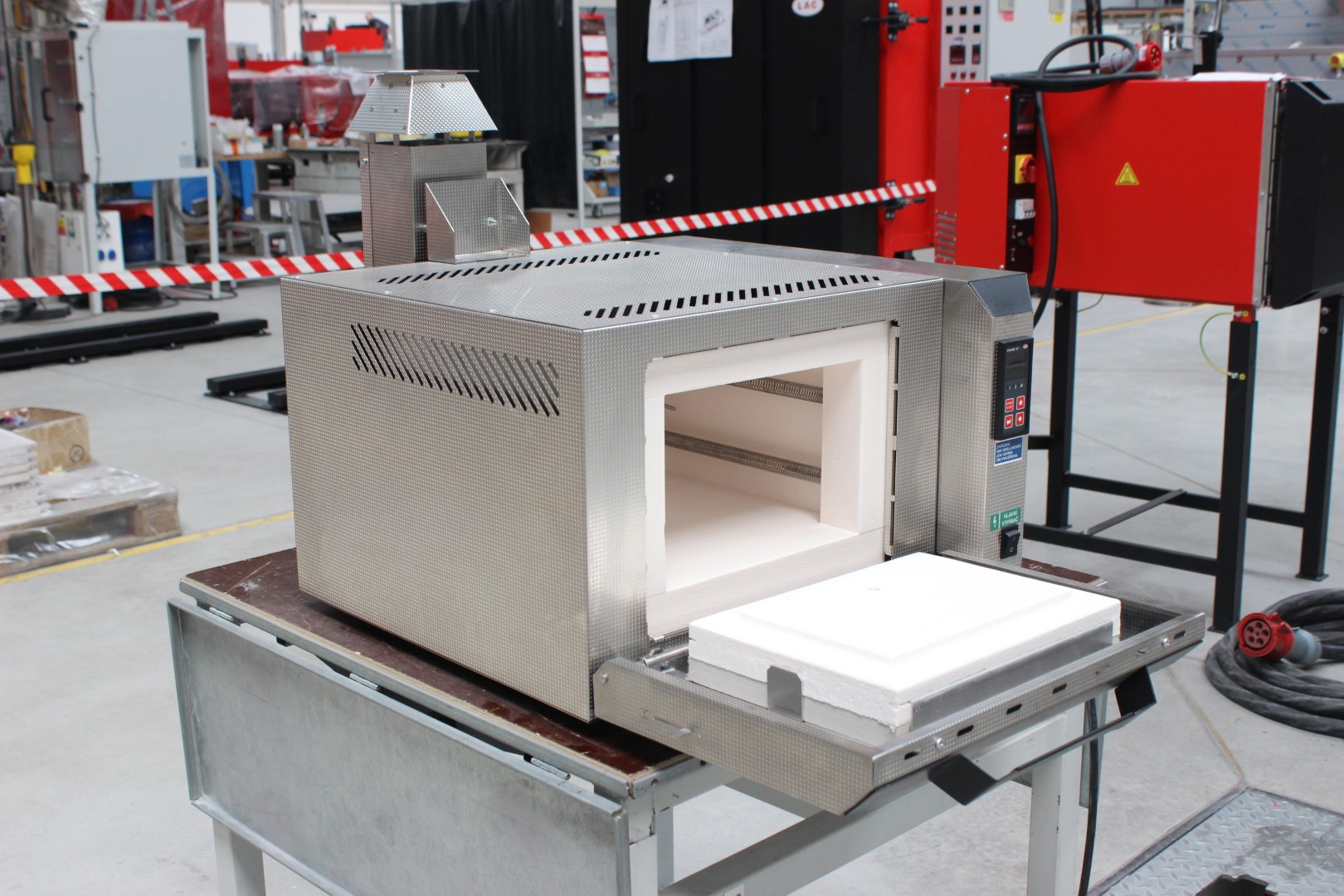
What does laboratory furnace volume mean?
Volume in litres expresses the approximate geometric size of the working space. In LAC laboratory furnaces, it is also often reflected in the model designation.
For example:
- L 03/12 has a chamber volume of approximately 3 litres
- LMH 07/12 has a chamber volume of approximately 7 litres
- LH 30/13 has a chamber volume of approximately 30 litres
The number before the slash does not always correspond exactly to the actual volume. The LE series, for example, includes the LE 09/11, with an actual chamber volume of 9.4 litres, and the LE 15/11, with a volume of 14.4 litres.
Volume is therefore useful for an initial comparison, particularly between models in the same series. To check whether a specific load will fit inside a furnace, you need its internal dimensions.
Why are internal dimensions more important than litres?
Consider two models with a similar chamber volume:
| Model | Chamber volume | Internal dimensions |
|---|---|---|
| LE 09/11 | 9.4 l | 190 × 170 × 290 mm |
| LH 09/13 | 9 l | 230 × 170 × 230 mm |
Both working spaces have a volume of approximately nine litres. The first is narrower and deeper; the second is wider and shallower.
The LE 09/11 may be more suitable for a long sample, while the chamber shape of the LH 09/13 may better accommodate a wider item. The number of litres alone does not reveal this difference.
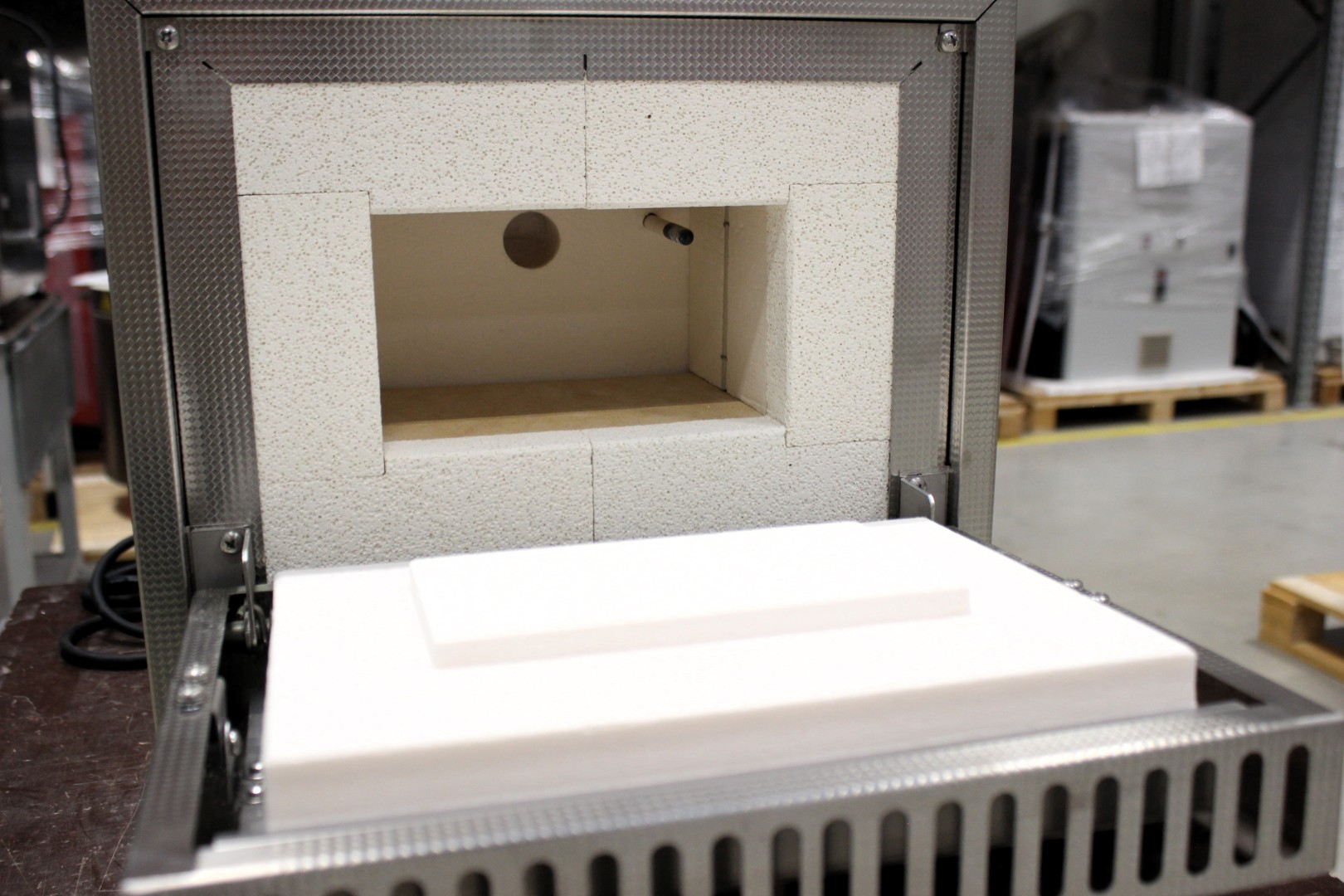
A similar comparison can be made between muffle furnaces:
| Model | Chamber volume | Internal dimensions |
|---|---|---|
| LMH 07/12 | 7 l | 170 × 170 × 275 mm |
| LMV 05/12 | 5 l | Diameter 165 × height 230 mm |
The LMH has a horizontal working space and is loaded from the front. The LMV has a cylindrical vertical muffle into which the sample is lowered from above. The difference is therefore not simply two litres, but a completely different shape and handling method.
Practical advice
Do not state only the required furnace volume in your enquiry. Provide the maximum width, height and depth of the complete load.
What must be included in the load dimensions?
The furnace load is more than the sample itself. You will usually place additional items in the furnace, such as:
- A crucible, dish or other container
- A base or protective plate
- A stand, holder or measuring fixture
- Shelves, where required
- Multiple samples processed in the same cycle
If the component itself is 150 mm high but stands on a 20 mm base, you need to allow at least 170 mm. Additional clearance may be required for safe loading and suitable process conditions.
There is no single universal value for the required clearance. It depends on:
- The construction and position of the heating elements
- The method of heat transfer
- Atmosphere flow
- Sample shape
- Number of items
- Temperature-distribution requirements
- Handling of the load
The load should not be designed to fill the working space right up to the walls unless the arrangement has been assessed by the furnace manufacturer.
Total weight can become the limiting factor before volume
A large but lightweight sample may impose a smaller load on the furnace floor than a small metal component or several heavy crucibles.
In addition to chamber volume, datasheets therefore specify the maximum floor load. This varies between furnace series and sizes.
According to the current datasheets, for example:
| Model | Chamber volume | Maximum floor load |
|---|---|---|
| L 03/12 | 3 l | 4 kg |
| L 05/12 to L 15/12 | 5–15 l | 6 kg |
| LE 05/11 to LE 15/11 | 5–14.4 l | 6 kg |
| LMH 04/12 and LMH 07/12 | 4 and 7 l | 10 kg |
| LMH 11/12 | 11 l | 15 kg |
| LMV 02/12 and LMV 05/12 | 2 and 5 l | 5 kg |
| LH 06/13 and LH 09/13 | 6 and 9 l | 10 kg |
| LH 15/13 | 15 l | 15 kg |
| LH 30/13 | 30 l | 25 kg |
This weight must include everything supported by the furnace floor: the sample, containers, bases and any other fixtures.
A larger chamber volume does not automatically mean a proportionally higher load capacity. According to the datasheet, for example, all standard LE models have a maximum floor load of 6 kg even though their chamber volumes range from 5 to 14.4 litres.
Maximum floor load is not the same as area load
The total load capacity indicates how much weight the furnace floor can support. It does not mean that the entire weight can be concentrated at a few small points.
Imagine a heavy sample standing on four narrow feet. Its total weight may be within the maximum floor load, but the load is concentrated over a very small area.
For this reason, some furnace datasheets also specify a maximum area load. For LHS furnaces, for example, the documentation specifies both the total floor load for each model and a maximum area load of 0.1 kg/cm².
If the load has a small contact area, sharp edges or point supports, mention this in your enquiry. A suitable base or another method of distributing the weight may be required.
Its material and construction must, however, be suitable for both the operating temperature and the chemical environment of the process.
How does load weight affect heating?
Weight affects more than the furnace floor. It also influences the temperature cycle.
A heavy load generally takes longer to heat through. The controller measures temperature with a thermocouple positioned at a particular point in the furnace; it does not automatically measure the temperature inside the sample.
The furnace may already display the setpoint while the temperature inside a heavy component is still lagging behind.
The result depends on:
- The sample material and weight
- Its thickness and shape
- Its initial temperature
- The container used
- The heating rate
- Its position within the working space
If the specified temperature must also be reached inside the load, the process may need to be verified by measurement or a practical test.
The furnace’s rated power alone does not tell you how long your specific load will take to heat through.
How many samples can be processed in one cycle?
This cannot be determined from chamber volume alone.
It depends on:
- The sample dimensions
- Whether samples can be placed beside or above one another
- Whether shelves will be used
- The clearance required by the process
- Whether samples or containers obstruct atmosphere flow
- Whether their arrangement affects the required temperature distribution
If you need to process twelve identical crucibles, send their dimensions and proposed arrangement. A simple sketch is usually more useful than saying: “We need a furnace of about ten litres.”
A furnace with sufficient mathematical volume may not have the right footprint for the required number of containers.
The loading method also matters
Working-space dimensions are only part of the issue. You must also be able to place the load inside safely and remove it again after processing.
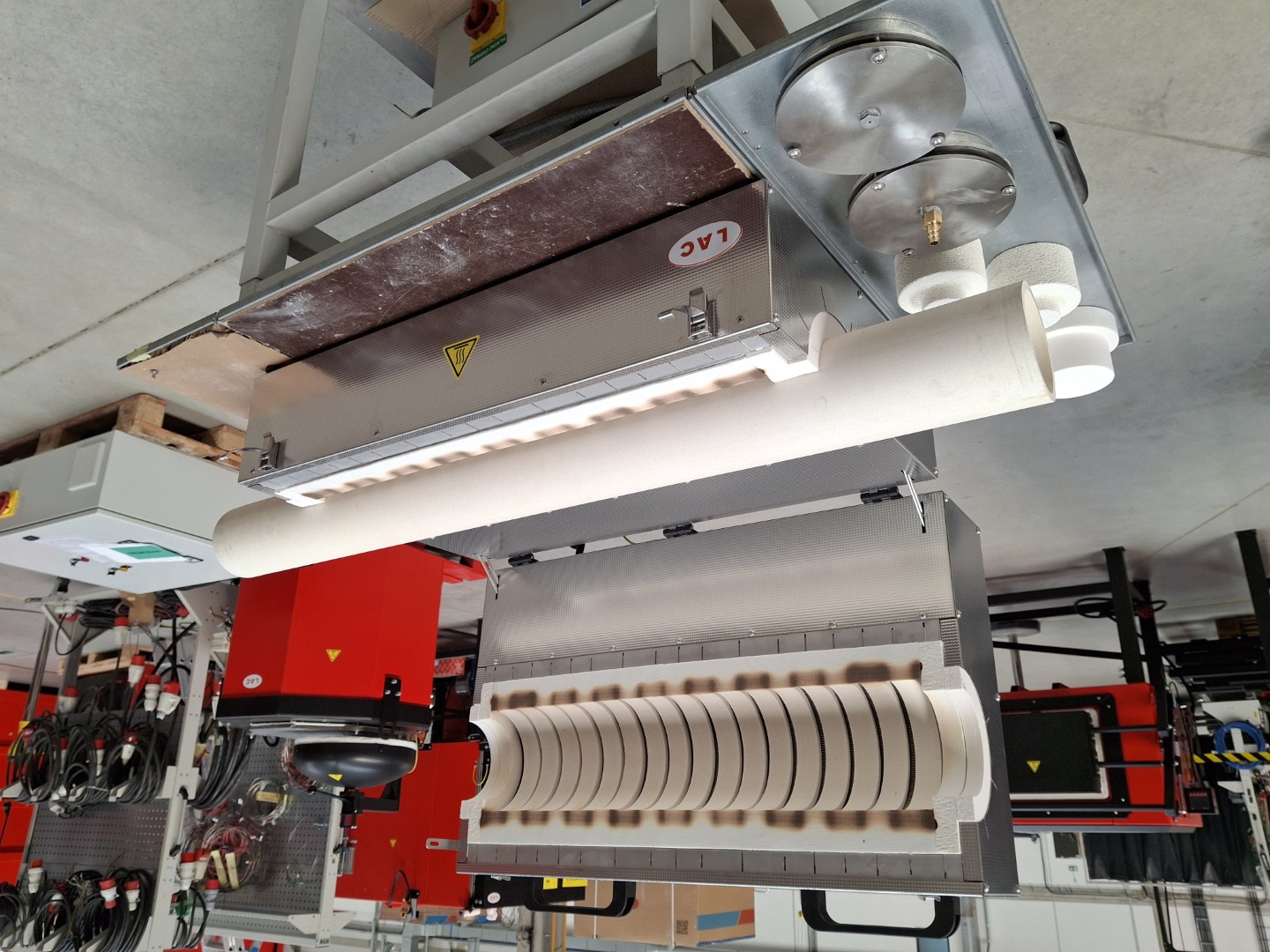
The standard LT series uses tube bores of 50, 75 or 100 mm and heated lengths of 300, 500 or 750 mm, depending on the model.
The sample’s position within the heated zone and any required tube closure must also be considered.
Internal dimensions are not the external dimensions of the furnace
A small working chamber does not mean that the complete furnace will be equally small.
Insulation, the heating system, casing, controller and electrical components can make the external dimensions considerably larger. The LMH 07/12, for example, has internal dimensions of 170 × 170 × 275 mm, while its external dimensions are 490 × 540 × 720 mm according to the datasheet.
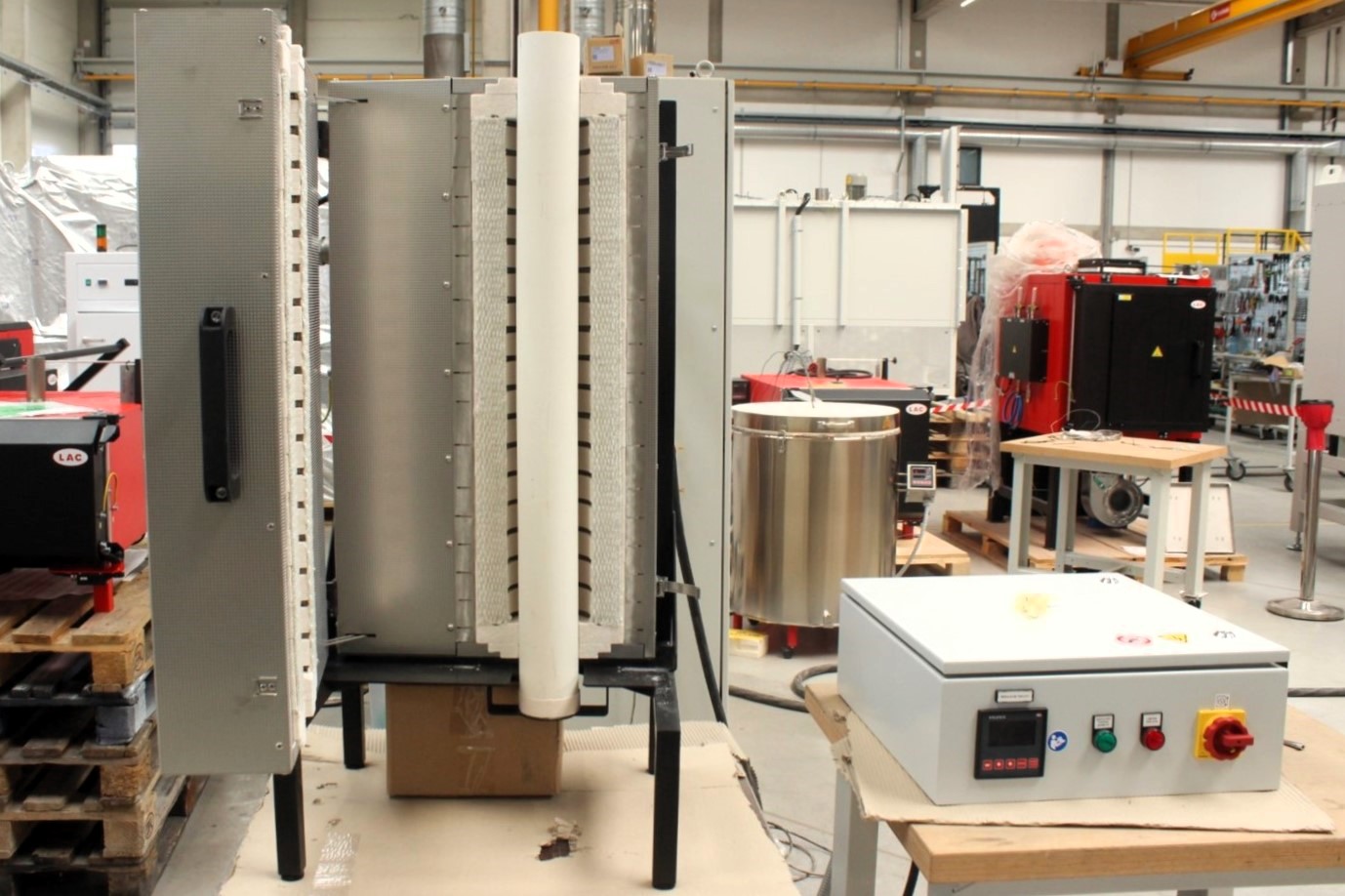
Before ordering, check:
- The space available for the furnace itself
- The clearance required to open the door or lid fully
- Operator access
- The clearances specified in the operating instructions
- Space for the chimney, extraction equipment or other accessories
- The route along which the furnace will be moved into position
The furnace must not only accommodate the sample. It must also pass through the laboratory door and fit safely on the prepared bench or stand.
How much spare capacity should you allow for the future?
It is sensible to consider whether the number or size of samples may change later. An unnecessarily large furnace should not, however, be selected merely “to be on the safe side”.
A larger model may mean:
- A higher purchase price
- More demanding space requirements
- Higher rated power or a different electrical connection
- A longer or otherwise different real-world cycle
- More difficult handling
Define the expected future requirement specifically. For example:
“We currently process four crucibles, but within two years we expect to process eight. Their dimensions will remain unchanged.”
This makes it possible to assess the actual size required. A general request for “a larger furnace just in case” is less useful for selecting the correct model.
What should you send the manufacturer to check the furnace size?
A simple sketch of the complete load is the most reliable starting point. It does not need to be a professional technical drawing.
- The dimensions of one sample
- The number of items per cycle
- The dimensions and weight of the containers
- The total weight of the load
- The proposed arrangement
- The dimensions of holders, bases and shelves
- The loading and handling method
- Any requirement to measure temperature inside the sample
- The expected future increase in capacity
For an unusual shape, include a photograph. For a heavy component, also indicate the areas through which it will rest on the furnace floor or base.
Frequently asked questions
Is it enough for the sample volume to be smaller than the furnace volume?
No. The actual internal dimensions and shape of the working space are decisive. The sample must be capable of being loaded safely and must also comply with the maximum floor load.
Do the crucible and base count towards the maximum load?
Yes. The maximum floor load applies to the total weight of everything supported by the furnace floor.
Can I fill the entire working space with samples?
This cannot be recommended without assessing the particular process. The load arrangement can affect heat transfer, atmosphere flow and the thermal conditions between individual items.
Does a larger furnace process more samples faster?
Not automatically. Increasing the number or weight of samples changes the thermal load. The actual cycle must be assessed for the specific load and required temperature.
How can I determine the temperature inside a heavy sample?
The temperature shown by the controller is based on the furnace control thermocouple. If you need to know the temperature inside the sample, an additional measurement designed for the particular process may be necessary.
Is horizontal or vertical loading better?
It depends on the shape and weight of the sample and how it will be handled. A horizontal chamber is usually loaded from the front, while the LMV allows a sample to be lowered into a cylindrical muffle from above.
Should I choose a larger furnace to allow spare capacity?
Only if you have a specific expectation of the future load. An unnecessarily large model can increase space, connection and purchase requirements.
Measure the complete load first
Chamber volume in litres helps you compare model sizes quickly. The suitability of a furnace, however, is ultimately determined by the internal dimensions, chamber shape, total weight and loading method.
Remember to include containers, bases, holders and the clearance required for handling. For heavy samples, check not only the total floor load but also how the weight is distributed across the floor.
Explore LAC laboratory furnaces
Compare chamber, muffle, tube and high-temperature laboratory furnaces with different working-space dimensions and load capacities.
👉 Explore LAC laboratory furnaces
👉 View the complete range of LAC laboratory furnaces and dryers
Not sure whether your complete load will fit inside the selected furnace?
Send us its dimensions, total weight and a simple sketch showing the samples, containers, bases and holders. LAC specialists will check whether the load matches the working space, load capacity and loading method of the selected model.
What to remember
Chamber volume is useful for an initial comparison, but it does not determine whether a specific load will fit.
Measure the complete load, check its total weight and contact area, and consider the required clearance and loading method before selecting a furnace.