
Fresh-Air Supply and Fume Extraction from a Laboratory Furnace: When Is a Chimney Enough and When Is Forced Extraction Required?
Fresh-Air Supply and Fume Extraction from a Laboratory Furnace: When Is a Chimney Enough and When Is Forced Extraction Required?
How to distinguish process air, natural ventilation, forced extraction and furnace-casing cooling
Key insight:
A fresh-air supply, ventilation chimney, forced extraction and furnace-casing cooling do not perform the same function. They are not interchangeable.
The sample releases vapour, smoke or other fumes during heating. Is opening the furnace ventilation port enough? Do you need to connect an exhaust fan? And where should the furnace atmosphere go?
The answer depends on what the sample releases, how much is released and what role airflow plays in the process itself.
Each method of supplying or removing air addresses a different requirement. The complete solution must therefore be selected according to the process, furnace and workplace.
First determine why air needs to flow through the furnace
Before choosing any accessories, ask a simple question:
Does my process need the airflow, does the furnace need it for protection, or is it required for workplace safety?
Fresh air inside a furnace can:
- Supply oxygen for oxidation or combustion
- Help remove moisture and the atmosphere generated by the process
- Affect the course of the thermal process
An exhaust, by contrast, removes atmosphere from the working space. Depending on the particular arrangement, extraction may be natural or forced.
Neither fresh-air supply nor extraction automatically ensures that all fumes are discharged safely outside the building. The complete solution must reflect their composition and quantity as well as the requirements of the particular workplace.
Ventilation openings in the casing do not remove fumes from the sample
You may see ventilation openings or a fan on the casing of a laboratory furnace. This does not necessarily mean that the working chamber is being extracted.
In some furnaces, airflow around the casing and electrical components is used for cooling.
According to its datasheet, for example, the LH series has a fan that cools the outer casing and the compartment containing the electrical components. LHS high-temperature furnaces use similar forced cooling.
This air does not flow through the working space in the same way as process air supplied to the load.
A cooling fan:
- Does not automatically supply oxygen to the sample
- Does not replace an exhaust fan
- Does not confirm that the furnace is suitable for a process that produces fumes
When reading a datasheet, distinguish between casing cooling and working-chamber ventilation.
What does a ventilation chimney do?
A ventilation or exhaust chimney provides a route through which atmosphere can leave the furnace working space.
Some laboratory furnaces in the following series, for example, have a chimney as standard:
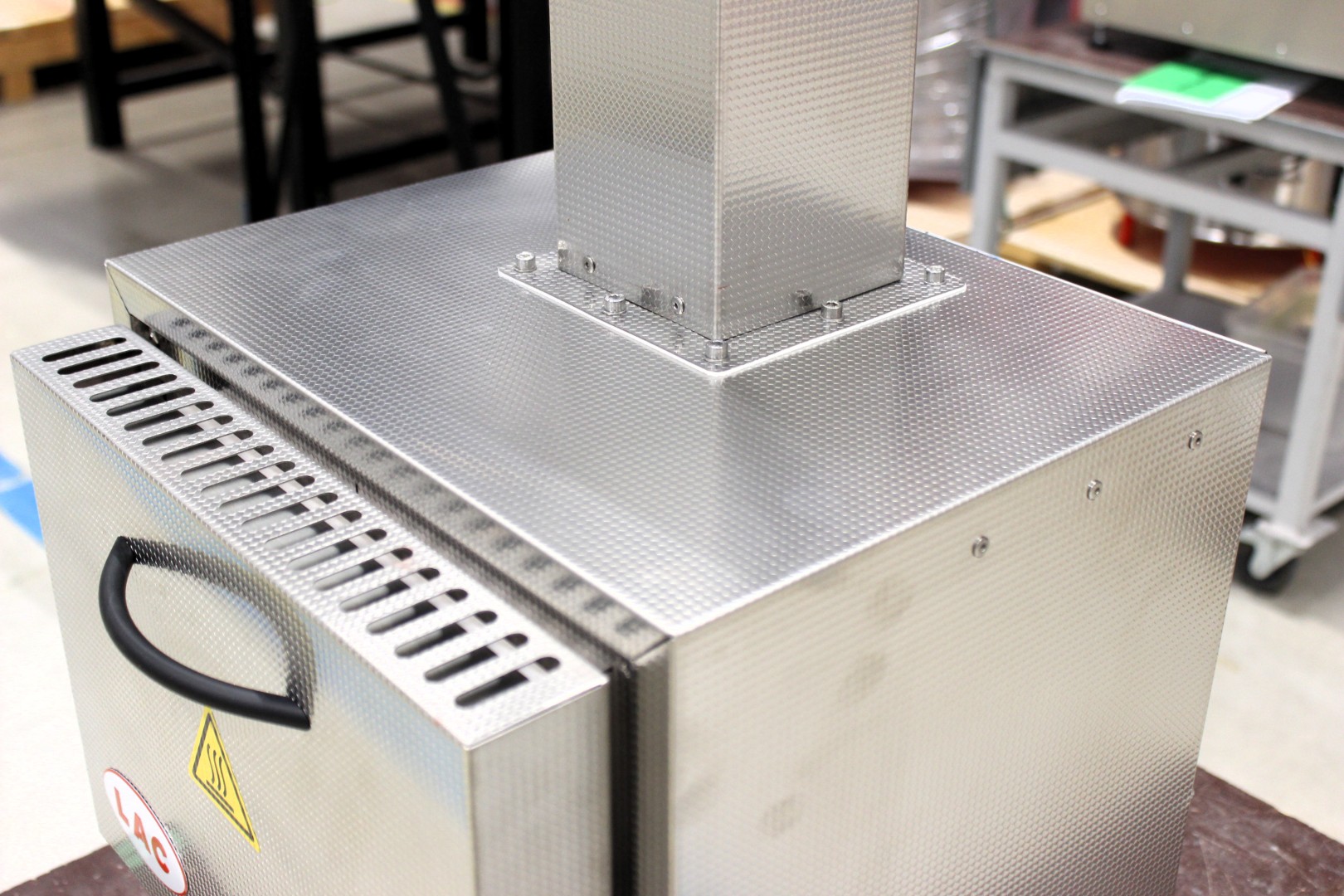
L • LE • LMH • LH • LG
The equipment supplied with a particular model must always be checked in its current datasheet.
A chimney can support natural discharge of atmosphere from the chamber, but its presence alone does not tell you:
- How much atmosphere or fumes it can remove
- How quickly the air inside the furnace is exchanged
- Whether it will prevent substances from escaping into the room
- Whether ductwork can be connected to it directly
- Whether it meets the workplace’s occupational-hygiene and safety requirements
A furnace chimney is not automatically a complete extraction system.
When can natural ventilation be sufficient?
Natural ventilation may form part of the solution when a process generates a small quantity of non-hazardous atmosphere and controlled air exchange is not required.
Without information about the sample, however, it is impossible to say whether a chimney will be sufficient.
We need to know:
- What is released
- At what temperature
- In what quantity
- For how long
- How frequently the process will run
- Where the atmosphere goes after leaving the furnace
A one-off test with a few grams of material presents a different situation from regular processing of a larger load for several hours every day.
If the substances have a strong odour, cause irritation, are harmful to health, flammable or otherwise hazardous, their removal cannot be based simply on the assumption that they will “leave through the chimney”. Both the process and the workplace require a professional safety assessment.
When is forced extraction required?
Forced extraction uses a fan or another device to actively assist the removal of atmosphere from the furnace.
For selected LAC furnaces, an ejector with an exhaust fan and draft diverter is available as an accessory.
Depending on the furnace series and controller selected, the fan may also be controlled during individual programme steps.
This solution is listed as optional equipment for certain versions of the L, LE, LMH, LH, LHS and LG series. It is not automatically included with every laboratory furnace.
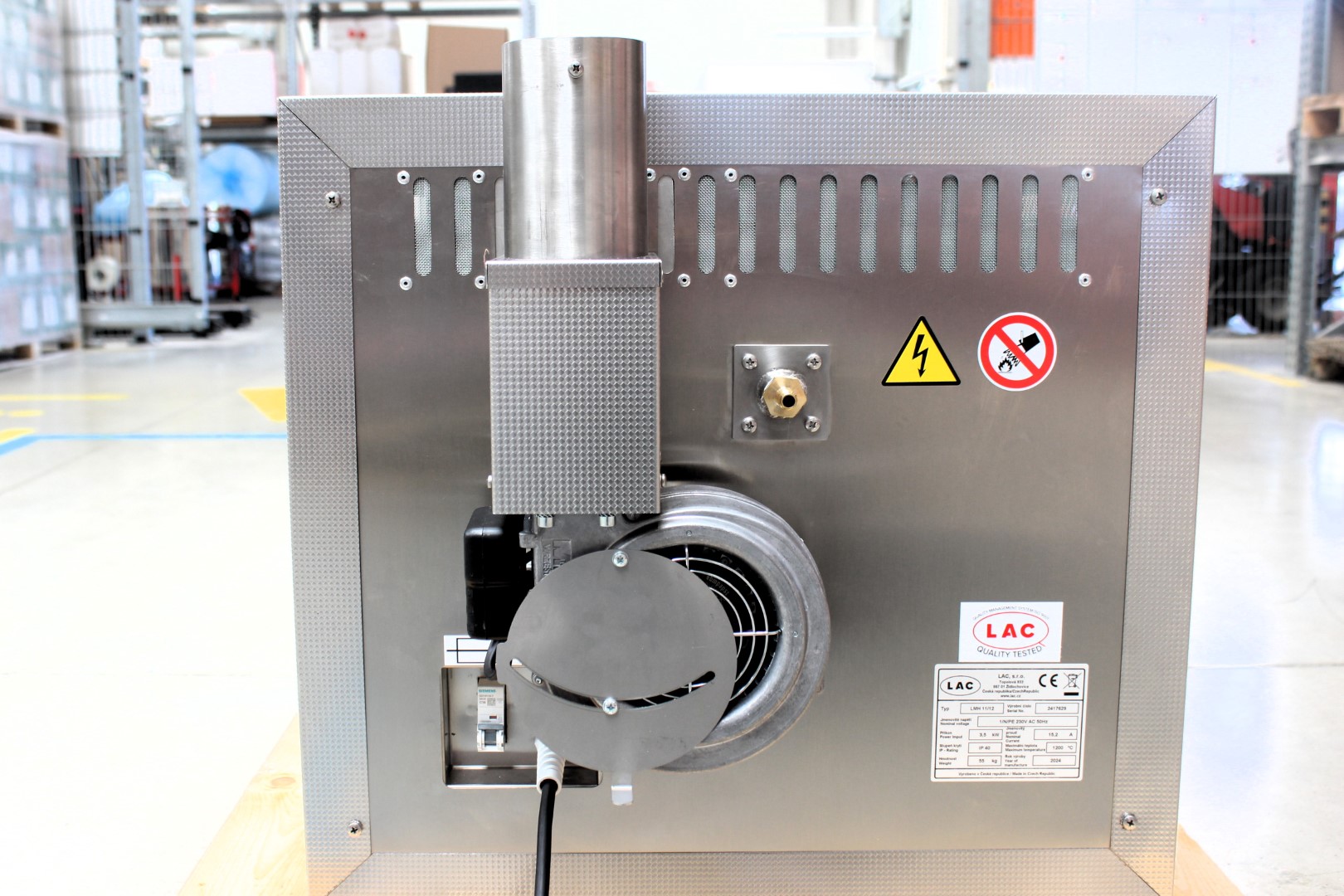
Forced extraction may be required when:
- Natural draught is insufficient for the process
- The atmosphere generated needs to be removed more actively
- Extraction needs to switch on during a particular part of the programme
- The furnace outlet needs to be connected appropriately to the workplace exhaust system
The fan capacity and connection method cannot be selected from chamber volume alone.
Excessive extraction can alter airflow and thermal conditions within the working space. The solution must therefore match the particular furnace and process.
Why should you not connect an arbitrary fan?
It may seem sufficient to connect any available duct fan to the furnace outlet. Such an arrangement can, however, affect:
- The quantity of air entering the furnace
- Pressure conditions within the working space
- The cooling rate
- Temperature distribution
- The course of oxidation or combustion
- The load placed on the heating system
Directly connecting a furnace chimney to the building ventilation system can also alter the furnace’s natural draught.
For this reason, some arrangements use a draft diverter to separate airflow within the furnace from the effect of the extraction system.
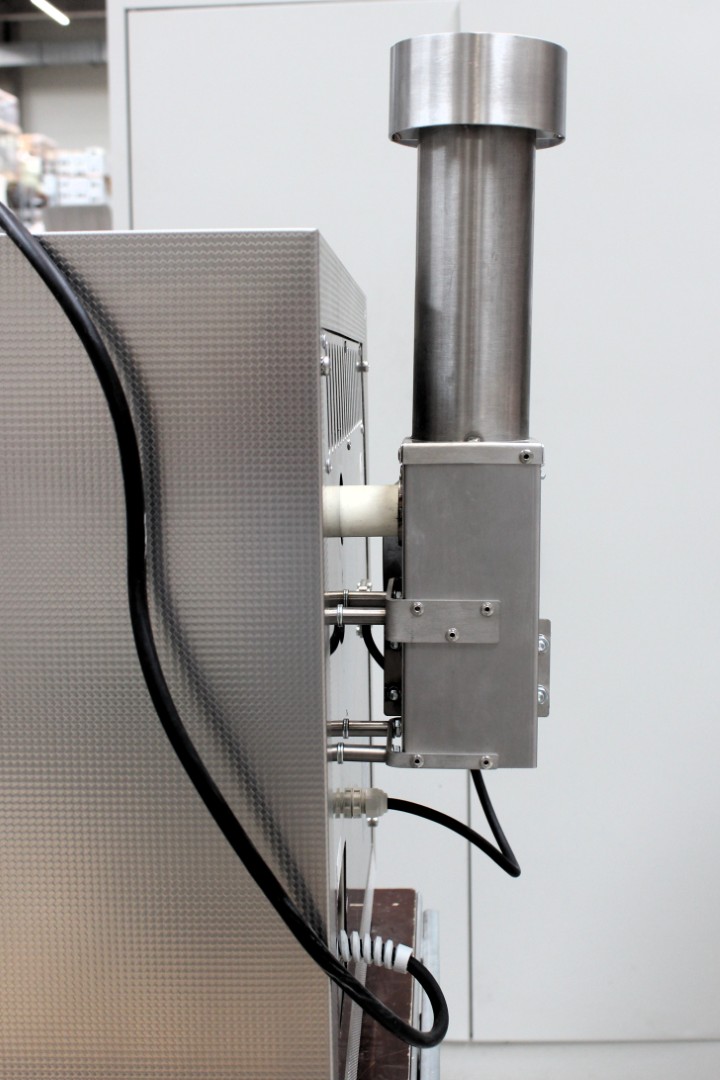
The specific design must be proposed or approved by a specialist with regard to the furnace model and installation conditions.
When does the process need a supply of fresh air?
Removing atmosphere from a furnace and supplying replacement air are connected. When air leaves the working space, it must be replaced.
The incoming air can be adjusted manually in some laboratory furnaces.
The standard LE series, for example, has an adjustable air inlet that opens the air path into the working space. The LG gravimetric furnace also has an adjustable air inlet.
This arrangement must not be confused with the intensive, construction-defined air exchange of an LZ ashing furnace.
The purpose is decisive:
- If you only need basic chamber ventilation, an adjustable air inlet may form part of a suitable solution.
- If the process requires a large supply of oxygen for oxidation or ash content determination, consider a furnace designed specifically for that purpose.
- If you need to limit contact between the sample and oxygen, a conventional fresh-air supply conflicts with the aim of the process and the atmosphere must be addressed differently.
What makes an LZ ashing furnace different?
The LZ is not simply a chamber furnace with a larger chimney. Its construction is adapted to processes requiring an intensive oxygen supply, particularly load oxidation and ash content determination.
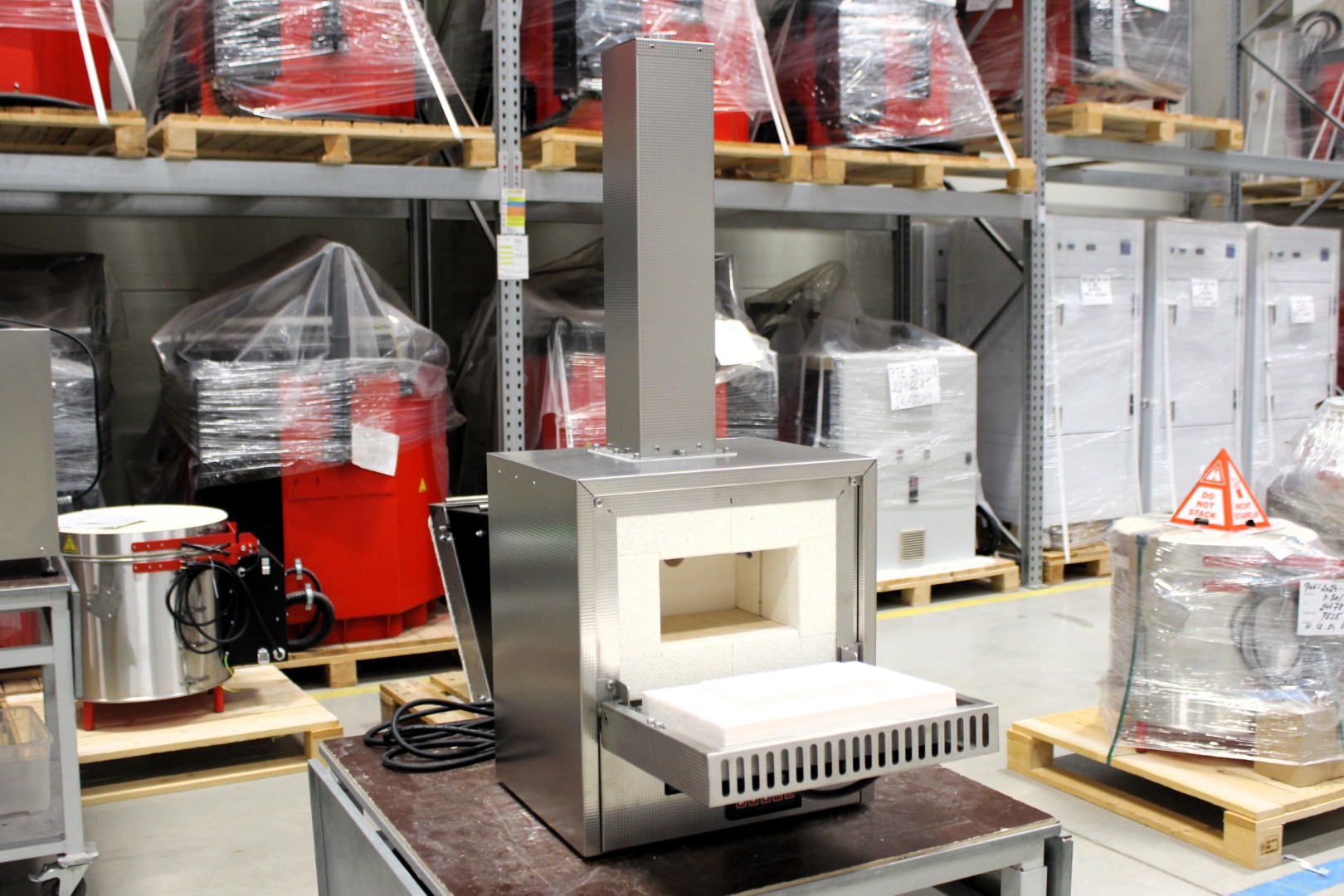
Standard equipment includes:
- Inlet channels for fresh-air supply
- Preheating of the air before it enters the chamber
- A double-wall stainless-steel exhaust chimney
According to the current datasheets, the complete internal furnace volume is exchanged approximately six to twelve times per minute, depending on temperature.
The incoming air is preheated as it passes around the heating elements and then enters the space containing the load.
Preheating is an important part of the construction because an intensive supply of cold air would affect the thermal conditions inside the chamber.
A standard laboratory furnace with an open air-inlet control and chimney is not automatically an equivalent substitute for an LZ furnace.
Does the LZ chimney discharge fumes safely from the laboratory?
The LZ chimney removes atmosphere from the furnace chamber. This does not mean that the resulting fumes can be released freely into the room without any further measures.
Depending on their composition and the conditions at the workplace, the customer must determine where they will be routed after leaving the furnace.
A suitable fume cupboard, local exhaust ventilation or connection to a dedicated extraction system may be required.
The appropriate arrangement depends on:
- The material being processed
- The quantity and properties of the fumes
- The furnace location
- Laboratory requirements
- Local safety and operating conditions
The furnace and the workplace ventilation system should be considered together before installation.
How does airflow affect the thermal process?
Every volume of air entering the furnace must be heated. Changing the airflow can therefore affect the heating rate, energy consumption and thermal conditions within the working space.
The result depends on the furnace construction, operating temperature, air-inlet setting and extraction intensity.
You cannot automatically assume that:
- More air will always accelerate the process
- Stronger extraction will always improve the result
- An open air inlet has no effect on temperature
- A temperature-distribution value remains the same with every damper and extraction setting
If accurate temperature distribution is important to your process, the airflow conditions must form part of the specification and any subsequent measurement.
What about a protective atmosphere?
A protective gas addresses the opposite requirement from an intensive fresh-air supply.
The aim may be, for example, to limit contact between the sample and oxygen or to establish other conditions for the thermal process.
Some LAC laboratory furnaces can be fitted with a protective-atmosphere inlet as an accessory.
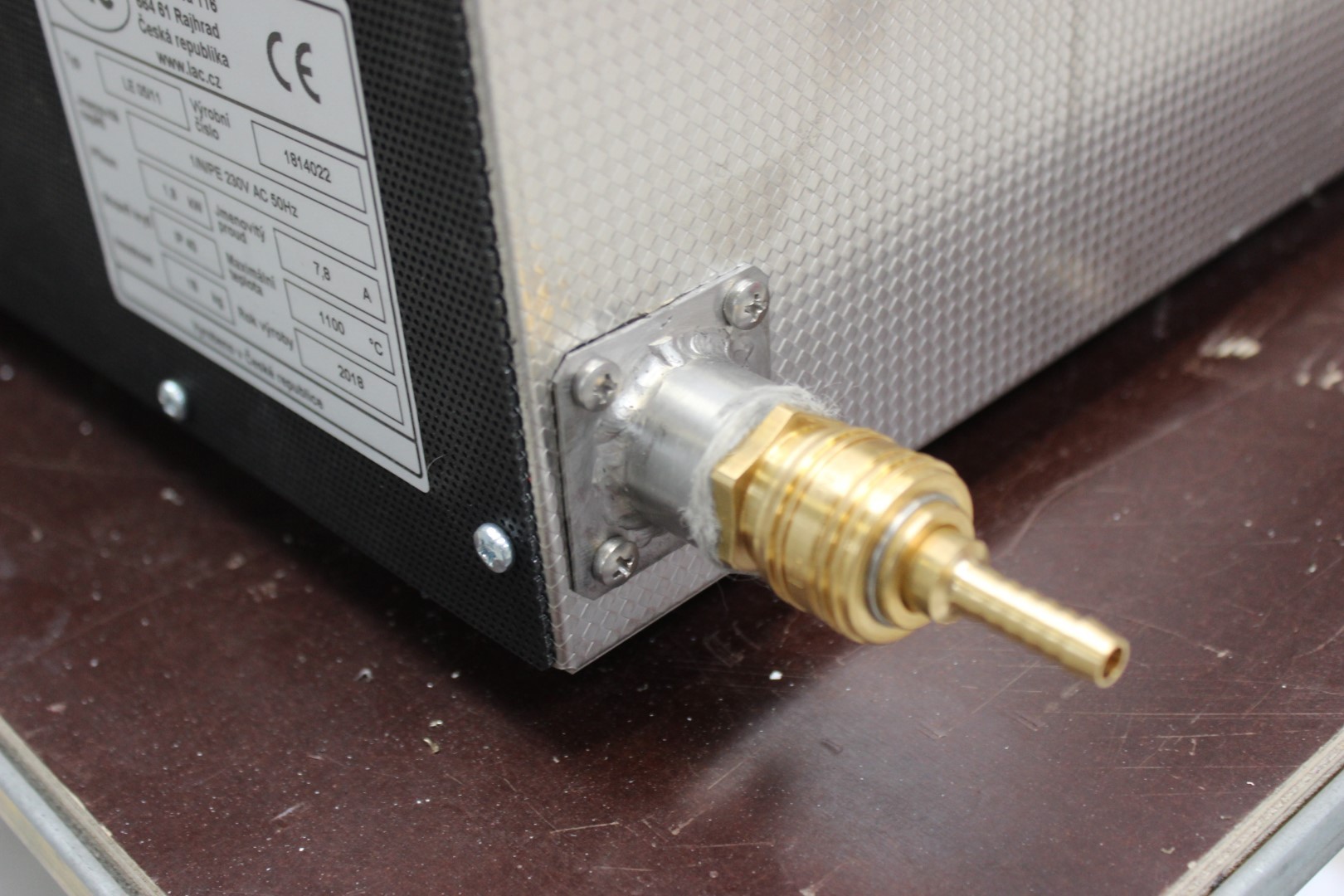
A gas inlet alone:
- Does not mean that the furnace is gas-tight
- Does not determine the resulting gas concentration in the chamber
- Does not automatically ensure safe discharge of the used atmosphere
- Does not confirm suitability for every gas
Protective or process gas must also leave the furnace somewhere. The design must therefore address the gas supply, discharge and safety of the complete workplace.
Protective atmospheres will be covered in more detail in a separate article.
Which solution might suit your process?
| Situation | What to consider |
|---|---|
| You need basic ventilation of the working chamber | The standard air inlet and ventilation chimney of the particular model |
| You need to remove the atmosphere more actively | An ejector with an exhaust fan and draft diverter |
| The process requires an intensive oxygen supply | An LZ ashing furnace |
| Hazardous or significantly unpleasant fumes are generated | Furnace extraction combined with an appropriate workplace ventilation system |
| You need to limit the effects of oxygen | A protective-atmosphere supply assessed for the specific application |
| You can see a fan on the furnace casing | Check its function; it may only cool the casing and electrical compartment |
This overview is intended as an initial guide. The specific solution must reflect the composition and quantity of the substances generated.
What to include in your enquiry
To assess the required air supply and removal of atmosphere, we need to know:
- The composition and quantity of the load
- The temperature at which vapours or fumes begin to be released
- Their approximate quantity
- The process duration and frequency
- Whether the process requires oxygen
- Whether you need to limit oxidation instead
- What extraction is available at the workplace
- Any specific laboratory safety or operating requirements
A safety data sheet is also useful. If the exact quantity of fumes is unknown, provide at least the sample composition and a description of its behaviour during previous tests.
Frequently asked questions
Is a ventilation chimney the same as an extraction system?
No. A chimney provides a route for atmosphere to leave the working chamber. Forced extraction actively supports airflow with a fan. Neither solution on its own necessarily ensures that fumes are discharged safely outside the building.
Is opening the adjustable air inlet enough?
It depends on the purpose. An adjustable air inlet may form part of the solution for basic ventilation. A process with a high oxygen demand, such as ash content determination, may require an LZ ashing furnace.
Does the cooling fan remove fumes from the furnace?
Not automatically. According to their datasheets, the fans in LH and LHS furnaces cool the casing and electrical compartment. They do not extract the working space.
Can I connect the furnace chimney directly to the building ventilation system?
This cannot be recommended generally without a technical assessment. An external extraction system can alter airflow, pressure and thermal conditions inside the furnace. The connection method must be suitable for the particular equipment.
Is the LZ suitable for burning every type of sample?
Not automatically. The LZ is designed for oxidation and ash content determination with an intensive supply of fresh air. The chemical compatibility, quantity of fumes and safety of the particular sample must be assessed separately.
Do I need an exhaust when using a protective gas?
The gas used and the atmosphere displaced from the furnace must be discharged safely. The appropriate solution depends on the gas, flow rate, equipment tightness and workplace conditions.
Do not consider the furnace and extraction separately
Correct removal of the furnace atmosphere is not merely a question of furnace accessories. It forms part of the complete thermal process and must be coordinated with the workplace ventilation system and laboratory safety requirements.
First determine what the sample releases and whether the process requires an oxygen supply.
Only then can you decide whether natural ventilation is sufficient, forced extraction is appropriate or a specialised ashing furnace is required.
Explore LAC laboratory furnaces
Compare laboratory furnaces with different air-supply, ventilation and extraction options, including specialised ashing furnaces.
👉 Explore LAC laboratory furnaces
👉 Explore specialised laboratory furnaces
👉 View the complete range of LAC laboratory furnaces and dryers
Need help assessing fresh-air supply and fume extraction?
Send us a description of the sample, temperature cycle and fumes generated. LAC specialists will help you assess the appropriate fresh-air supply, atmosphere removal and required accessories.
What to remember
Fresh-air supply, natural ventilation, forced extraction and casing cooling serve different purposes.
Select the solution according to the substances generated, required oxygen supply, furnace construction and workplace ventilation and safety requirements.