
Chamber, Muffle or Tube Furnace: Which Type Should You Choose?
Chamber, Muffle or Tube Furnace: Which Type Should You Choose?
How the working space, heating-element arrangement and loading method influence furnace selection
Key insight:
Chamber, muffle and tube furnaces differ in more than their external shape. Each arranges the working space, heating elements and load differently.
You may need a laboratory furnace for several samples in crucibles. Perhaps you want to heat a small quantity of material under a protective atmosphere. Or your process may release fumes and you need to protect the heating elements.
All three processes may run at a similar temperature, but each can require a different furnace construction.
The terms chamber furnace, muffle furnace and tube furnace describe how the working space is arranged, where the heating elements are located and how samples are loaded.
What is the difference between them, and how should you choose?
Is a muffle furnace also a chamber furnace?
The terminology can be confusing.
A chamber furnace has a chamber-shaped working space into which the load is usually placed through a front door. In the broader sense, a muffle furnace can also have a chamber-shaped design.
The term muffle furnace, however, emphasises a particular construction feature: the working space consists of a ceramic muffle that separates the load from the heating elements.
In a standard chamber furnace, the working space may be made from insulation boards or brick lining, while the heating elements may be installed in panels, tubes or grooves.
In practice, it is useful to distinguish between:
- Standard chamber furnaces
- Chamber-shaped furnaces with a ceramic muffle
- Tube furnaces
Each construction has its own advantages and limitations.
When should you choose a chamber furnace?
A chamber furnace is often the first option to consider when processing samples of different shapes in crucibles, dishes or other containers.
The working space is accessible from the front and can hold one larger sample or several smaller items.
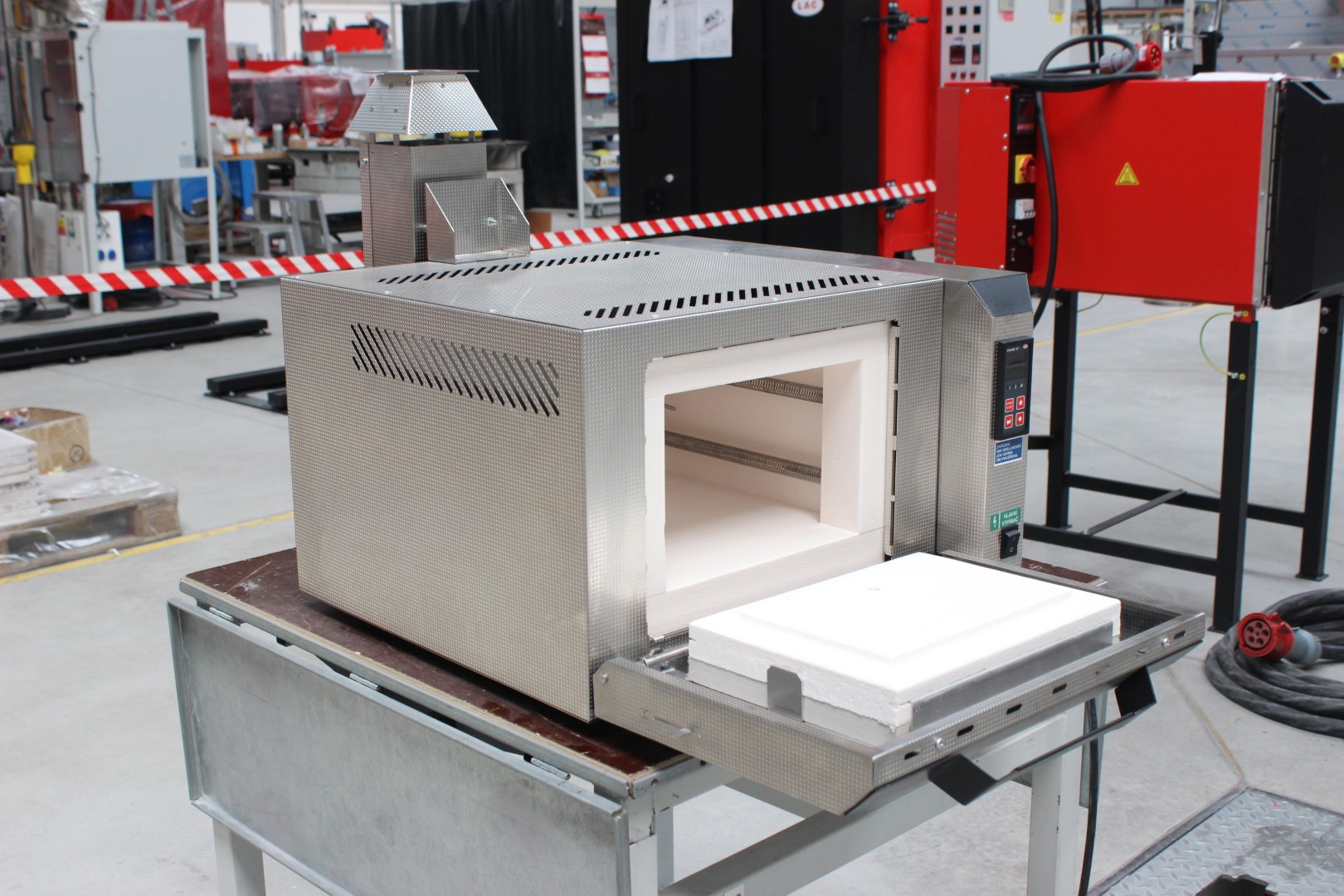
Chamber volume in litres is not enough for selection. The actual internal dimensions, maximum floor load and required clearance between samples also matter.
The LAC laboratory portfolio includes chamber furnace series such as L, LE and LH. They differ in maximum temperature, working-space construction and heating-element arrangement.
L laboratory furnaces
In L furnaces, the heating coils are embedded in ceramic heating panels in the floor and roof. They are therefore not freely exposed to direct contact with the load.
The panels provide the heating elements with partial protection from mechanical damage and substances released by the sample.
This is not, however, the same degree of separation as that provided by a ceramic muffle. L furnaces have downward-opening doors and a working space made from insulation boards.
LE laboratory furnaces
In the LE series, heating is provided by coils housed in quartz-glass tubes along the sides of the working space. The coils are therefore not freely exposed here either.
According to the datasheet, LE furnaces are suitable for various laboratory tests and processes in which it is beneficial for the heating elements not to be located directly in the sample space. Standard equipment also includes an adjustable air inlet.
The LE series has a lower maximum temperature than the L or LH series. Temperature alone does not determine its suitability, however. The expected load, behaviour of the sample and intended operating mode are also important.
LH laboratory furnaces
The LH series has a chamber lined with lightweight refractory bricks. The heating coils are installed in grooves in the lining, and the door opens upwards.
These furnaces are intended for higher operating temperatures than the L and LE series.
The datasheet states that LH furnaces are intended for processes in which the load does not release aggressive substances capable of attacking the coils or brick lining. If the sample produces aggressive fumes, you cannot select an LH furnace from its temperature range alone.
When does a muffle furnace make sense?
A muffle furnace is particularly useful when the sample needs to be separated from the heating elements.
In LAC LMH and LMV furnaces, the working space is formed by a ceramic muffle. The heating coil is wound around its exterior and is therefore not located directly in the sample space.
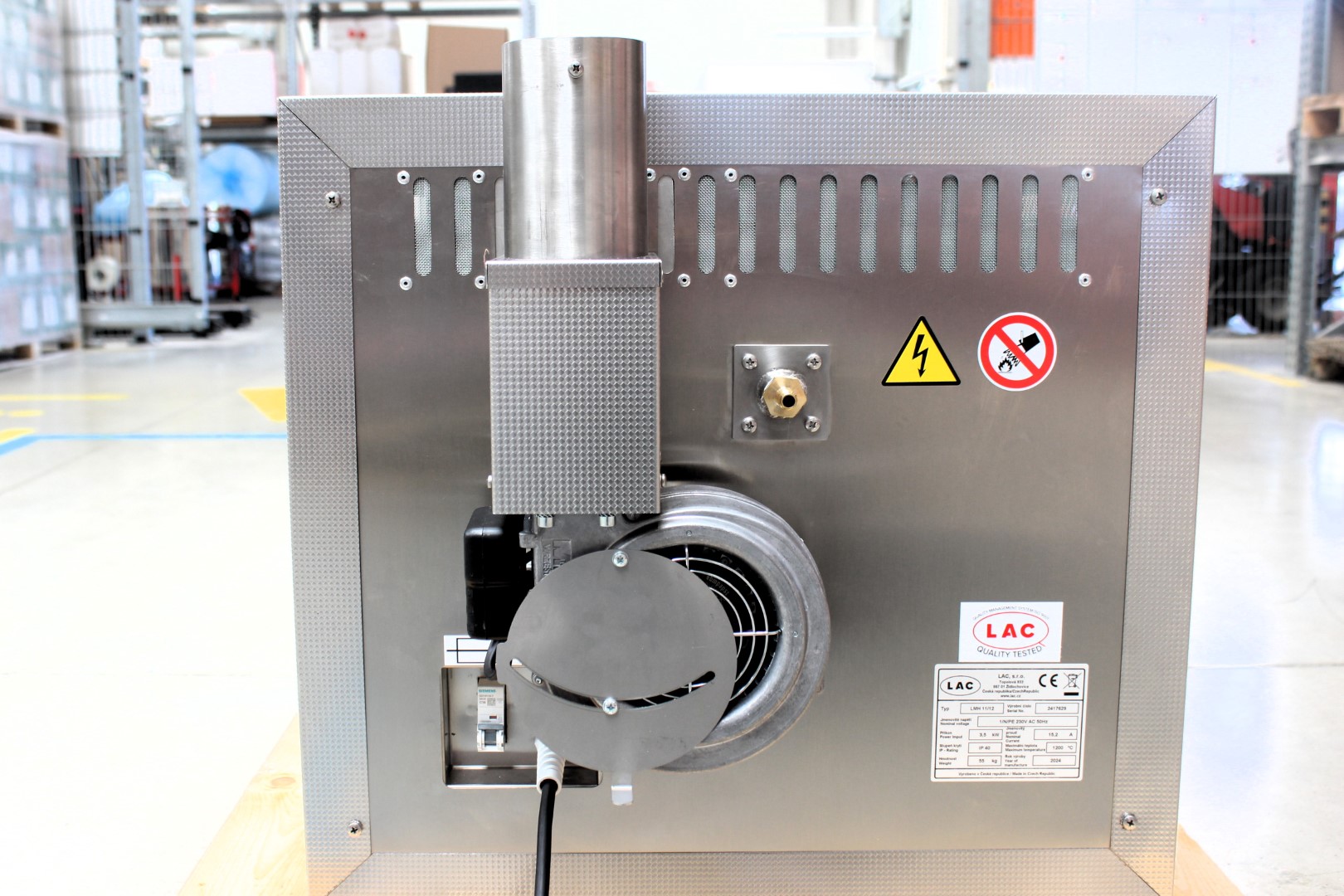
What the ceramic muffle provides:
- Separation of the sample space from the heating elements
- Protection of the heating elements from potentially aggressive fumes
- Reduced risk of direct mechanical damage during loading
A ceramic muffle is not universally resistant to every chemical substance. The effects of a particular sample must always be assessed with regard to its composition, quantity, operating temperature and process duration.
LMH horizontal muffle furnace
The LMH working space is accessible from the front, and its door opens upwards. It is suitable for conventional horizontal loading into a ceramic muffle.
The standard series includes several sizes. When selecting a model, check not only its volume but also the internal width, height and depth of the muffle.
LMV vertical muffle furnace
In the LMV series, the ceramic muffle is cylindrical and samples are loaded from above. Standard models have chamber volumes of approximately 2 and 5 litres.
The vertical arrangement may suit samples or containers that are best lowered into the working space from above. Suitability still depends on their exact dimensions, weight and handling requirements.
Choosing between LMH and LMV is not primarily a question of chemical resistance, as both series use a ceramic muffle.
The main considerations are the shape of the load, required working-space dimensions and preferred loading method.
When should you choose a tube furnace?
In a tube furnace, the main working space is not a conventional chamber but a tube that passes through the heated section of the equipment.
According to the datasheet, LT laboratory tube furnaces are intended for special laboratory and research applications.
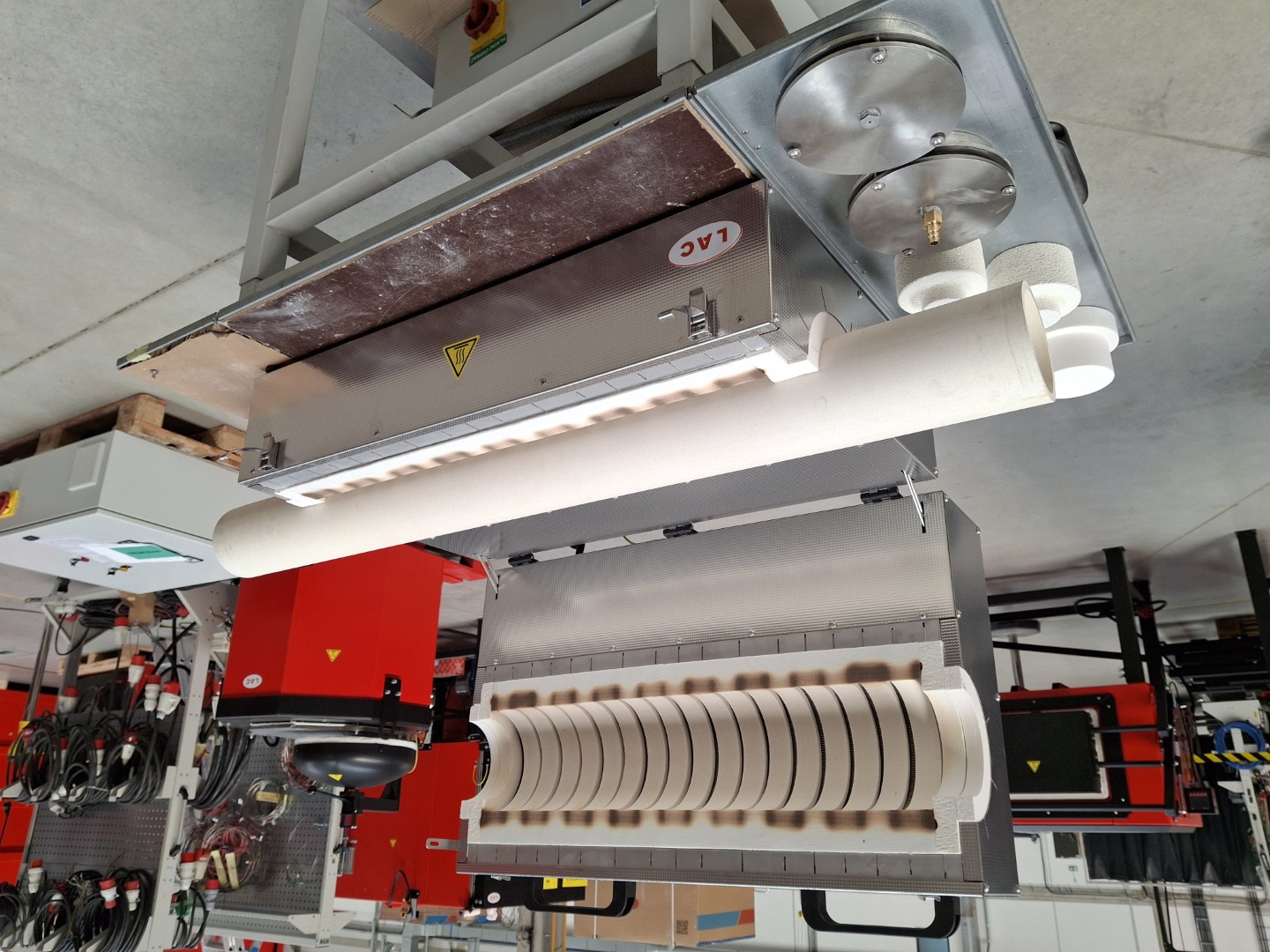
The LT model designation specifies:
- The tube bore
- The heated length
- The abbreviated maximum temperature
LT 75/750/13 denotes a tube furnace with a 75 mm tube bore, a heated length of 750 mm and a Tmax of 1,300 °C.
The LT series offers tube bores of 50, 75 or 100 mm and several heated lengths. The furnace can be placed horizontally on a bench; a special stand is available as an accessory for vertical operation.
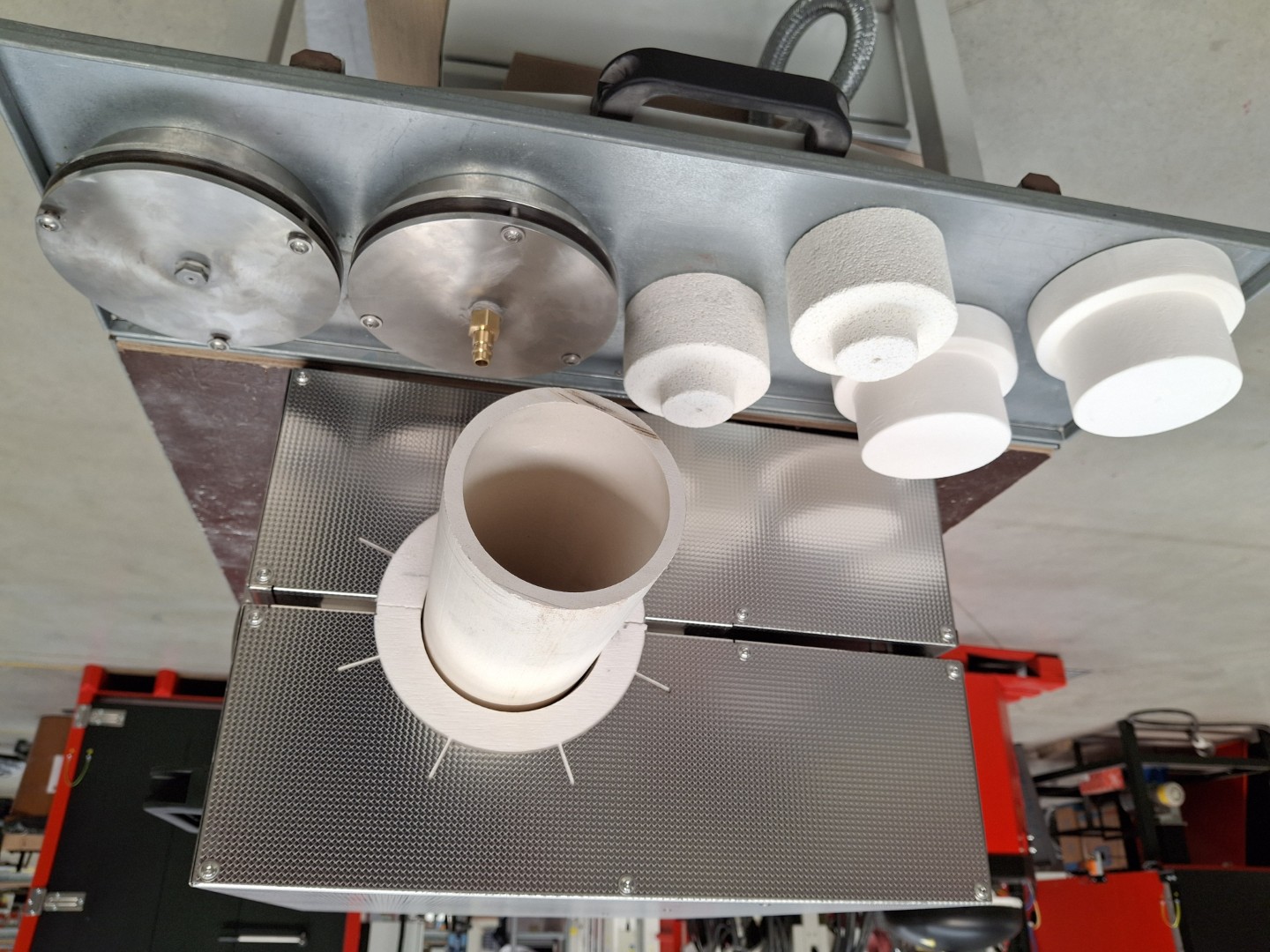
A tube furnace may be suitable when:
- The sample dimensions correspond to the internal space of the tube
- The process requires a defined heated zone
- The sample should be inserted from the end of the tube
- A protective-atmosphere inlet is required
- A horizontal or vertical arrangement is needed
A protective-atmosphere inlet is available as optional equipment for the LT series. A gas inlet alone does not automatically make the furnace gas-tight or guarantee a defined atmosphere purity. The result also depends on the tube-end arrangement, gas used and process requirements.
According to the datasheet, models with a 750 mm heated length can be supplied with a three-zone heating system.
This does not, without defined conditions, establish a particular temperature-uniformity value. Temperature distribution must be assessed for the specified temperature, arrangement and measured space.
Is a tube furnace always better for small samples?
Not automatically.
A small sample can also be processed in a chamber or muffle furnace. A tube furnace makes sense when its geometry or configuration options match the process.
Consider:
- Whether the sample, holder and container will fit inside the tube
- How the sample will be inserted into the heated zone
- Whether access to the sample is required during the process
- Which part of the sample needs to be heated
- Whether a protective gas will be used
- How the tube will be closed and its atmosphere discharged
If you simply need to place several crucibles side by side, a chamber furnace may be more practical.
If the process requires heating inside a tube or along a longitudinal heated zone, the LT series may be more suitable.
Quick comparison of furnace constructions
| Question | Chamber furnace | Muffle furnace | Tube furnace |
|---|---|---|---|
| What does the working space look like? | Chamber, usually accessible from the front | Horizontal or vertical ceramic muffle | Tube passing through the heated zone |
| How is the sample loaded? | Usually from the front | From the front in LMH; from above in LMV | From the end of the tube |
| Are the heating elements separated from the sample? | Depends on the construction of the particular series | Yes, they are outside the ceramic muffle | Yes, they are outside the internal space of the working tube |
| What load shapes does it accommodate? | Different shapes, containers and multiple samples | The load must fit the shape and dimensions of the muffle | The sample and holder must fit inside the tube |
| Can a protective gas be used? | Available as an optional solution for selected series | Available as an option for LMH and LMV | Available as an option for LT |
| What needs particular attention? | Fumes, heating-element protection and load capacity | Chemical compatibility with the muffle | Tube bore, heated length, tube closure and atmosphere |
The table summarises the basic construction differences. It does not mean that every model within a category is suitable for the same material or process.
What if you need a specialised laboratory process?
Some applications cannot be solved simply by choosing between a chamber, muffle and tube design. They require equipment intended for a particular task.
How should you decide?
Start with five practical questions:
- What are the shape and dimensions of the complete load?
- Will you load one sample or several containers at the same time?
- Do you need to load the sample from the front, from above or into a tube?
- Does heating release substances from which the heating elements need to be protected?
- Does the process require fresh air, protective gas or specialised measurement?
In simple terms:
- Consider a chamber furnace for conventional loading of samples or containers of different shapes.
- Consider a muffle furnace if you need a ceramic barrier between the sample and heating elements.
- Consider a tube furnace if the process requires a working tube, defined heated zone or a specific horizontal or vertical arrangement.
- Look for a specialised furnace if you need intensive oxidation, weight monitoring or testing at several temperature levels simultaneously.
Frequently asked questions
Is a muffle furnace the same as a chamber furnace?
A muffle furnace can have a chamber-shaped design, but its working space consists of a ceramic muffle that separates the sample from the heating elements. A standard chamber furnace may have a different working-space and heating-system arrangement.
Is a muffle furnace always more chemically resistant?
A ceramic muffle protects the heating elements from direct exposure to fumes, but it is not resistant to every chemical substance. Suitability depends on the sample composition, concentration, temperature and duration of exposure.
Does a tube furnace have better temperature uniformity than a chamber furnace?
No such general statement can be made. Temperature distribution depends on the construction of the particular model, heated length, operating temperature, sample arrangement and measurement conditions.
Is a tube furnace gas-tight?
Not automatically. The LT series can be fitted with a protective-atmosphere inlet, but the resulting conditions also depend on the working tube, its end closures and the complete gas-supply system.
Can I process materials that release fumes in a chamber furnace?
It depends on the furnace construction, the type and quantity of fumes and how they are removed. Some chamber-furnace designs protect the heating elements more effectively than others. Suitability must be verified for the specific process.
What if the sample fits into several furnace types?
Other requirements then determine the choice: material behaviour during heating, operating temperature, loading method, required atmosphere, frequency of operation and necessary measurements.
Furnace shape is only part of the decision
Chamber, muffle and tube furnaces differ in more than appearance. Each arranges the working space, heating elements and load differently.
The best choice is therefore not determined by sample size alone. Its material, required temperature cycle, fumes generated and process atmosphere must also be considered.
Explore LAC laboratory furnaces
Compare chamber, muffle, tube and specialised furnaces for laboratory testing, research and quality control.
👉 Explore LAC laboratory furnaces
👉 Explore specialised laboratory furnaces
👉 View the complete range of LAC laboratory furnaces and dryers
Not sure which furnace construction suits your process?
Send us the sample dimensions and description, intended loading method and required heating cycle. LAC specialists will help assess whether a chamber, muffle, tube or specialised laboratory furnace is the best match for your process.
What to remember
The external shape of a furnace does not tell the whole story.
Choose the construction according to the complete load, loading method, required temperature cycle, substances released during heating and atmosphere requirements.