
What Will You Process in the Furnace? Why the Load Material Matters When Choosing a Laboratory Furnace
What Will You Process in the Furnace? Why the Load Material Matters When Choosing a Laboratory Furnace
How the sample, containers, fumes and process atmosphere influence furnace selection
Key question:
What will happen to the sample during heating?
You need to heat a sample to 1,000 °C. You know its dimensions and the required temperature, so it may seem that you already have almost everything you need to choose a furnace.
In fact, one of the most important questions remains unanswered.
Some materials remain almost unchanged as they are heated. Others release moisture, smoke or aggressive fumes. Powder can spread through the chamber, liquid can escape from its container and a heavy component can damage delicate insulation or heating elements.
The same operating temperature does not therefore mean that the same laboratory furnace will be suitable for two different samples.
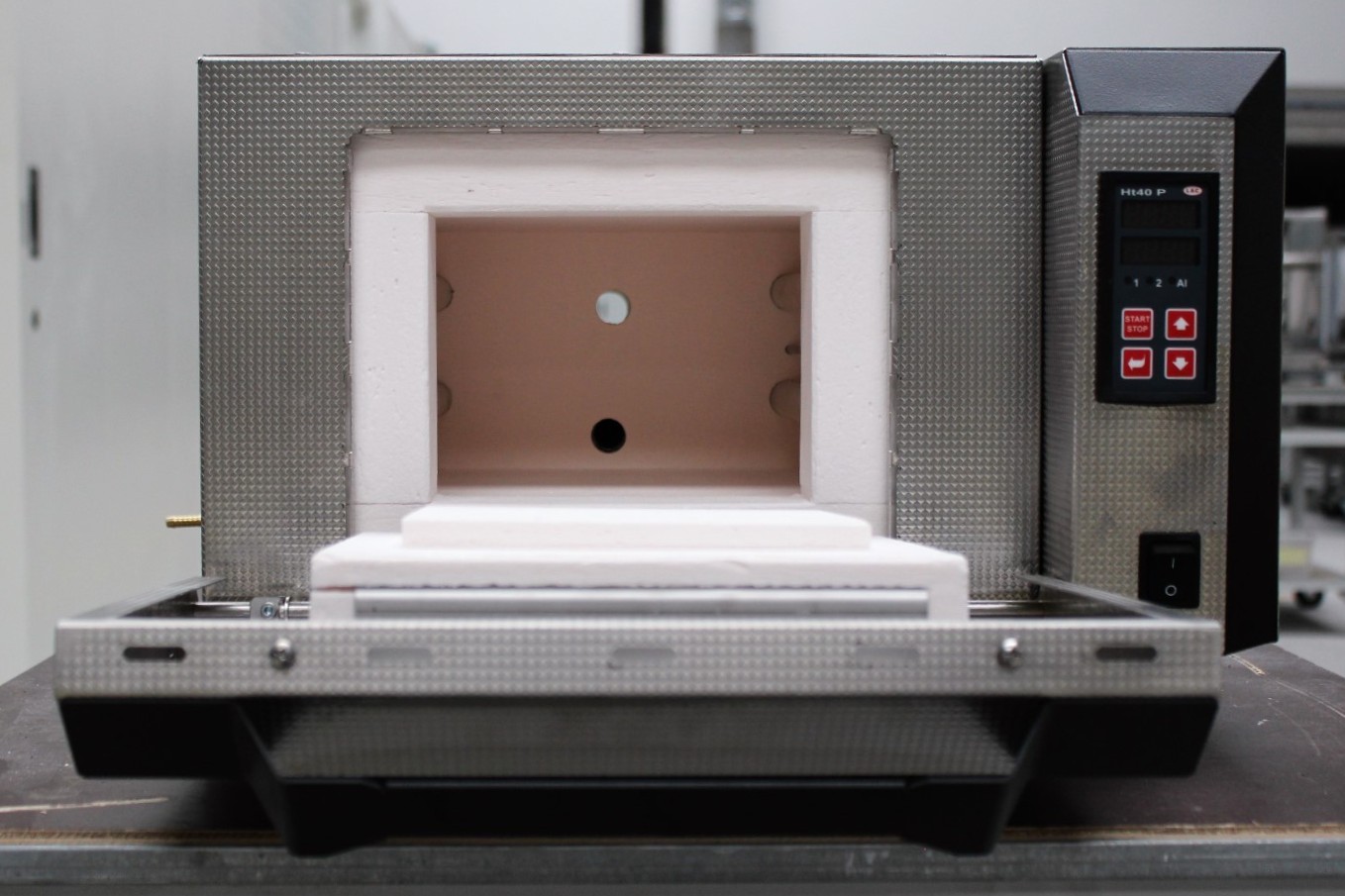
What is the furnace load?
The furnace load comprises everything placed inside the furnace during the process. It includes not only the sample itself but also:
- Crucibles, dishes or other containers
- Shelves and supporting plates
- Holders, stands and measuring fixtures
- Any packing material or other process aids
All these components affect the total weight, atmosphere flow within the working space and heating rate. They must also be suitable for the planned temperature and chemical environment.
When describing the load, it is therefore not enough to write “plastic”, “powder” or “metal component”.
The more accurately you describe the material and the process, the more reliably the appropriate furnace construction can be assessed.
What will the sample release during heating?
A material may appear harmless at room temperature, but its behaviour can change during heating. It may release:
- Water and water vapour
- Decomposition or combustion products
- Organic components, binders and plasticisers
- Smoke, dust or fine particles
- Chemically aggressive fumes
These substances can affect the heating elements, ceramic muffle, insulation, brick lining, thermocouple and other parts of the working space.
The type of substance is not the only deciding factor. You must also consider:
- Its quantity and concentration
- The temperature at which it is released
- The duration of exposure
- How frequently the process is repeated
- How the furnace is ventilated
A small quantity released during a one-off test may impose a very different load on the furnace from daily operation with a large batch.
It is therefore impossible to create a simple list of materials that are always safe to process in a particular furnace.
How does the furnace construction protect the heating elements?
Laboratory furnaces differ in whether their heating elements are separated from the working space and how they are protected from chemical or mechanical effects of the load.
LMH and LMV muffle furnaces
In LMH and LMV furnaces, a ceramic muffle separates the working space from the heating elements. The heating coil is wound around the outside of the muffle, so it is not located directly in the space containing the sample.
This construction helps protect the heating elements from fumes generated during thermal processing. It also reduces the risk of direct mechanical damage to the elements while the furnace is being loaded.
A ceramic muffle is not resistant to every chemical substance. An aggressive environment can also affect the muffle itself and shorten its service life. The suitability of a specific sample must therefore be assessed individually.
The two series also differ in their loading arrangement:
The shape of the sample and the way it will be handled are therefore just as relevant as its chemical behaviour.
L laboratory furnaces
In L furnaces, the heating coils are embedded in ceramic heating panels in the floor and roof. The panels provide the heating elements with partial protection from substances released by the load and prevent direct contact with the elements.
This protection is not the same as an enclosed ceramic muffle. If the process generates fumes, their quantity and properties must still form part of the assessment.
LE laboratory furnaces
In the LE series, the heating coils are housed in quartz-glass tubes, so they are not freely exposed within the working space. The quartz tubes provide partial protection from substances generated by the process.
According to the datasheet, standard LE furnaces have an adjustable air inlet. A protective-atmosphere inlet is available as optional equipment.
This alone does not make the furnace gas-tight.
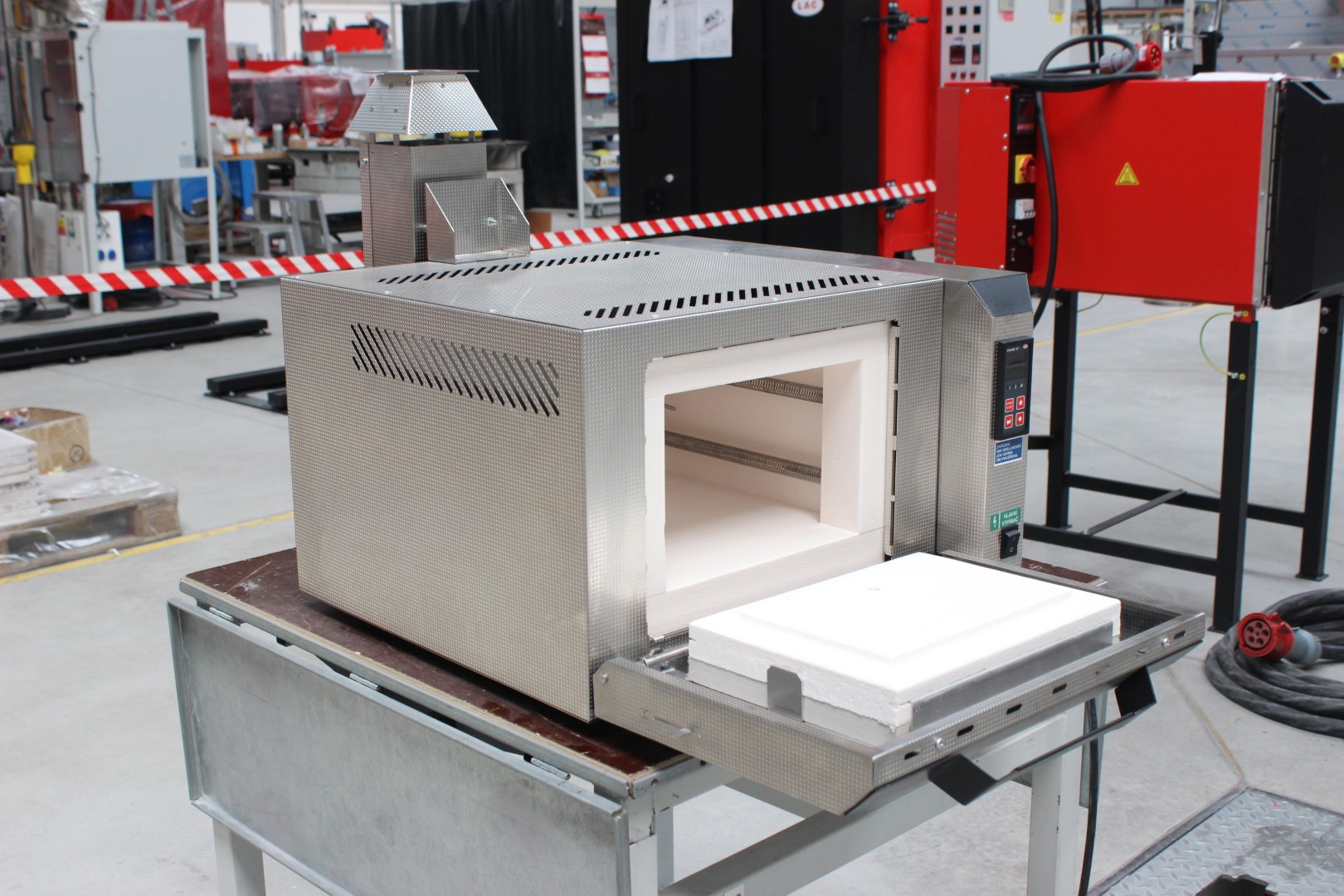
LH laboratory furnaces
In LH furnaces, the heating coils are installed in grooves in the brick lining.
The datasheet explicitly states that these furnaces are intended for thermal processing in which the load does not release aggressive substances capable of attacking the coils or lining.
If aggressive fumes are expected, the LH series cannot be recommended solely because its temperature and chamber volume are suitable.
LHS high-temperature furnaces
LHS furnaces use SiC heating rods positioned along the sides of the working space. They are intended primarily for regular operation at higher temperatures.
According to the datasheet, both the SiC rods and the insulation used in these furnaces are fragile. Careless loading can cause mechanical damage.
The method of loading is therefore important in addition to the chemical behaviour of the sample.
Initial comparison of furnace constructions
| Furnace series | Heating-element arrangement | What needs to be checked |
|---|---|---|
| LMH, LMV | Heating coil outside the ceramic muffle | Chemical compatibility of the sample with the muffle and the required ventilation or extraction |
| L | Coils embedded in ceramic heating panels | Type and quantity of fumes generated |
| LE | Coils housed in quartz-glass tubes | Effects of fumes, air supply and method of atmosphere removal |
| LH | Coils installed in grooves in the brick lining | The process must not release substances that attack the coils or lining |
| LHS | SiC rods positioned along the sides of the working space | Risk of chemical or mechanical damage to the fragile heating elements |
This table is intended only as an initial guide. It does not describe resistance to any particular chemical and does not account for its concentration, temperature or duration of exposure.
Pay attention to dust, liquids and sample spillage
Furnace selection often focuses on gaseous emissions. The physical form of the load itself can also present a risk to the working space.
Fine powder can spread through the chamber during handling or as air moves through the furnace. A liquid can foam, expand or spill during heating. An incorrectly positioned sample container can tip over.
Spillage or contamination can damage:
- The furnace floor
- Ceramic heating panels
- The ceramic muffle
- Insulation
- Heating elements
- The thermocouple
Place the sample in a container suitable for both its behaviour and the operating temperature. The container must have sufficient capacity and must not react chemically with the sample or process atmosphere.
Without knowing the exact material, however, the furnace manufacturer cannot automatically determine the appropriate type of crucible or other container. Its suitability must be verified for the particular application.
Does the process need oxygen?
Some processes require a sufficient supply of fresh air. Typical examples include sample oxidation and ash content determination.
LZ ashing furnaces are designed for these applications.
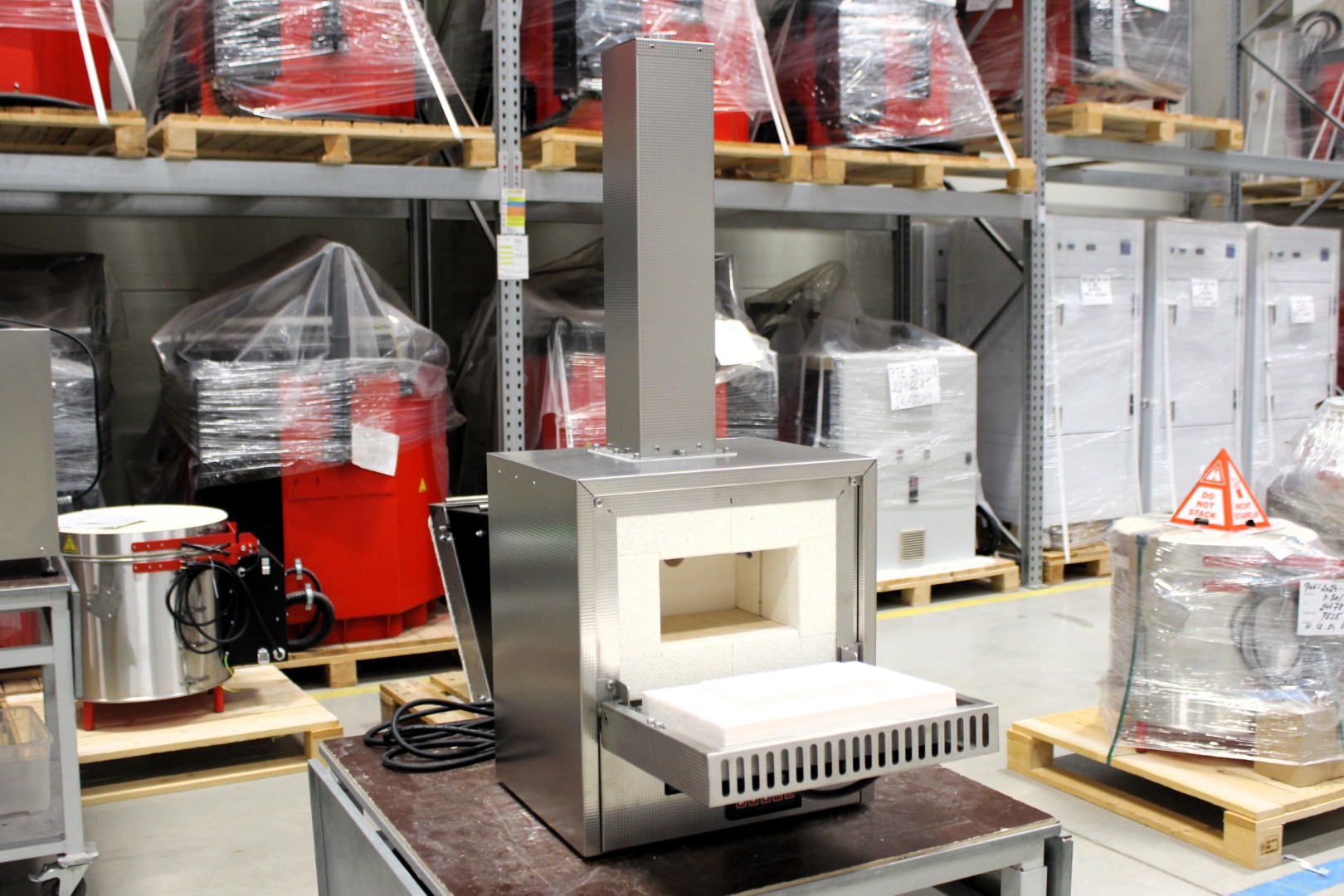
How LZ ashing furnaces supply fresh air
- Fresh-air inlet channels
- An exhaust chimney
- A system that preheats the incoming air
According to the current datasheets, the entire chamber volume is exchanged approximately six to twelve times per minute, depending on the operating temperature.
This intensive air exchange is part of the furnace design and supports the oxidation process. A standard ventilation opening in another laboratory furnace cannot automatically be considered an equivalent solution.
When making an enquiry, explain why air is required:
- To support oxidation
- To remove moisture
- To help remove fumes
- To perform another function
The appropriate equipment can only be assessed once the purpose is known.
What if you need to limit oxidation instead?
Another process may require a protective gas, for example to reduce contact between the heated material and oxygen in the air.
Some LAC laboratory furnaces can be fitted with a protective-atmosphere inlet as optional equipment.
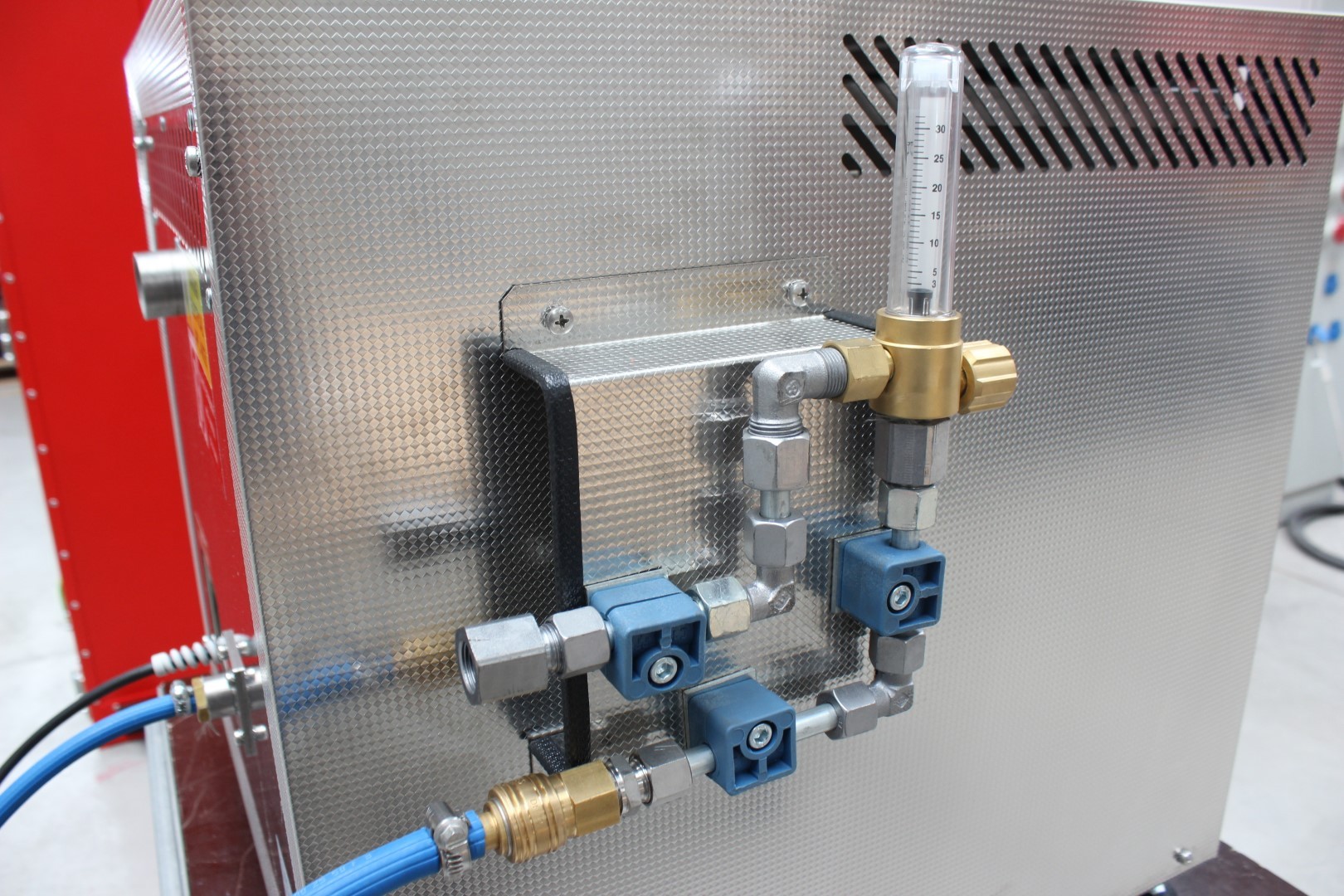
A gas inlet does not mean that the furnace is gas-tight or that a precisely defined atmosphere will be established throughout the chamber.
An assessment requires at least:
- The gas to be used
- The required effect
- The temperature cycle
- The method and duration of gas supply
- The required gas tightness and atmosphere purity
If you do not yet know the technical parameters, begin by describing the intended result. For example: “We need to limit oxidation of the sample surface during heating.”
A furnace specialist can then determine what further information is required.
When can a sample test help?
For unusual materials, it may not be possible to determine the suitability of a furnace reliably from the sample name or safety data sheet alone.
A practical test can help establish:
- When the sample begins to release fumes
- Whether it foams, cracks or changes volume
- How long the process actually takes
- How the sample responds to a supply of fresh air
- Whether the selected temperature cycle produces the required result
A single sample test does not necessarily confirm the long-term chemical resistance of the equipment. Repeated operation can impose a different load on the furnace from a one-off test.
What to include in your enquiry
For an initial assessment, send us:
- The exact name and composition of the sample
- Its safety data sheet, if available
- The quantity processed in one cycle
- Its physical state, dimensions and weight
- How it will be positioned in the furnace
- The required operating temperature and holding time
- A description of substances released during heating
- How frequently the process will be repeated
- Any requirement for fresh air, fume extraction or protective gas
Do not worry if some information is not yet available. Provide what you know about the process and describe the intended result. Missing details can be identified during a technical consultation.
Frequently asked questions
Is a muffle furnace resistant to every aggressive substance?
No. A ceramic muffle separates the sample from the heating elements and helps protect them, but the muffle itself can be damaged by certain substances. Suitability depends on the exact chemical composition, quantity, temperature and duration of exposure.
If the process generates fumes, is opening the ventilation port enough?
Not necessarily. A ventilation port, an exhaust chimney and forced extraction are different solutions. The appropriate method depends on the quantity and properties of the fumes generated.
Can I place a liquid in the furnace?
It depends on the liquid, its container and the process. Evaporation, foaming, possible spillage, vapours generated and chemical compatibility with the working space must all be assessed. Without this information, suitability cannot be confirmed.
Is a safety data sheet sufficient?
It is extremely useful, but it may not describe every condition of the specific thermal process. The sample quantity, temperature cycle and frequency of use must also be known.
Is a protective-gas inlet the same as a gas-tight furnace?
No. A gas inlet can modify the atmosphere within the working space, but it does not by itself ensure gas tightness or precisely defined conditions throughout the chamber.
How can I tell whether fumes may damage the furnace?
This cannot be determined reliably without knowing their composition and the operating conditions. Tell the furnace manufacturer what the sample releases, in what quantity, at what temperature and how frequently the process will run.
Do not choose a furnace from the material name alone
The appropriate laboratory furnace construction is not determined simply by whether you process metal, ceramics, plastic or powder.
What matters most is how the complete load behaves during heating.
Two materials with similar names can have different compositions, release different substances and require different air-supply or ventilation arrangements.
Explore LAC laboratory furnaces
Compare chamber, muffle, ashing and high-temperature laboratory furnaces with different working-space and heating-element designs.
👉 Explore laboratory furnaces in the LAC e-shop
👉 View the complete range of LAC laboratory furnaces and dryers
Need help assessing your furnace load?
Send us information about the sample, temperature cycle and substances released during heating. LAC specialists will assess the appropriate furnace construction and identify any details that still need to be verified before a furnace is selected.
What to remember
The furnace load includes the sample, its container, supports and every other component placed in the working space.
Choose the furnace according to the complete load, the substances released during heating, the required atmosphere and the risks of chemical or mechanical damage.