
Ceramic Kiln Controllers: What Are Ramps and Dwell Times, and How Many Steps Do You Need?
Ceramic Kiln Controllers: What Are Ramps and Dwell Times, and How Many Steps Do You Need?
How to read a firing programme and choose a controller for your ceramic kiln
Key insight:
A larger number of programmes and steps does not automatically produce a better firing result. The controller should match your materials, firing processes and everyday workflow.
With a ceramic kiln, setting the final temperature alone is not enough. The way in which the kiln reaches that temperature, whether it remains at certain temperatures and how many stages the complete programme contains are also important.
This temperature profile is managed by the programmable controller.
Some users will benefit from straightforward operation, while others need more stored profiles, data logging or remote access.
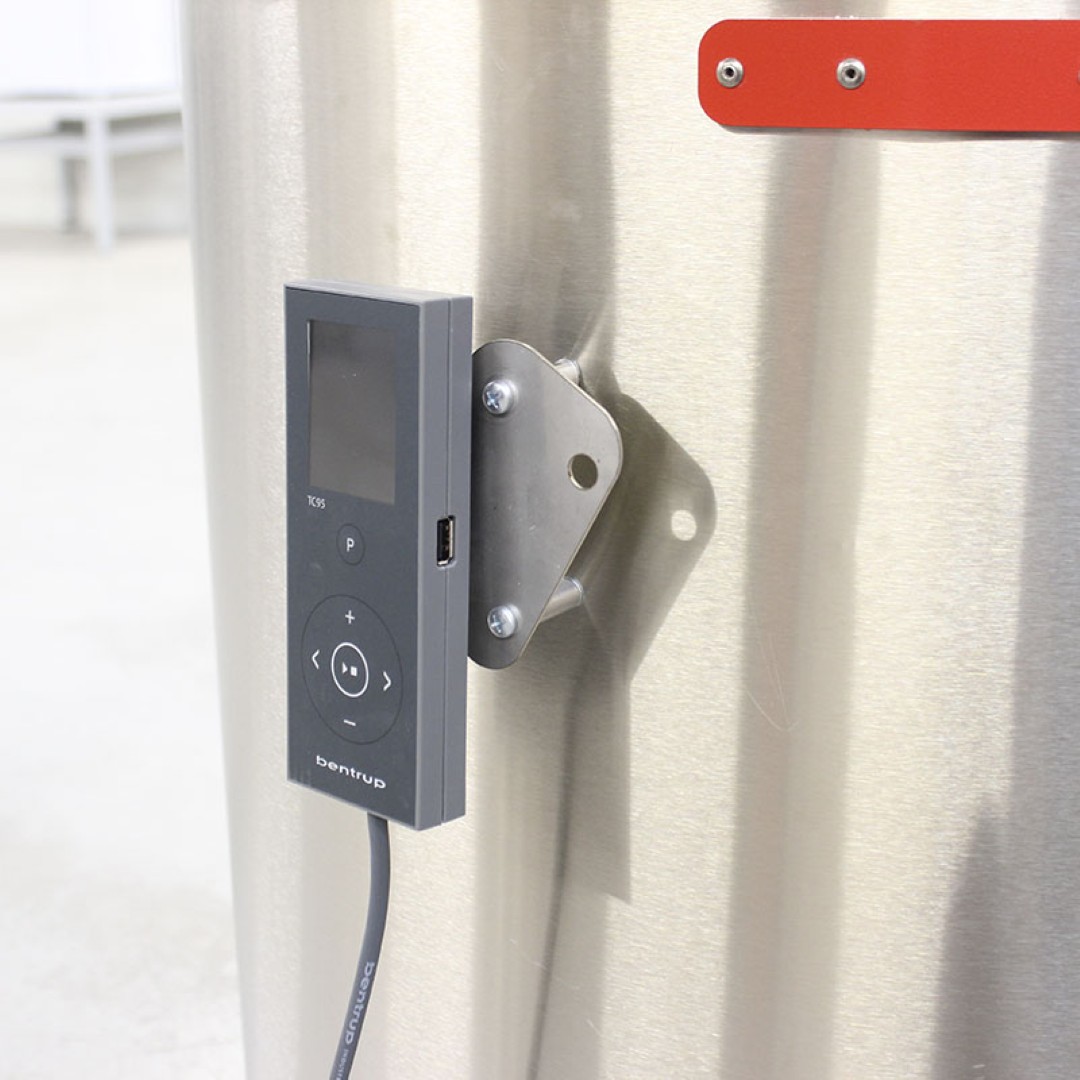
This article explains the basic terms and helps you understand the available options when choosing a kiln controller. It is not a guide to creating a particular firing programme. Temperatures, heating rates and dwell times must always be based on the material, process, design of the ceramic piece and instructions for the particular kiln.
A controller does more than set the target temperature
In an M series kiln, the temperature inside the chamber is measured by a type S thermocouple. The controller works with this measured temperature and regulates the kiln heating according to the selected programme.
The programme describes the required temperature profile over time, not simply the final value that the kiln should reach. [1]
The kiln can follow the programmed curve only within the limits of its available power, current condition and particular load.
Entering a high heating rate does not guarantee that the kiln will actually achieve that rate during every stage of the firing. [3]
Important:
The controller does not know which clay body or glaze you have placed inside the kiln. The correct programme must be based on information from the material manufacturer, a verified process and the operating limitations of the particular kiln.
What is a temperature ramp?
A ramp is a section of the programme during which the setpoint temperature changes. With a linear ramp, the rate of change is usually entered in degrees Celsius per hour.
Some controllers also allow the operator to enter a target temperature together with the time in which it should be reached.
A ramp can describe a heating stage. With kilns and programmes that support controlled cooling stages, it may also specify a required decrease in temperature.
Simple model example:
If the setpoint temperature is to increase from 100 °C to 600 °C at a rate of 100 °C per hour, the programmed ramp will take five hours.
500 °C ÷ 100 °C/h = 5 hours
This calculation explains only the relationship between temperature change, rate and time. It is not a recommended setting for firing ceramics.
The actual process must be assessed using the firing record and the result of the particular cycle.
The heating rate affects more than the overall duration of the programme. The ceramic pieces, kiln shelves and kiln structure all absorb heat progressively.
A ramp should not be selected solely according to how quickly you would like the firing to finish.
What is a dwell time?
A dwell is a period during which the controller maintains a specified setpoint temperature. It may be included at an intermediate temperature or at the final temperature.
Its purpose depends on the material and process. In different applications, a dwell can provide time for the required changes to take place or help equalise the thermal effect throughout the load.
A longer dwell is not a universal solution
A dwell increases the heatwork and may alter the result. It should not replace a correctly selected temperature, suitable heating rate, well-planned loading arrangement or verification of the compatibility between the clay body and glaze.
Programme, step and segment: what is the difference?
The exact method of programming and the meaning of each setting are defined in the instructions for the particular controller.
More steps make it possible to create a more detailed temperature profile. However, an ordinary studio may not need to use all of them.
The number of steps represents the controller’s capacity; it is not an indication of firing quality.
A straightforward and correctly verified programme may be more practical for repeated use than a complex profile in which the individual stages have no clearly defined purpose.
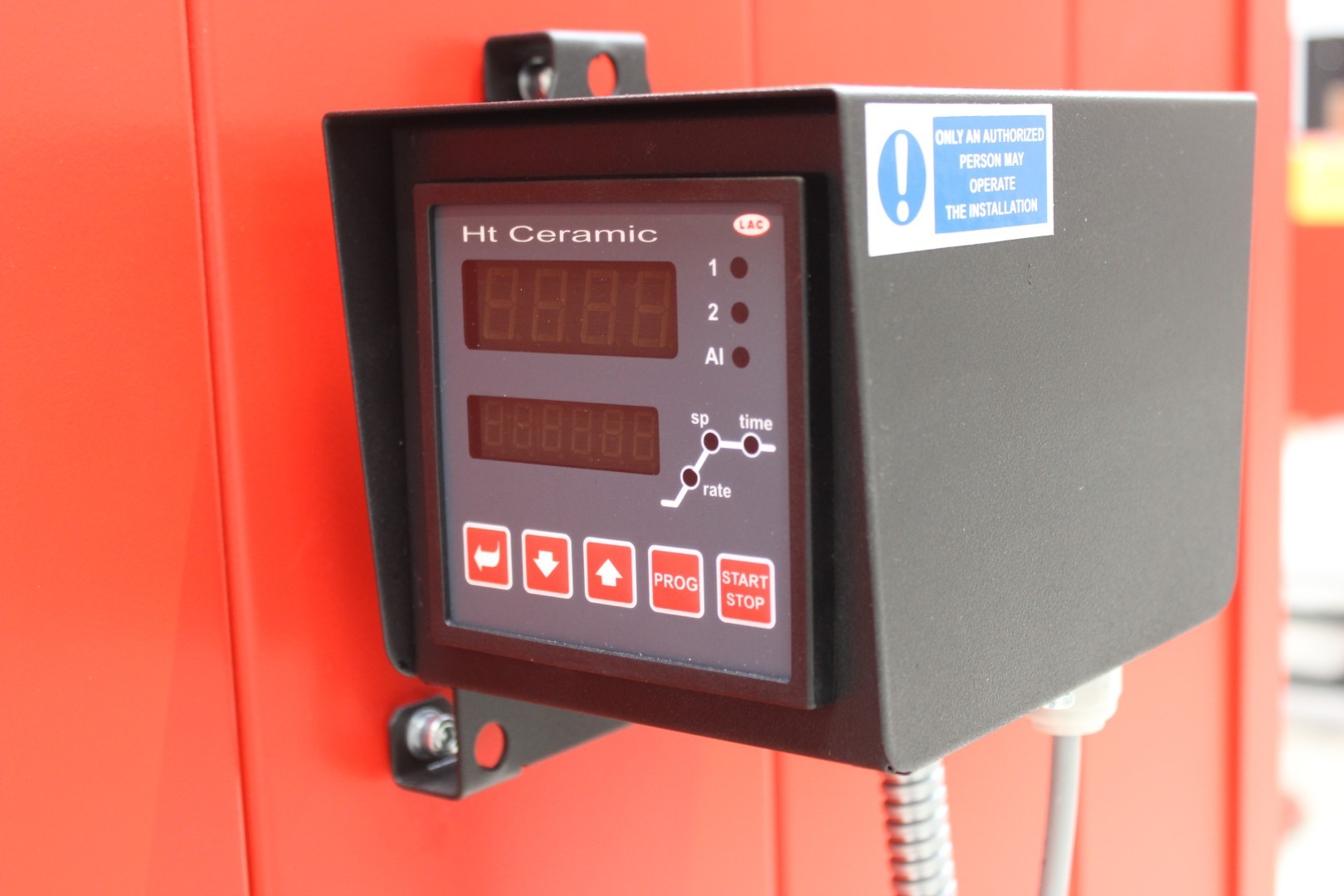
Four controller options for LAC M series ceramic kilns
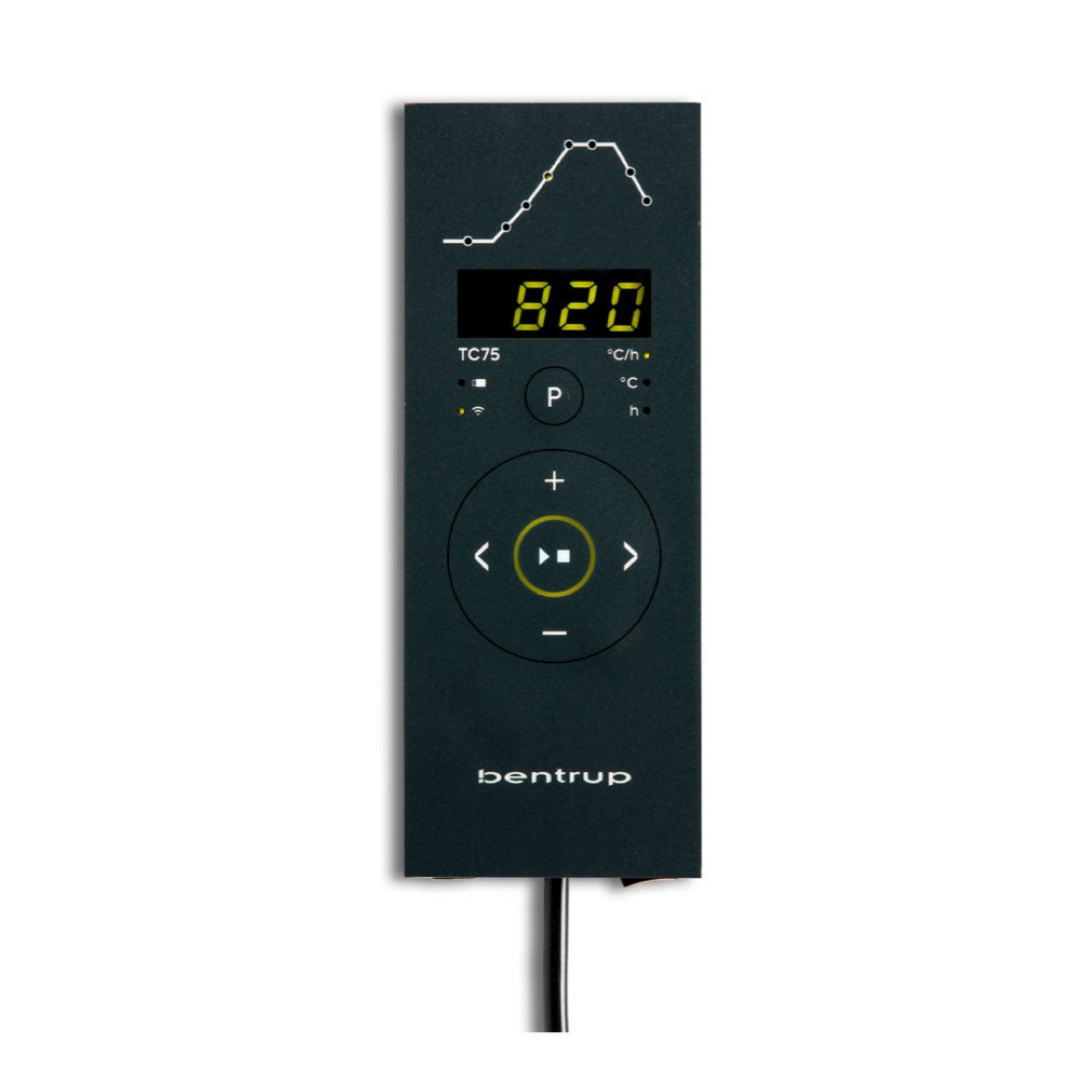
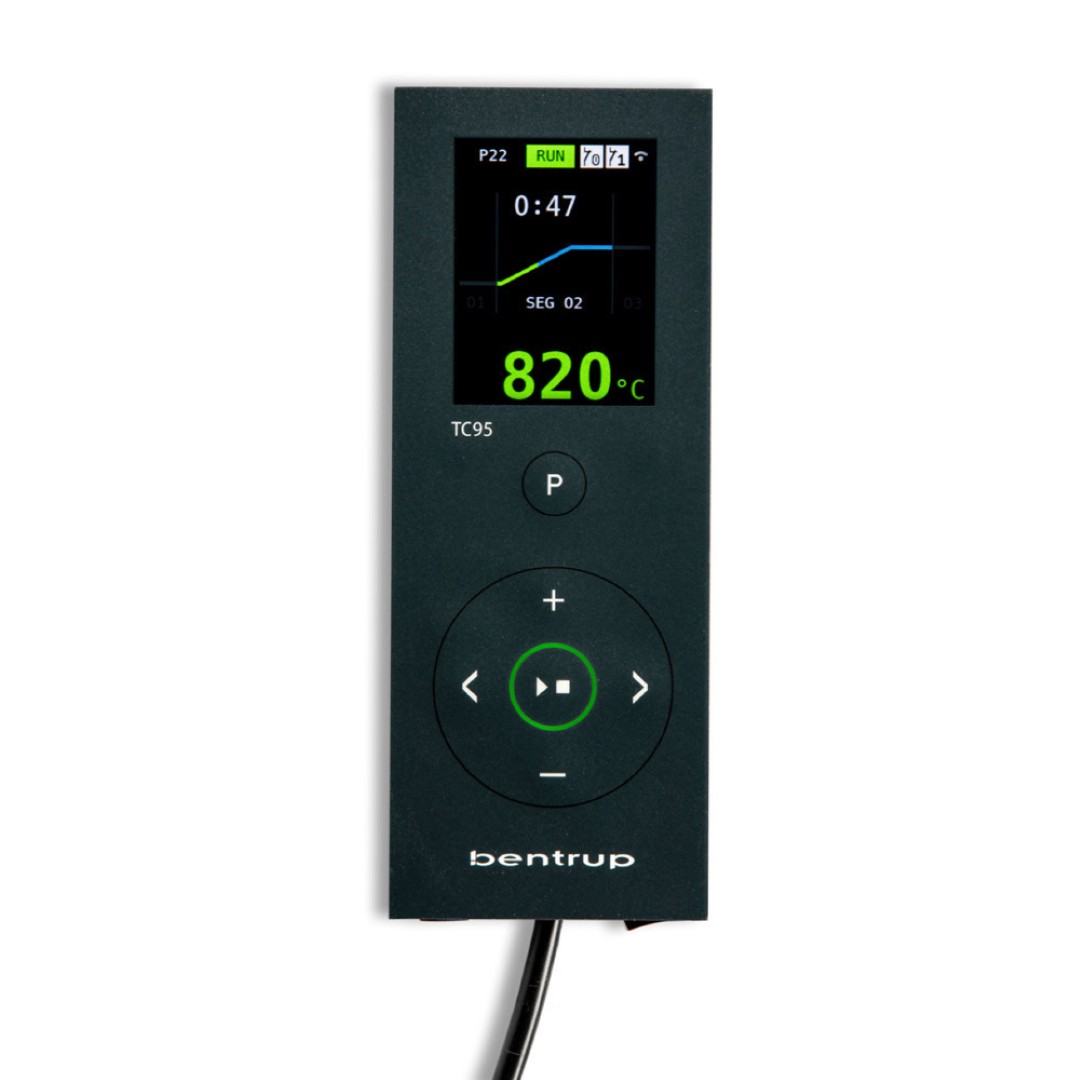
According to the current product range, LAC M series top-loading kilns can be configured with the Ht40AL, HtCeramic, Bentrup TC75 or Bentrup TC95 controller.
The main differences involve programme capacity, method of operation and options for working with process data. [1]
| Controller | Programme capacity | Selected functions | When it may be a suitable option |
|---|---|---|---|
| Ht40AL | 1 programme; 2 ramps and 2 dwell times | Linear ramp in °C/h; delayed start | Repeated, less complex firing profiles with an emphasis on straightforward operation |
| Bentrup TC75 | Up to 6 programmes with 4 steps each | Delayed start; USB data logging for up to 48 hours; Wi-Fi | Several regularly used profiles with an interest in data recording or remote access |
| HtCeramic | Up to 20 programmes with 15 steps each | Linear ramps or reaching a target value within a specified time; real-time clock; memory for 500 records | A larger number of different or more detailed firing profiles and process recording |
| Bentrup TC95 | Up to 20 programmes with 20 steps each | 2.8-inch graphic LCD; delayed start; USB data logging for up to 48 hours; Wi-Fi | Multiple profiles, greater programming flexibility and graphic display of the process |
The guidance in the final column is an interpretation of the available functions, not a restriction on how each controller may be used. The final choice should be based on the type of firing, operator requirements and the current kiln configuration.
How to choose a kiln controller
You do not need to memorise the technical names of every function. It is more important to describe how the kiln will actually be used:
- How many different firing programmes do you use regularly?
- Are a few ramps and dwell times sufficient, or do you need a more detailed profile?
- Will several people operate the kiln, making clearly stored programmes particularly important?
- Do you want to record and compare firing cycles retrospectively?
- Would monitoring via a smartphone or computer be useful?
- Do you need a delayed start or precise scheduling using a real-time clock?
If your studio repeatedly uses one straightforward firing profile, a large programme memory may remain unused.
A school, shared studio or professional operation may benefit from more stored programmes and process data logging. These records make it easier to compare the actual course of individual firings and provide more useful information when investigating an unexpected deviation.
Remote access does not replace safe operation
Wi-Fi connectivity and remote access can improve visibility of the running process, but they do not replace safety procedures, workplace supervision or the manufacturer’s operating instructions.
Delayed start should only be used in a way permitted for the particular kiln and workplace conditions.
Maximum temperature is not the normal operating temperature
When setting a programme, distinguish between the kiln’s maximum temperature and its recommended operating temperature range.
According to the current specifications, LAC M series kilns have a Tmax of 1320 °C and a recommended operating temperature range of 700–1250 °C.
LAC also states that Tmax is the maximum temperature the kiln can attain but is not suitable for long-term operation. [1]
The value of 1320 °C is not a recommended temperature for a standard firing cycle and does not confirm suitability for a particular clay body, glaze or item of kiln furniture. The programme must respect all the materials being used as well as the kiln’s operating limitations.
Why the same programme may not always produce the same result
A stored programme improves the repeatability of the settings, but it is not the only condition required for a repeatable firing result.
The result may also be affected by:
- The quantity and arrangement of the load
- The kiln shelves being used
- The initial condition of the pieces
- The condition of the heating elements
- The power supply
- The temperature measurement
It is therefore useful to record not only the programme name but also the date, composition and arrangement of the load, materials used and observed result.
A controller record shows the values measured by the kiln’s system; it does not describe every condition affecting each individual piece.
A programme obtained from another user should be treated, at most, as information for professional assessment. Without knowing the particular kiln, sensor, materials, ceramic pieces and loading arrangement, it cannot safely be adopted as a universal firing recipe.
Frequently asked questions
Is a controller with more steps always better?
No. It provides more options for creating a detailed profile, but this is an advantage only if you actually need those options and know how to use them correctly.
Can I enter only the final temperature?
This depends on the controller and the selected programme. For safe and repeatable operation, follow the controller instructions and use a verified profile for the particular process.
Does a dwell guarantee a uniform temperature in every piece?
Not by itself. The result is also affected by the kiln construction, distribution and mass of the load, kiln furniture and the complete firing schedule.
Is remote monitoring the same as safe unattended operation?
No. Viewing the process on a smartphone or computer does not replace the operating instructions, workplace safety requirements or the operator’s responsibilities.
How can I determine which controller I need?
List the materials and firing processes you use, the number of different profiles, the required level of programme detail and whether you need data logging or remote access. A suitable option can then be assessed with the kiln supplier.
The right choice begins with a description of your operation
When requesting a ceramic kiln, describe the products and materials you fire, the temperature profiles you use and how often each type of firing is repeated.
Include information about who will operate the kiln and whether you need multiple stored programmes, process data logging or Wi-Fi connectivity.
LAC offers several controller options for M series top-loading kilns, allowing the configuration to be adapted to straightforward hobby use, a school studio or professional operation.
The objective is not to select the largest possible number of functions, but a controller that allows your firing processes to be managed clearly, safely and repeatably.
Explore LAC ceramic kilns and controllers
Compare M series ceramic kilns and available controllers for hobby, school and professional firing processes.
Not sure which kiln controller is suitable for your studio?
Tell us which materials and firing profiles you use, how many people will operate the kiln and whether you need data logging or remote access.
👉 Contact us and we will help you choose a suitable LAC kiln and controller configuration.
What to remember
Ramps define how the setpoint temperature changes, while dwell times define how long it is maintained at a specified value.
Choose the controller according to the complexity and number of your firing profiles, the needs of the operators and the process data you genuinely intend to use.