
How to Choose a Laboratory Furnace: 7 Questions to Ask Before You Buy
How to Choose a Laboratory Furnace: 7 Questions to Ask Before You Buy
How to define your laboratory process before comparing furnace models and specifications
Key insight:
The right laboratory furnace is not defined by maximum temperature and chamber volume alone. Start with the sample, the required process and what happens during heating.
You need to heat samples at 1,000 °C and you know roughly how large they are, so you start by comparing the maximum temperatures and chamber volumes of different furnaces.
That is a logical starting point—but it is not enough to choose the right furnace.
You also need to consider what the sample releases during heating, how long the furnace must remain at the required temperature and whether the process needs a supply of fresh air.
These factors often determine whether you need a standard chamber furnace, a muffle furnace or equipment designed for a specific laboratory process.
You do not need to know every technical detail from the outset. The following seven questions will help you identify what you already know about your process—and what you still need to discuss with a furnace specialist.
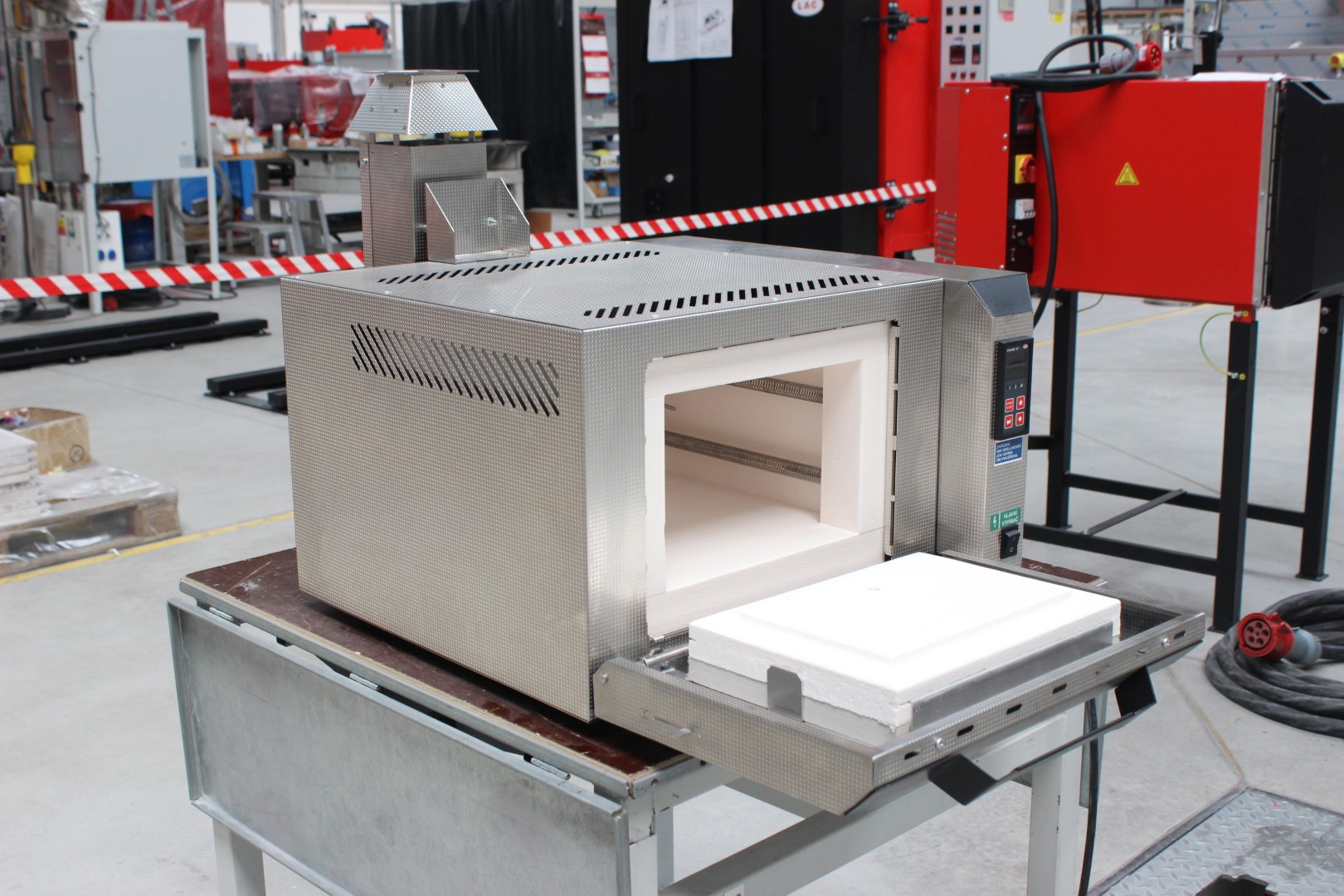
1. What will you heat in the furnace?
Choosing a laboratory furnace starts with the sample. Enamel firing may require a different furnace design from ash content determination or research conducted under a protective atmosphere.
For an initial assessment, we mainly need to know:
- What the material is
- Its quantity and physical state
- Whether it will be placed directly in the furnace, in a crucible or in another container
- What is expected to happen to it during heating
Even seemingly minor details can matter. Powder can spill, liquids can leak and some materials expand, contract or release fumes during heating.
All of these factors can affect the choice of furnace chamber and construction.
If a safety data sheet is available for the material, include it with your enquiry. A product’s trade name alone may not provide enough information for a reliable assessment.
What this means for your choice: Do not begin by selecting a particular furnace model. Start by describing the sample and the result you need to achieve.
2. At what temperature—and for how long—will the process run?
A common question:
“I need to operate at 1,100 °C. Is a furnace with a maximum temperature of 1,100 °C sufficient?”
This is where it is easy to make a costly mistake. The maximum temperature, or Tmax, is the upper temperature limit of the equipment. It may not be suitable for regular or prolonged operation.
When comparing models, focus primarily on the recommended working temperature range of the specific furnace.
You must also consider the holding time, heating rate, cycle frequency and properties of the load.
A general rule such as “subtract 100 °C from the maximum temperature” does not apply equally to every furnace. Some designs can operate closer to their maximum temperature than others.
Prepare at least a simple description of the cycle:
“Heat to 800 °C, hold for two hours and then allow the furnace to cool naturally. One cycle per day.”
This tells a furnace specialist far more about your operating requirements than the highest required temperature alone.
What this means for your choice: The furnace must be suitable for the required temperature under your actual operating conditions—not merely capable of reaching it briefly.
3. What will the sample release during heating?
Does the sample produce smoke? Does it contain water, a binder, oil or another component that will evaporate or decompose during heating? Could it release aggressive fumes?
The answer can affect both furnace service life and workplace safety.
A muffle furnace is not automatically suitable for every chemical substance. Suitability always depends on the exact composition of the sample, the quantity of fumes released and the temperature at which they are generated.
If the sample releases anything during heating, tell us what it is, approximately how much is produced and at what temperature.
This information helps us assess the required protection of the heating elements and the appropriate method of removing the furnace atmosphere.
Flammable, explosive or toxic substances require particular attention
A standard laboratory furnace is not automatically suitable for such materials, and the complete process requires a separate safety assessment.
What this means for your choice: The composition of the fumes is just as important as the required temperature. If you do not know what will be released, say so—the process should be assessed before a furnace is selected.
4. How large and heavy will the load be?
Chamber volume in litres is useful for an initial comparison. It does not tell you whether a long sample, a tall crucible or several containers placed side by side will actually fit inside the furnace.
Always check the actual internal chamber dimensions. Allow sufficient clearance between samples and enough room for safe loading and handling.
Weight matters as well. The total load includes not only the sample but also crucibles, dishes, shelves and any other fixtures.
The maximum floor load—and the permissible area load where specified for the model—must not be exceeded.
Consider how the furnace will be loaded
- Standard chamber furnaces are front-loading
- LMV furnaces have a vertical ceramic muffle and are loaded from above
- In LT furnaces, the process takes place inside a ceramic tube
- LSP gradient furnaces allow samples to be tested at several temperature levels simultaneously
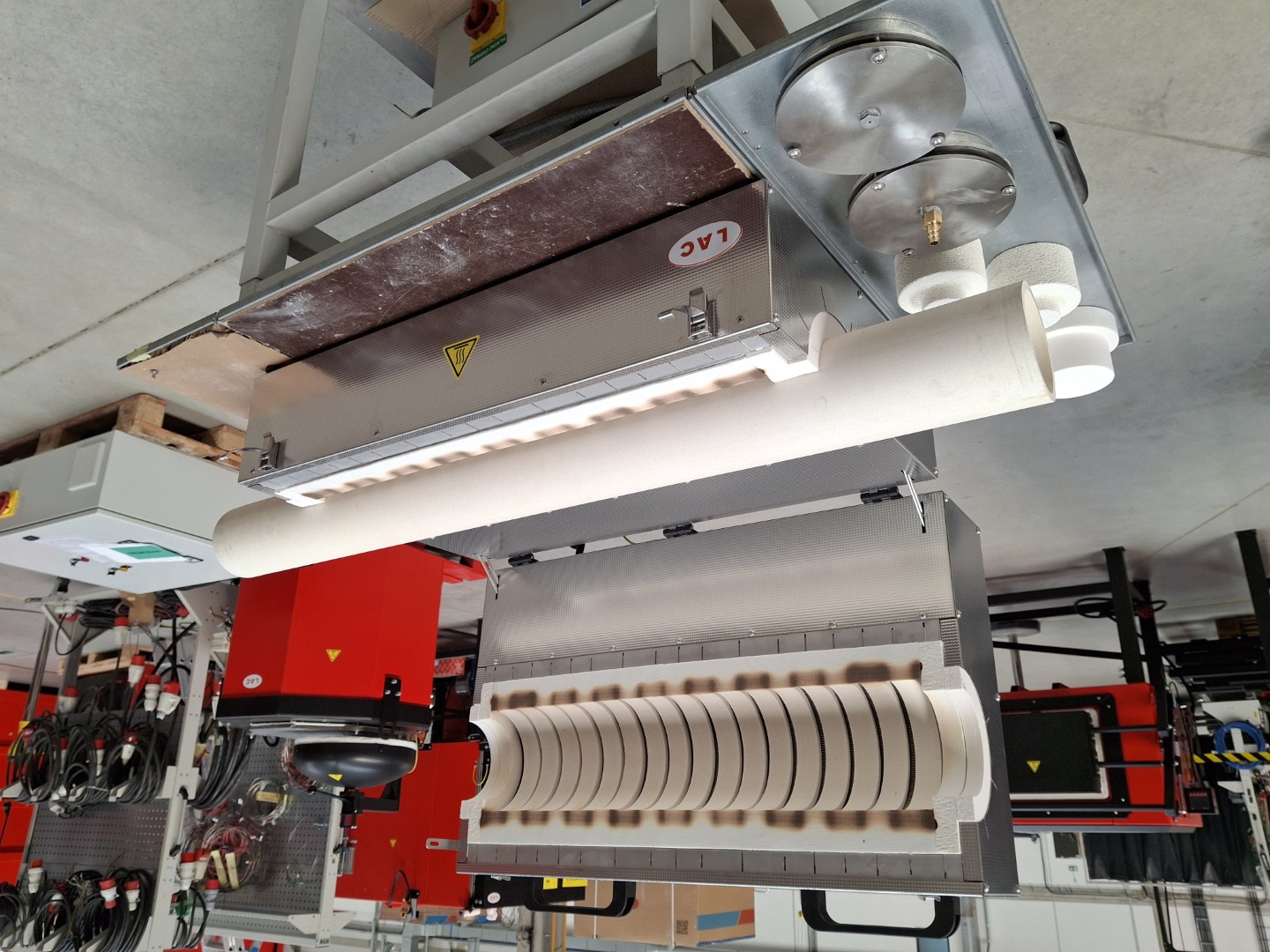
The largest furnace is not automatically the best option. An unnecessarily large working space can increase the purchase price without providing any practical benefit for your process.
What this means for your choice: State the dimensions and weight of the complete load, including containers and fixtures, in your enquiry. Chamber volume alone is not enough.
5. Do you need fresh air, fume extraction or a protective gas?
These requirements are often confused, but each serves a different purpose.
When the process needs oxygen
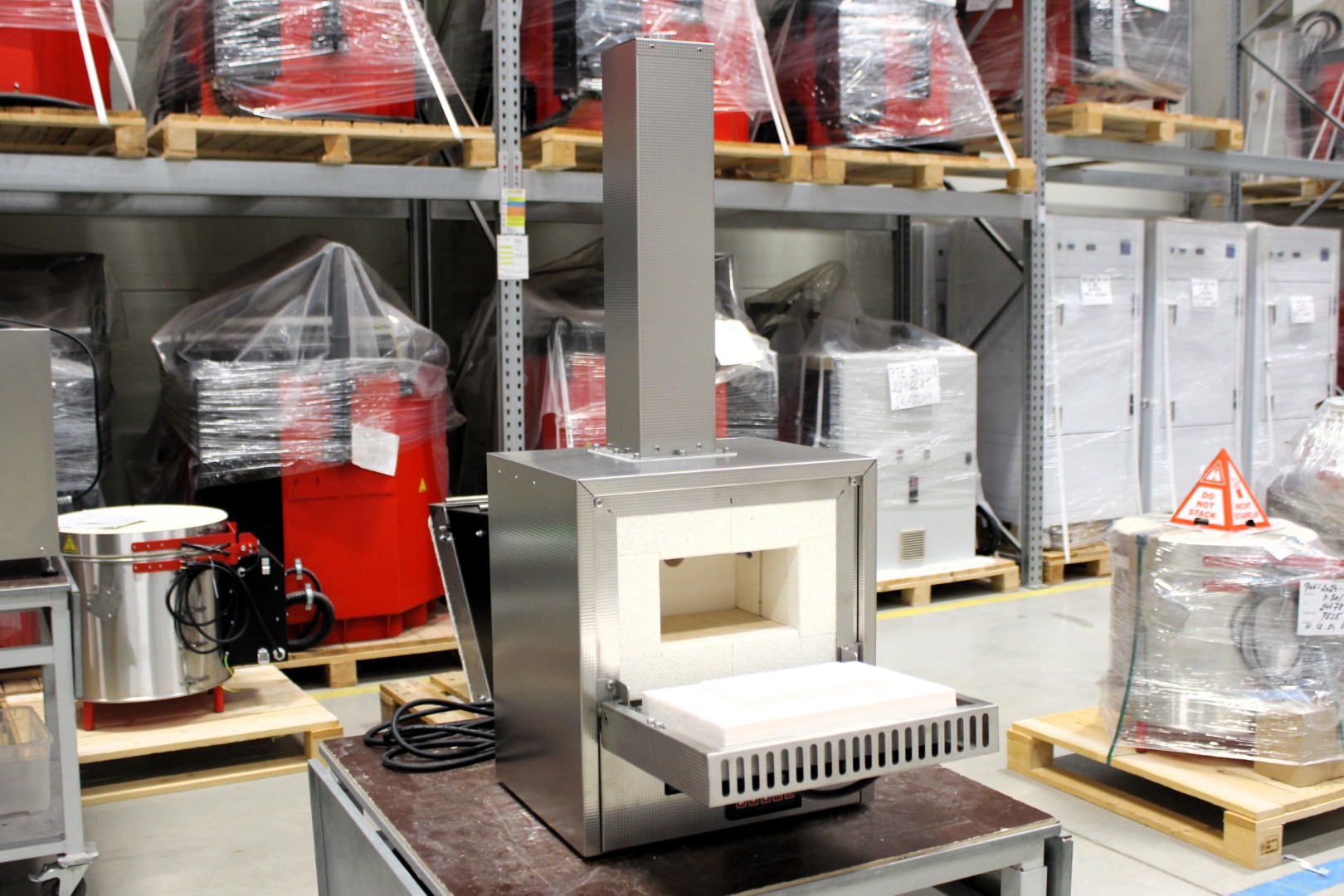
A supply of fresh air is important for processes such as oxidation or ash content determination. LZ ashing furnaces are designed for applications of this kind.
LZ furnaces have fresh-air inlet channels, an exhaust chimney and a system that preheats the incoming air. According to the current technical documentation, the entire chamber volume is exchanged approximately six to twelve times per minute, depending on the operating temperature. This is different from a standard furnace equipped only with a ventilation opening.
When the sample releases fumes
An exhaust chimney on the furnace does not necessarily ensure that fumes are safely removed from the room. Depending on their quantity and properties, forced extraction or further modifications to the workplace may be required.
We therefore need to know what will leave the furnace and how the atmosphere is to be safely discharged.
When you want to limit oxidation
Some laboratory furnaces can be fitted with a protective-atmosphere inlet. A gas inlet is not the same as a gas-tight furnace, however, and it does not guarantee precisely defined conditions throughout the chamber.
If you do not yet know the required gas flow or level of gas tightness, start by describing the result you need—for example, limiting oxidation of the sample. A furnace specialist can then determine what additional information is required.
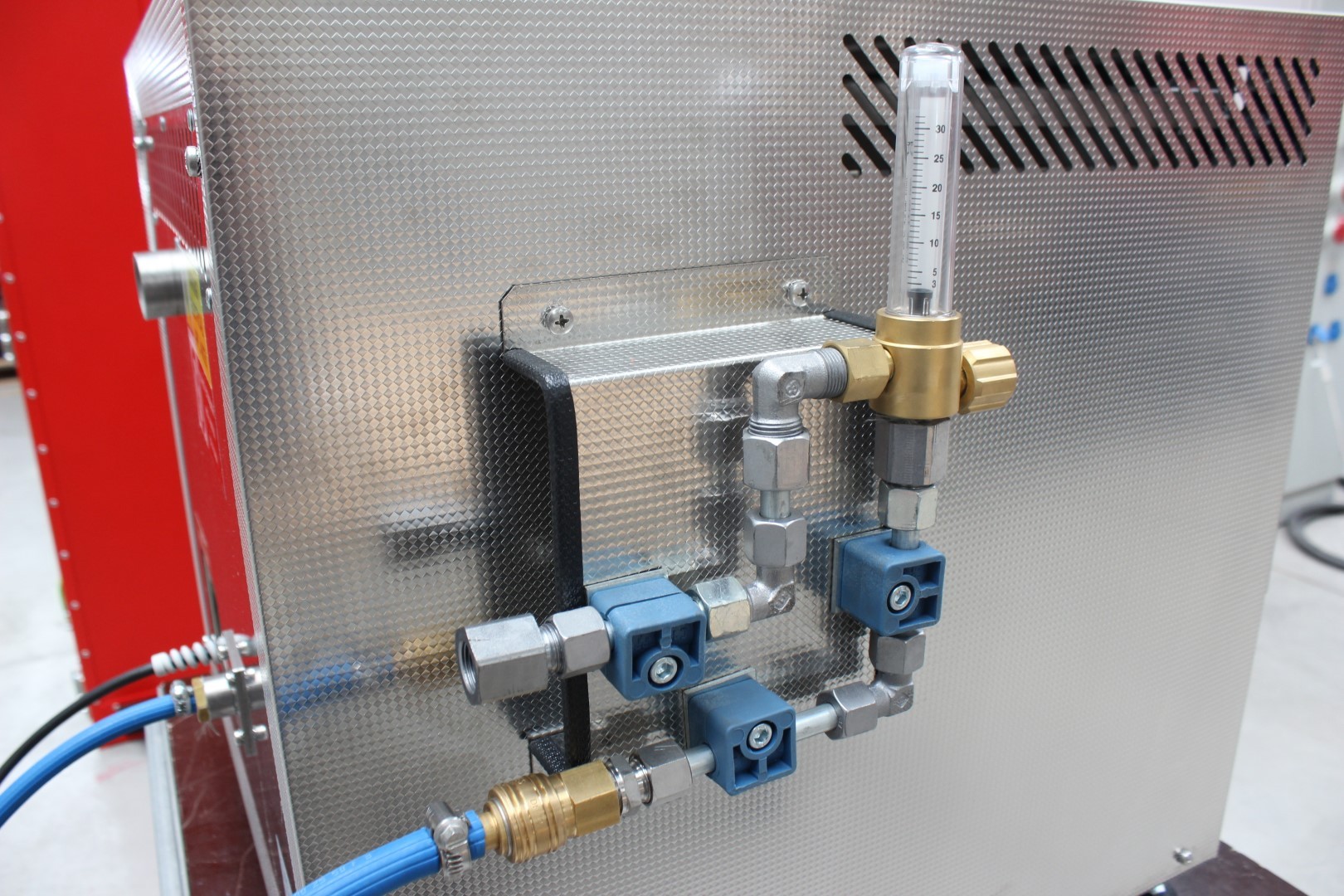
What this means for your choice: Explain why you need fresh air, extraction or gas. The correct solution can only be selected once its purpose is clear.
6. What should the temperature cycle look like?
A programme with only a few ramps and holds may be sufficient for a straightforward process. Other applications require a more complex temperature profile, a larger number of stored programmes or process data recording.
When choosing a controller, it helps to know:
- How many target temperatures the furnace must reach during the cycle
- The required heating rate for each ramp
- The duration of each hold
- Whether programmes need to be stored and reused
- Whether you need to record or export temperature data
Be careful not to confuse several related terms. Control accuracy, temperature stability over time and temperature distribution throughout the furnace chamber are not the same.
A precise controller alone cannot ensure that the temperature is identical at every point in the chamber.
Do you need to monitor changes in sample weight?
An LG gravimetric furnace may be suitable. It combines a chamber furnace, a laboratory balance and software for evaluating weight loss in relation to temperature and time.
What this means for your choice: Send us your temperature programme, even if it is only a preliminary version. It will help determine the appropriate furnace, controller and method of process documentation.
7. Is the installation site ready for the furnace?
A laboratory furnace must not only suit the process. It must also fit safely into the available space and be connected correctly.
Before ordering, check:
- The available supply voltage and circuit protection
- The external dimensions of the furnace and the required clearance around it
- The load-bearing capacity of the bench or floor
- The access route for moving the furnace to its installation position
- How excess heat will be removed from the room
- Whether a connection to an extraction system is available
- Whether technical gases will be required
For larger equipment, doorway widths, stairs and the availability of suitable handling equipment may also determine whether installation is possible.
Rated power is not the same as cycle consumption
The furnace’s rated power is not the same as the actual energy consumption of one cycle. Consumption depends on the programme, operating temperature, holding time, load size and frequency of door opening.
What this means for your choice: Check the technical conditions at the installation site before placing the order. This can prevent unexpected modifications to the electrical supply, extraction system or installation area.
Which laboratory furnace might suit your process?
Use the following table as an initial guide, not as a final recommendation.
| Your process requirement | LAC series to consider |
|---|---|
| General heat-treatment processes in a chamber furnace | L or LE |
| Fumes from which the heating elements need to be protected | LMH or LMV |
| Top loading into a vertical ceramic muffle | LMV |
| Oxidation or ash content determination with an intensive supply of fresh air | LZ |
| Monitoring weight loss during heating | LG |
| Processing inside a ceramic tube | LT |
| Testing samples at several temperature levels simultaneously | LSP |
| Higher operating temperatures without aggressive fumes | LH |
| Firing, sintering and testing at higher temperatures | LHS |
The suitability of a particular model always depends on the operating temperature, dimensions and weight of the load, fumes generated during the process and the required equipment.
What to include in your initial enquiry
You do not need to prepare a complete technical specification. For an initial consultation, the following information is usually enough:
- A description of the material or sample
- Its approximate dimensions, weight and quantity
- The required operating temperature and holding time
- Details of anything released during heating
- The intended outcome of the process
If you also know the required heating rate, extraction method, process gas or data-recording requirements, include these details as well. If you do not, LAC specialists can help you identify and complete the missing information.
Frequently asked questions about choosing a laboratory furnace
Is the maximum temperature enough to choose a furnace?
No. You must also consider the recommended working temperature range of the particular model and how the furnace will be used. Holding time, cycle frequency and the properties of the load all matter.
Is a muffle furnace suitable for every aggressive substance?
No. A ceramic muffle helps separate the working space from the heating elements, but the chemical compatibility of the specific sample must always be verified.
Does a laboratory furnace need fume extraction?
It depends on what the sample releases. If the process generates vapours, smoke, dust or other fumes, their quantity and the method of safely removing them must be assessed.
Can a protective gas be used in a laboratory furnace?
Some models can be fitted with a protective-atmosphere inlet. A gas inlet does not mean that the furnace is gas-tight, however. The appropriate solution depends on the specific process.
What if I do not know all the required information yet?
That is not a problem. Start with what you know: describe the sample, the required temperature and the intended result. LAC specialists will help you determine what else needs to be established or verified.
Understand the process first. Then choose the furnace.
The right laboratory furnace is not defined by maximum temperature and chamber volume alone.
Sample behaviour, cycle duration, fumes generated during heating, loading method and requirements for atmosphere or control are equally important.
The more accurately you describe the process, the easier it is to select a standard furnace, suitable accessories or any necessary custom modification.
Explore LAC laboratory furnaces
Compare chamber, muffle, ashing, tube, gravimetric, gradient and high-temperature laboratory furnaces for testing, development and quality control.
👉 Explore laboratory furnaces in the LAC e-shop
👉 View the complete range of LAC laboratory furnaces and dryers
Need help choosing a laboratory furnace?
Send us the basic details of your sample and planned thermal process. LAC specialists will review your requirements with you and help you find a solution that matches the way you will actually use the furnace.
What to remember
Do not choose a laboratory furnace according to maximum temperature and chamber volume alone.
Define the sample, complete temperature cycle, load dimensions, fumes, atmosphere requirements and installation conditions before selecting the furnace.