
How Long Does It Take to Fire Ceramics? From Drying to Kiln Cool-Down
How Long Does It Take to Fire Ceramics? From Drying to Kiln Cool-Down
Why heating time alone does not tell you when your ceramic pieces will be ready
Key insight:
A firing cycle does not end when the kiln stops heating. Cooling, handling and preparation between firings must also be included in your production schedule.
Your pieces have been glazed and you are looking forward to seeing the results. However, there may still be a long way to go between the final brushstroke and opening the kiln.
Heating alone takes many hours, and once it has finished, both the kiln and the ceramic pieces must cool down. A single cycle can therefore take a full day or longer.
How should you plan your firing schedule so that the waiting time does not catch you by surprise?
The exact duration of a firing cycle is not determined by the target temperature alone. It depends on the material, the size and thickness of the pieces, the kiln load, the selected programme and the kiln itself.
This guide covers conventional firing in an electric ceramic kiln, not specialised techniques such as raku.
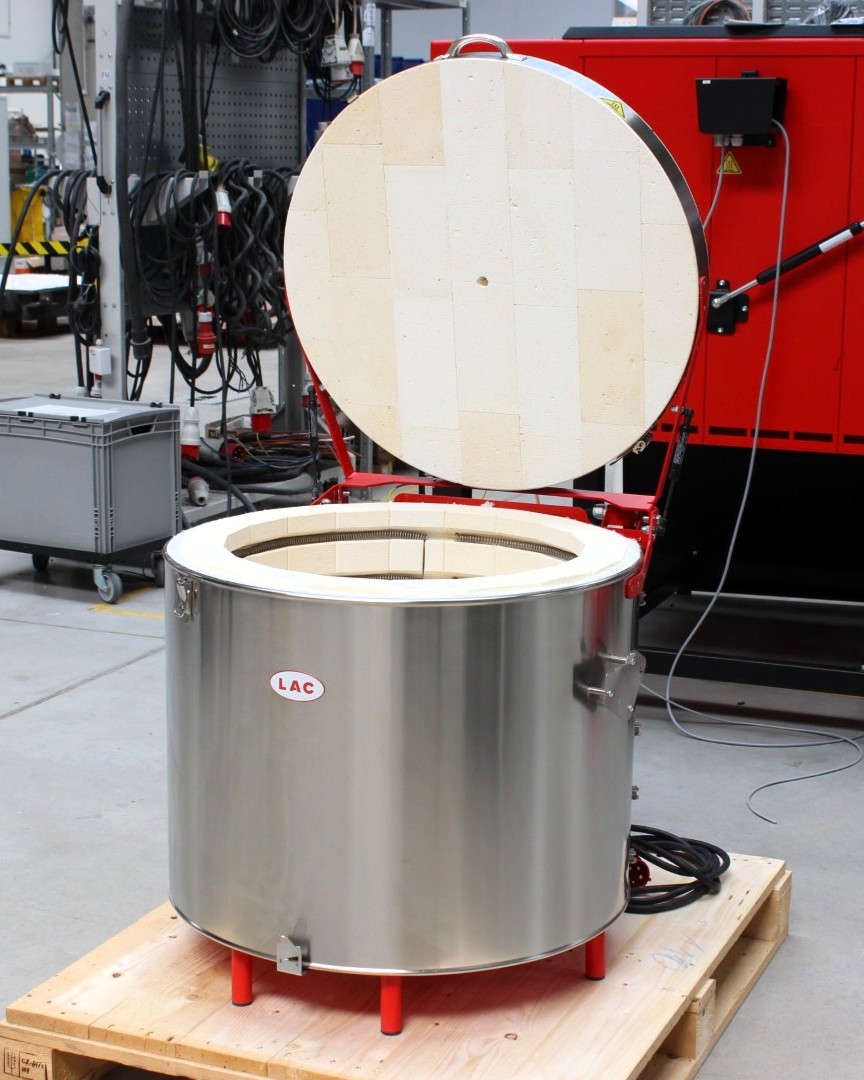
First decide which period of time you need to know
The question “How long does it take to fire ceramics?” can refer to three different periods:
To plan your next load, you need to know how long the kiln will be occupied. To calculate when an order or pieces from a ceramics course will be ready, you need to consider the entire production process.
The end of the programme does not necessarily mean that the kiln can already be opened and unloaded.
1. Drying: the waiting time starts before the kiln
The first waiting period begins after forming. Drying time depends on the clay body, the thickness and shape of the piece and the conditions in the studio. A thin ornament and a thick-walled sculpture therefore cannot automatically be scheduled for firing on the same date.
The surface may feel dry while moisture remains inside the piece. If the temperature rises too quickly, the resulting steam may damage it. Drying must therefore be planned particularly carefully for pieces with thick or uneven walls.
There is no universal rule stating that everything will be ready after three days.
What about preheating?
Some processes include additional drying or preheating in the kiln. If you use either of these stages, include the time in your kiln occupancy calculations. The specific settings must be based on the kiln instructions and material requirements. Preheating is not automatically a substitute for thorough drying.
2. Bisque firing: the first firing has a purpose
In a conventional two-firing process, bisque firing follows drying. It strengthens the piece for further handling and glazing. During heating, the clay body also undergoes a series of changes while water and other gaseous components are released.
The heating rate must therefore suit the actual pieces being fired. A programme that works for small, thin-walled items may not be suitable for a large sculpture.
The fact that a kiln can increase the temperature more quickly does not mean that this rate is appropriate for its load.
Cooling follows the heating stage and any programmed dwell times. The pieces may only be removed once the kiln has cooled sufficiently in accordance with the manufacturer’s instructions. Your production plan must therefore allow for the complete bisque-firing cycle.
3. Glazing and glaze firing: include the second cycle
Glazing follows the bisque firing. Applying glaze introduces water to the piece again, so time must also be allowed for it to dry before the next firing. This preparation time is not the same for every type of piece or application method.
The glaze firing is determined by the requirements of the clay body and glaze. Its schedule may differ from the bisque firing, but it cannot be assumed that it will always be shorter or must always take place at a higher temperature. The correct approach depends on the specific process.
Single-firing processes and additional decorative firings are also possible. If you use them, create your schedule according to the actual number of cycles required.
Allow for two separate periods of kiln occupancy and for the work required between them.
4. Dwell time: why reaching the target temperature may not mean the end
A firing programme may include a dwell time after a specified temperature has been reached. The kiln then maintains the target temperature for the programmed period. A dwell can help equalise the thermal effect throughout the load and can influence the changes taking place in the ceramic body and glaze.
Temperature and time work together to determine the result.
Two programmes with the same maximum temperature may therefore produce different results if their heating rates or dwell times differ. A dwell should not be shortened arbitrarily simply to meet a production deadline.
Pyrometric cones evaluate more than temperature
Pyrometric cones respond to the combined effect of time and temperature and help evaluate the firing process in relation to the result. The programme duration alone does not provide this information.
5. Cooling: the kiln is switched off but still occupied
The ceramic pieces are not the only hot components. Kiln shelves and the kiln structure also retain heat.
The duration of the cool-down period is affected by the load, firing temperature, kiln construction and insulation, as well as the surrounding conditions. With some glazes, the cooling schedule is also an intentional part of the firing process.
Do not rush the cool-down period
Switching off the heating is not an instruction to open the lid or door. A sudden change in temperature may damage the ceramic pieces. The appropriate time for opening the kiln must be determined by the instructions for the particular kiln and the requirements of the material being processed.
The appropriate opening time should not be determined merely by the number of hours since heating ended. The general assumption that “it will be cool by morning” may not apply in your studio.
Until you have verified the duration of your own cycles, leave sufficient time between scheduled firings.
Planning example: ten hours of heating does not mean ten hours of kiln occupancy
Illustrative example only:
The following figures are provided solely to demonstrate production planning. They are not measurements from a LAC kiln, a recommended firing programme or a specified safe cool-down time.
Imagine that heating, including dwell times, takes 10 hours. In this fictional example, cooling to a condition suitable for unloading in accordance with the relevant instructions takes another 14 hours. Loading and unloading require a total of 1 hour.
+ 14 hours of cooling
+ 1 hour of handling
If the same pieces still require a second firing, another separate cycle will be needed. You must also add the time required for glazing and drying.
For your actual production schedule, replace these model figures with times recorded from your own firing cycles. Do not use them to determine when your kiln can be opened.
How to create a reliable schedule for your studio
The most useful information will come from several successful and comparable firing cycles. Record not only the controller settings but also when the kiln could actually be unloaded:
- Kiln model, clay body and glaze, type of firing and programme designation
- Approximate number of pieces, their size and thickness, and the number and arrangement of kiln shelves
- Start time, end of heating and dwell stages, and the end of any controlled cooling
- Unloading time once the manufacturer’s instructions had been satisfied; record any additional delay while waiting for an operator separately
- Firing result and every change made compared with the previous load
Compare firings that used the same programme and similar loads. If the cycle becomes significantly longer under comparable conditions or the controller displays an error message, provide the records to technical support.
Simply adding more time to the programme does not resolve an unknown cause.
What does this mean when choosing a LAC kiln?
When planning studio capacity, consider three factors together: how many pieces can be loaded appropriately, how many firing cycles they require and how long the kiln will remain occupied.
A larger chamber volume may reduce the number of separate loads, but it does not guarantee a shorter overall production time.
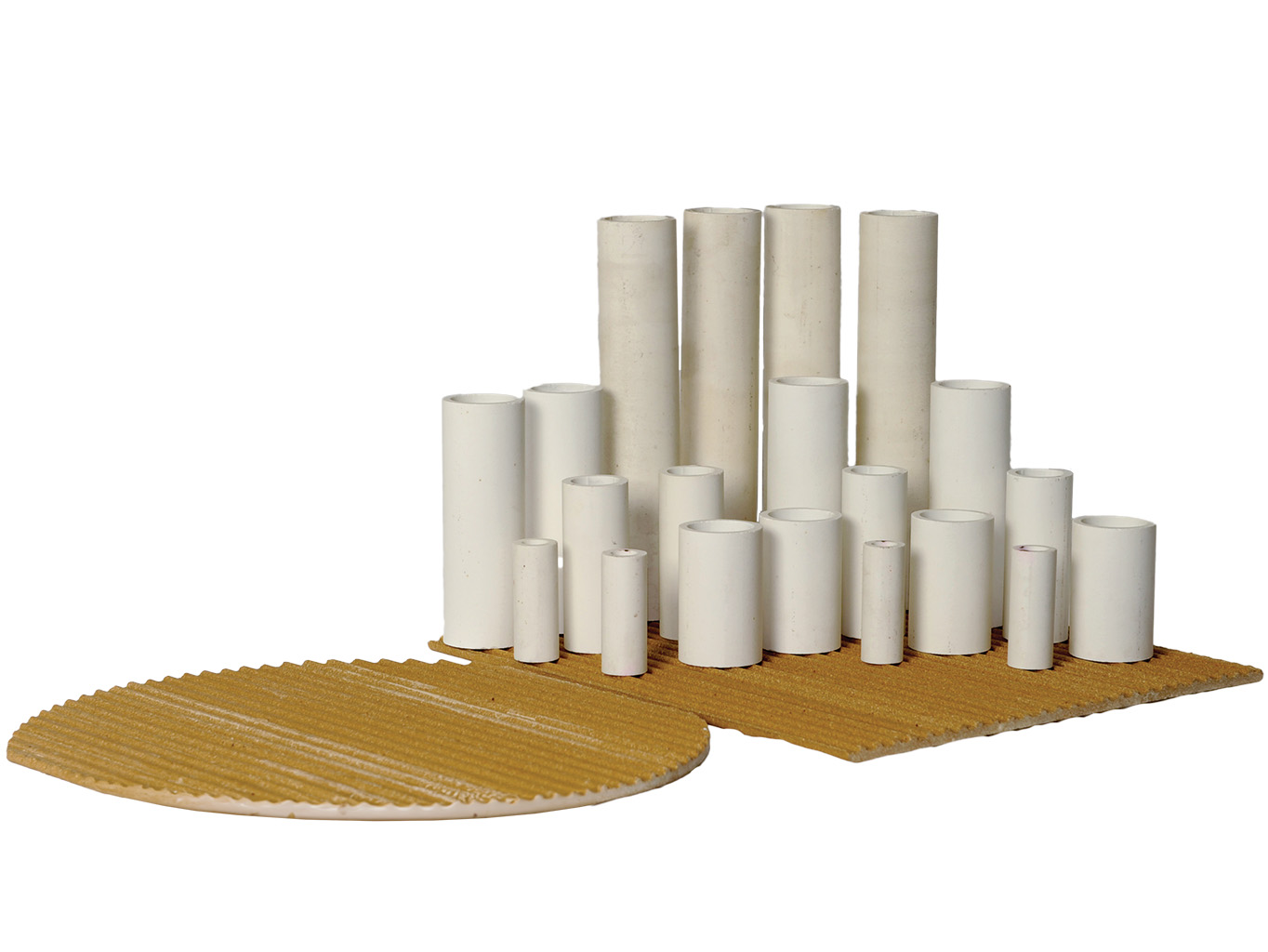
LAC M series kilns, for example, allow you to select a controller according to the required programme complexity and data-recording needs.
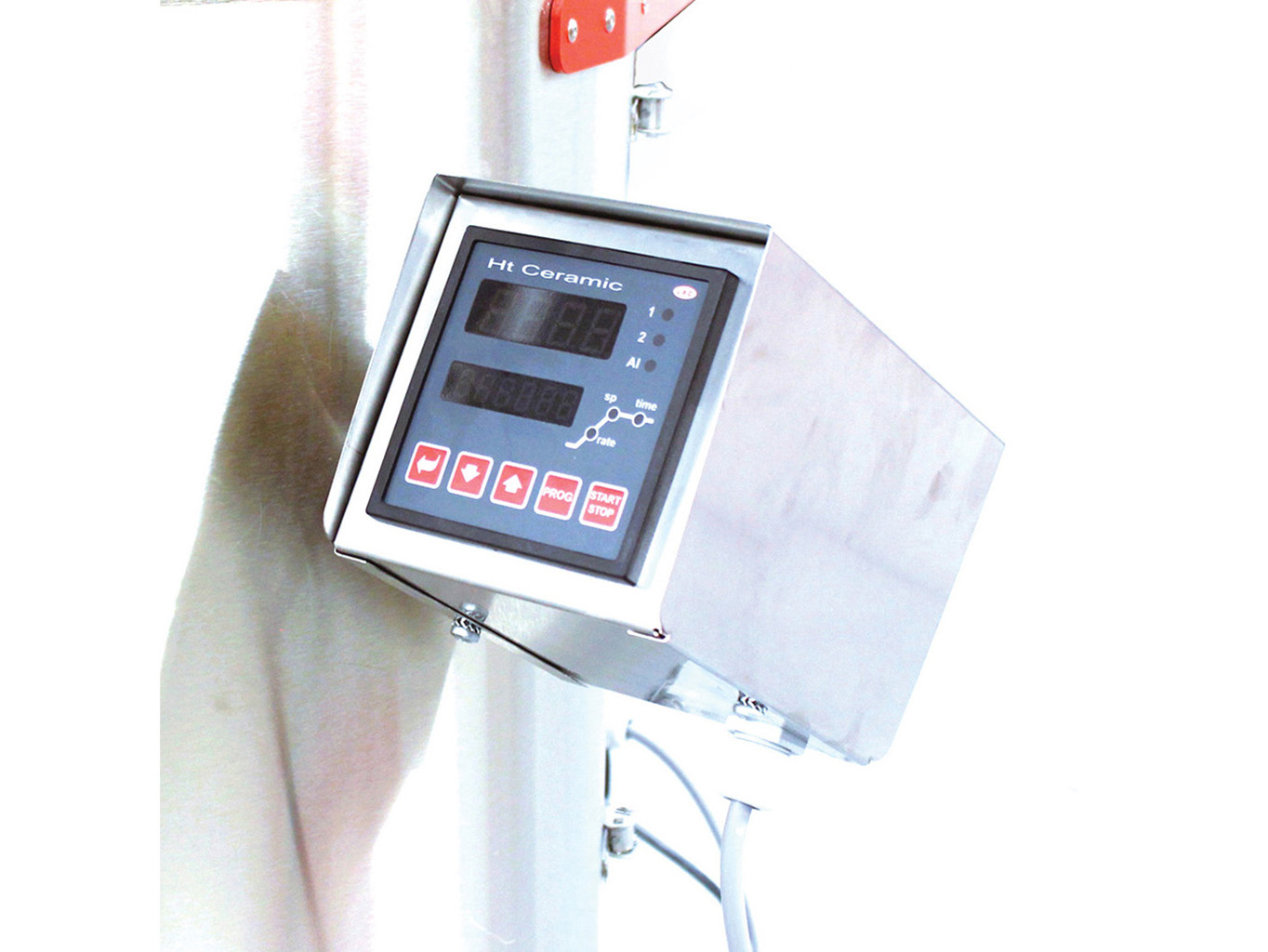
Examples of controller options
- HtCeramic: up to 20 programmes with 15 steps each and a memory for data logging
- Bentrup TC95: up to 20 programmes with 20 steps each, a USB interface and operating data logging
The exact storage and export options must be verified for the selected configuration.
These functions can make it easier to repeat programmes and monitor kiln operation. However, they do not in themselves shorten the firing cycle.
The technical data sheet and the kiln’s input power cannot tell you exactly how long your particular cycle will take.
Explore LAC ceramic kilns and controllers
Compare kiln sizes and available controllers for hobby studios, schools and professional ceramic workshops.
Plan around the complete cycle
When scheduling production, allow for the entire cycle, including cooling, preparation of the pieces and any waiting time before the kiln becomes available.
Are you selecting a kiln for a new studio or looking to increase your production capacity?
Send us details of the clay bodies and glazes you use, the dimensions and approximate number of pieces and your required firing frequency.
👉 Contact us and we will help you assess a suitable LAC kiln size and configuration.
What to remember
The target temperature and heating time provide only part of the information needed for production planning.
Drying, heating ramps, dwell times, cooling, handling and any additional firing cycles all influence when your ceramic pieces will actually be ready.