
Why Do Ceramic Pieces Crack During Firing? Causes and Prevention
Why Do Ceramic Pieces Crack During Firing? Causes and Prevention
How to investigate cracking in the ceramic body, glaze defects and pieces that break apart during firing
Key insight:
A crack discovered after firing may not necessarily have originated in the kiln. Before changing the programme, investigate forming, drying, residual moisture and material compatibility as well.
You open the cooled kiln expecting to find a finished bowl, only to discover a crack running across its base. Is the problem caused by the clay body, the drying process or the firing programme?
Before changing the programme, it is worth going back several steps. Possible causes include uneven drying, residual moisture, thermal stress and incompatibility between the clay body and glaze.
This guide covers conventional firing in an electric ceramic kiln and will help you identify what to investigate. It is not a guide to programming a specific kiln or a diagnosis of an individual piece.
First identify what has actually cracked
The word “crack” can describe several different defects. For an initial assessment, distinguish between:
The appearance of the defect provides a clue, but does not prove its cause. Photograph the entire piece, a close-up of the defect and the position where it stood in the kiln.
Record whether the crack was visible before firing, after the bisque firing or only after the glaze firing.
1. Drying: uniformity matters
Clay shrinks as it dries. If the rim of a bowl or the handle of a mug dries significantly faster than the rest of the piece, its individual parts shrink at different rates. The resulting stress may cause a crack.
Drying time alone is therefore not enough — the way in which the piece dries also matters.
Imagine a mug with a thin handle exposed to the air from every side while its thicker base remains damp. Extending the drying period by another day may not repair stresses that have already developed.
The aim is to minimise these differences from the beginning, for example by covering fast-drying areas appropriately and protecting the piece from one-sided draughts or direct heat.
Inspect the piece before loading
Check the base and joints carefully. Small defects can easily be overlooked. Finding a crack only after firing does not in itself prove that the programme was responsible. [1]
2. Shape and joints: the risk begins during forming
A particularly thick base combined with thin walls, abrupt transitions or a poorly made joint may create areas where stress becomes concentrated. The same process may therefore not be suitable for both a small ornament and a large sculpture.
If defects occur repeatedly, return to the construction of the piece. Examine differences in thickness, transitions between sections and the way in which individual parts were joined.
Even a grogged clay body does not guarantee that a piece will dry without cracking. Select the clay body and forming method according to the particular shape and the recommendations of the material supplier. [2]
What to examine:
- Differences in wall and base thickness
- Abrupt transitions between thick and thin sections
- Handles, attachments and other joined parts
- The suitability of the selected clay body for the shape
3. Residual moisture: a dry surface is not enough
A piece may appear dry while still containing water inside. During heating, this water turns into steam. If it cannot escape quickly enough, the piece may crack or break apart. Fragments may also damage the interior of the kiln.
Do not rely on the surface alone
If you are unsure whether a piece has dried completely, do not resolve the uncertainty by simply starting a standard firing programme. Neither the number of days spent on a shelf nor a dry-feeling surface provides universal proof that the piece is ready. [3]
Thick or complex pieces require appropriate preparation and a suitable process should be discussed with a specialist. Any additional drying in the kiln must comply with the kiln instructions and the material requirements.
4. Heating and cooling: the maximum temperature is not the only factor
During a rapid temperature change, the surface of a piece may be hotter or cooler than its interior. Different areas then change dimensions at different rates, creating thermal stress.
Excessively rapid heating or cooling — including opening the kiln too early — may therefore present a risk. [4]
Cracking associated with cooling is known as dunting in technical literature. Large pieces and objects with uneven wall thicknesses may be particularly sensitive.
Their position in the kiln also has an effect: a wide base resting on a kiln shelf may cool differently from the exposed walls.
The quartz transformation
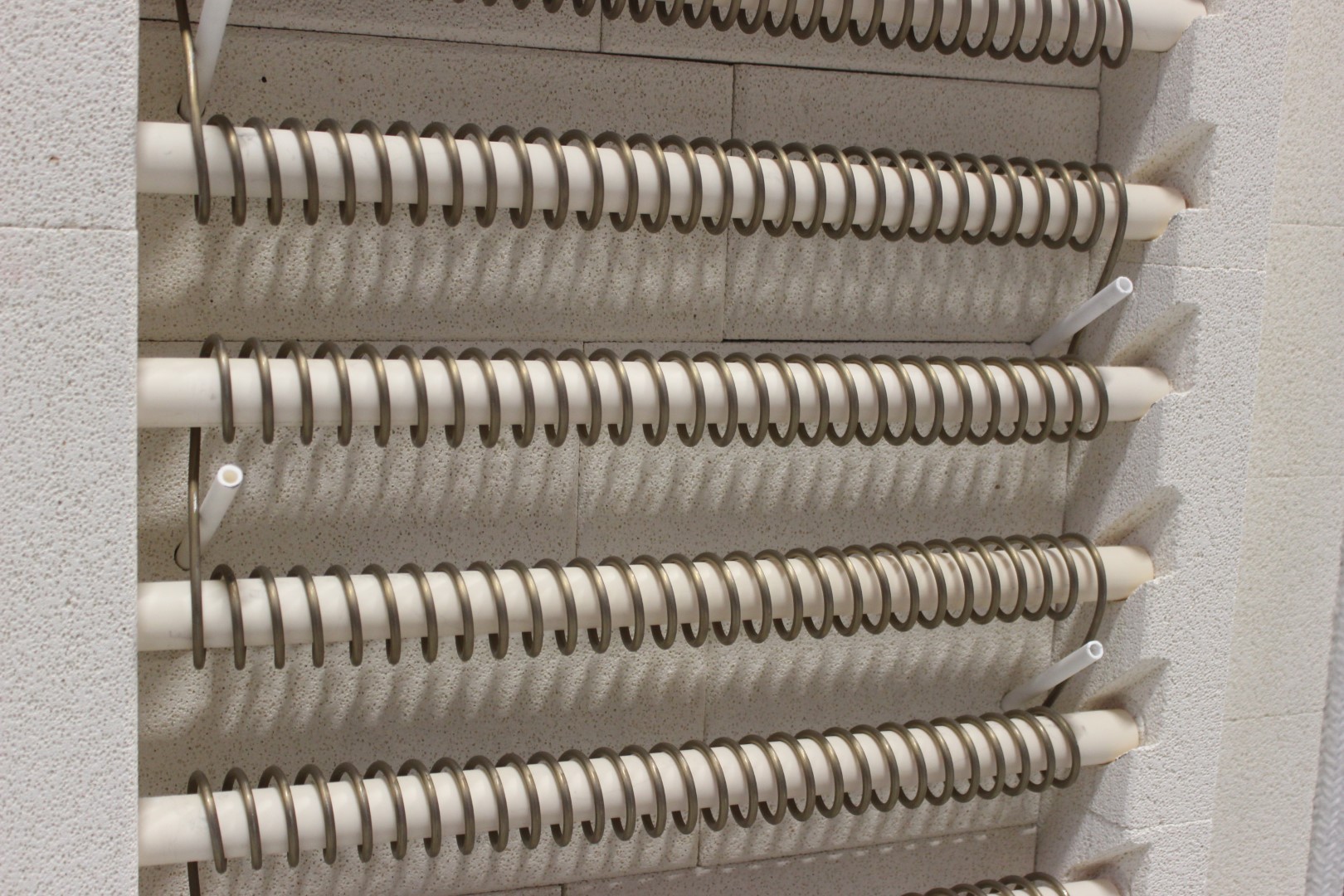
Quartz undergoes a reversible structural transformation at approximately 573 °C, which is accompanied by a change in volume. Its significance for cracking depends on the composition of the ceramic body and the temperature differences within the piece. This temperature is not a recommendation for a universal dwell time or cooling rate. [5]
Do not open the kiln early simply to meet an order deadline. Follow the instructions provided by the kiln manufacturer and the requirements of the ceramic material being processed.
If defects occur repeatedly, investigate the complete firing programme and loading arrangement, not just the final temperature.
5. Glaze and clay body: a matching temperature range does not guarantee compatibility
After firing, the glaze and ceramic body are bonded together, but they may not expand and contract at the same rate during temperature changes.
Excessive stress between them can produce a network of fine cracks in the glaze. A different type of mismatch may cause glaze shivering or flaking and, in some cases, may even damage the body of the piece. [6]
Test every new combination
A shared recommended firing range is only the first requirement when selecting a clay-and-glaze combination. Test every new combination using the intended process and continue to observe the result after cooling. Slower cooling alone may not correct a mismatch between the clay body and glaze.
If crazing occurs repeatedly, discuss the compatibility of the materials with their supplier.
With crackle glazes, a network of fine cracks may be an intentional decorative effect. However, this is not the same as a crack extending through the wall of the vessel.
Verify the suitability of the glaze for its intended use according to the particular product and the glaze manufacturer’s recommendations. [7]
What to do before repeating the firing
Instead of making several changes at the same time, first gather the relevant information:
- Photographs of the defect: the complete piece, a close-up, the base and joints, together with information about when the crack was first observed
- Materials: the exact names of the clay body and glaze, their batch numbers if available and the recommended firing conditions
- Preparation: dimensions, wall thickness, joining method and details of the drying and glazing processes
- Kiln and programme: kiln model, controller, programmed ramps and dwell times, any available record of the actual firing curve and error messages
- Loading and extent of the defect: the position of the piece, arrangement of the kiln shelves and whether the problem affected one shape, one clay body or several different pieces
Change one factor at a time
Use the collected information to formulate one working hypothesis and select a change that can be tested safely with a specialist. If you change the clay body, glaze and programme at the same time, you will not know which adjustment produced the improvement.
A successful small test also does not automatically confirm that the process is suitable for a large sculpture or a differently loaded kiln.
How a LAC kiln and controller can help
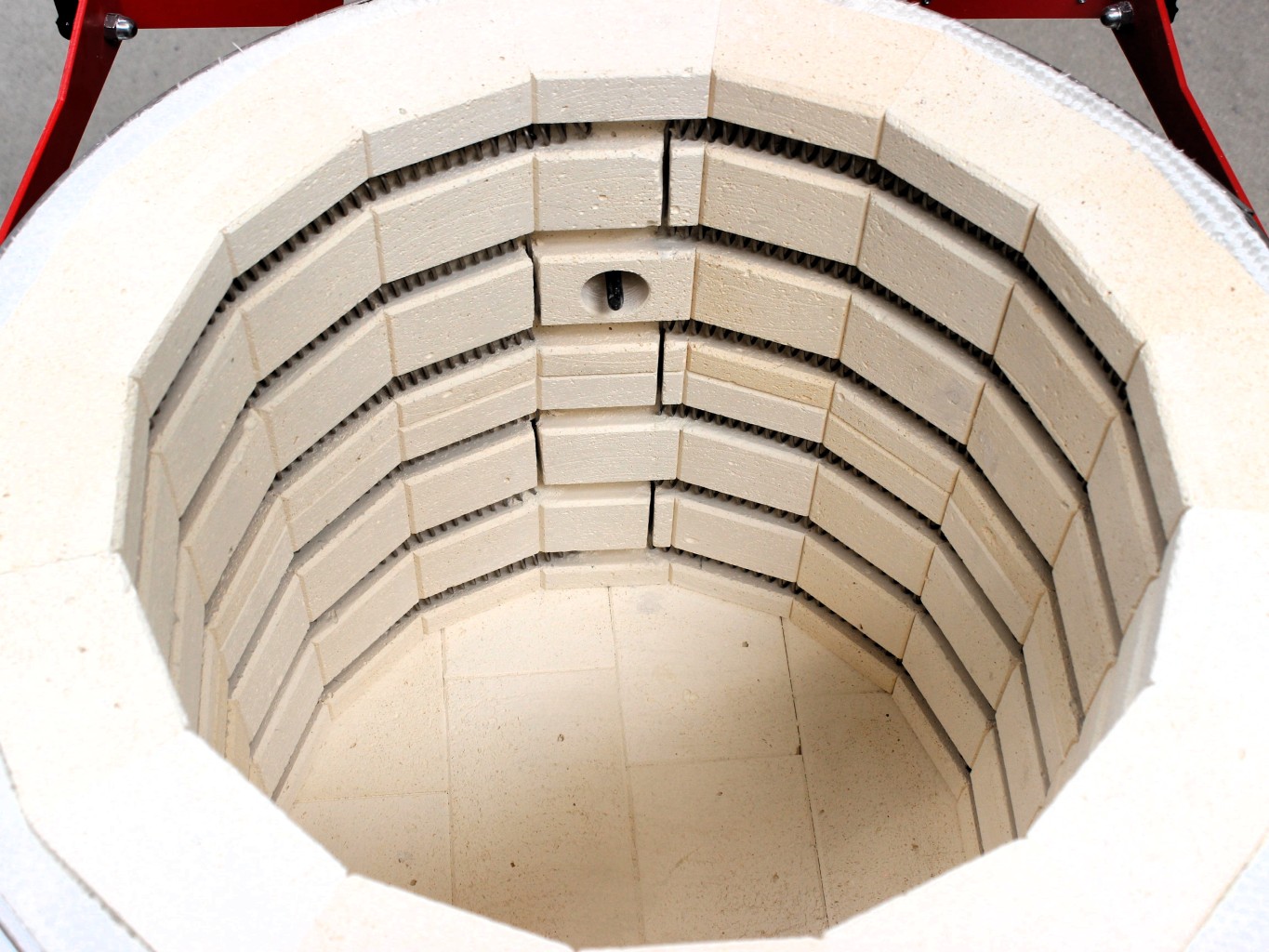
A programmable controller allows you to repeat a selected firing schedule and, depending on the configuration, store process data.
With the LAC M series, for example, the HtCeramic controller provides a memory for data logging, while the Bentrup TC95 offers a USB interface for recording operating data. These records can make it easier to compare firing cycles and discuss the results with a technician. [8]

A temperature record alone cannot prove that a piece was dried uniformly or that the glaze is compatible with the clay body. A good kiln forms part of a controlled process; it does not replace proper material preparation and inspection of the finished result.
Explore LAC ceramic kilns and controllers
Compare ceramic kilns and controller configurations for hobby studios, schools and professional workshops.
👉 Explore LAC kilns and controllers
👉 View the complete range of LAC ceramic and fusing furnaces
Are you experiencing repeated cracking when firing in a LAC kiln?
Prepare photographs, material details and a record of the programme, and contact our technical support team. If you are still choosing a kiln, also provide the dimensions and wall thicknesses of your pieces and details of the intended firing processes.
👉 Contact us and we will help you assess the process or select a suitable LAC kiln configuration.
What to remember
A crack found after firing may have developed during forming, drying, heating or cooling, or may be related to incompatibility between the clay body and glaze.
Identify the type of defect, document the complete process and test one carefully selected change at a time.