
How to Choose a Ceramic Kiln: 7 Questions to Ask Before Buying
How to Choose a Ceramic Kiln: 7 Questions to Ask Before Buying
A practical guide to choosing the right kiln for your products, materials and everyday studio workflow
Key insight:
Start with your products and everyday workflow. The technical specifications will then make much more sense.
Having your own kiln allows you to plan firing cycles around the needs of your studio. Before choosing a particular model, however, it is worth considering more than just price and chamber volume.
What will you fire, how often will you use the kiln, which temperatures will you need and how comfortable will the kiln be to operate?
These seven questions will help you narrow down your options and prepare the information your supplier will need.
This guide focuses on electric ceramic kilns for home workshops, schools, studios and smaller professional operations.
1. What will you fire and which temperature do you need?
Make a list of the clay bodies and glazes you currently use or intend to use. Check the firing conditions recommended by the manufacturer of each material. If you are not yet certain, include the product names or technical data sheets with your enquiry.
Maximum temperature is not the same as the recommended operating range
When choosing a kiln, distinguish between its maximum temperature and its recommended operating temperature range. For example, LAC M series kilns have a stated maximum temperature of 1320 °C, while their recommended operating temperature range is 700–1250 °C.
If you intend to fire regularly above this range, the suitability of the kiln must be discussed with the supplier rather than assumed from the 1320 °C maximum alone.
Tell the supplier how frequently you expect to fire the kiln and whether your firing schedules include dwell times at high temperatures. Two studios using the same target temperature may have very different operating requirements.
The stated operating range of a kiln is also not a universal firing programme for every clay body and glaze.
2. How large are the pieces that must fit inside the kiln?
Chamber volume in litres provides a useful initial reference, but it does not tell you whether your widest bowl or tallest vase will fit inside. Measure your largest piece in the condition in which it will be placed in the kiln and compare these measurements with the internal dimensions of the chamber.
The difference can be seen by comparing two LAC kilns with similar chamber volumes:
| LAC model | Chamber volume | Internal diameter | Internal height |
|---|---|---|---|
| M 150/13 | 150 l | 647 mm | 458 mm |
| M 160/13 | 164 l | 550 mm | 690 mm |
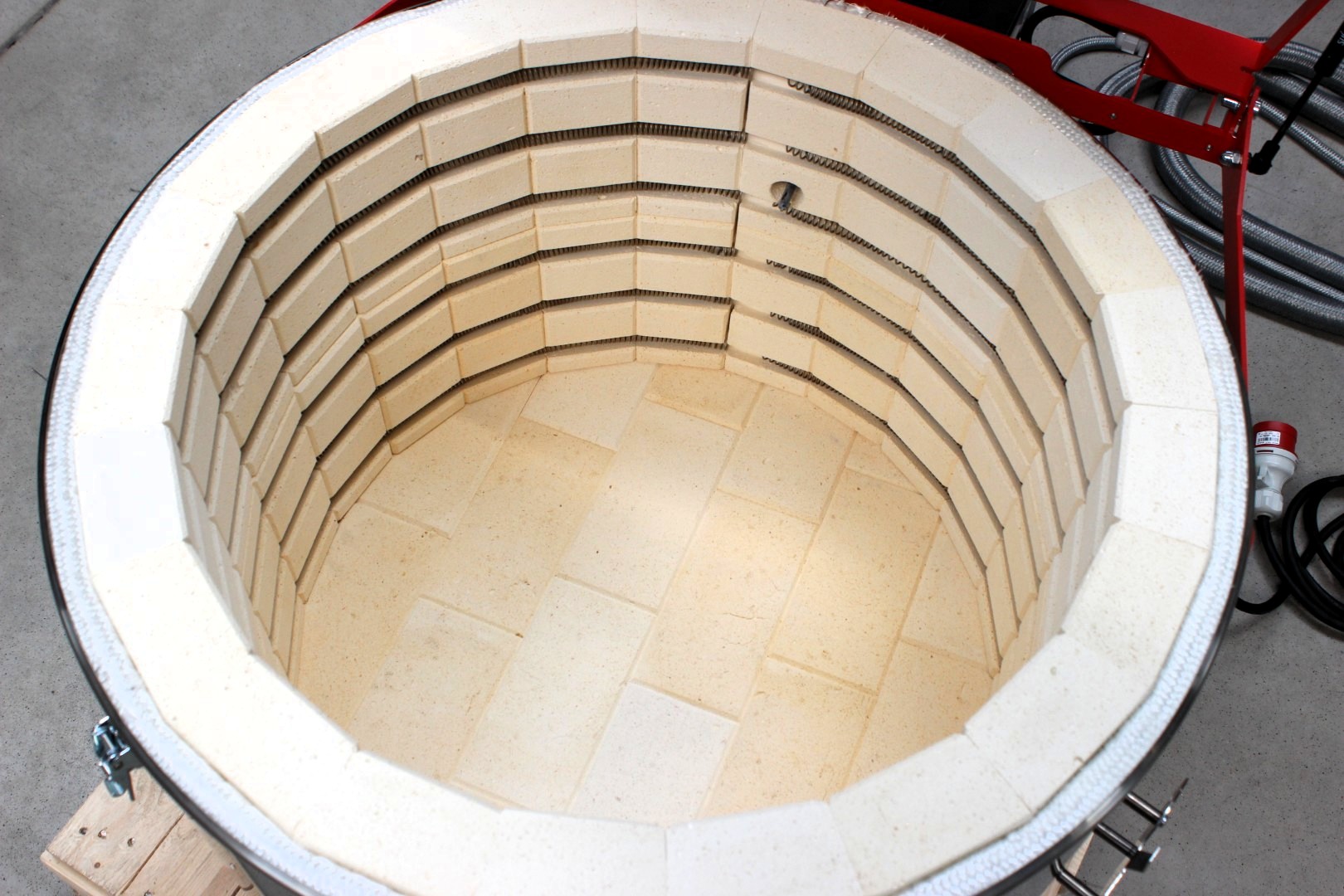
The M 150/13 has a wider and lower chamber, while the M 160/13 is narrower and taller. Your decision therefore depends on whether you primarily need more width or more height.
👉 View the technical specifications of the LAC M series.
Remember the kiln furniture:
The internal chamber dimensions are not the maximum permitted dimensions of the workpiece. Kiln shelves, spacing columns and the necessary clearances occupy part of the available space. Ask the supplier to verify the dimensions of suitable kiln furniture and the proposed loading arrangement as well.
3. How much ceramic work do you need to fire, and how often?
A home potter working at weekends has a different production rhythm from a school ceramics class or a studio processing regular orders. Estimate how many pieces you produce each week and how long they can wait before firing.
A kiln that is too small may require several separate firing cycles. With an unnecessarily large kiln, you may have to wait longer to fill it or frequently run it only partially loaded. Consider the planned growth of your studio, but base your decision on a realistic amount of work.
Include the entire cycle in your planning: loading, heating, dwell times, cooling and unloading. If you use a bisque firing followed by a glaze firing, allow for both cycles.
The heating time alone does not tell you when the kiln will be ready for the next load.
4. Would top loading or front loading suit you better?
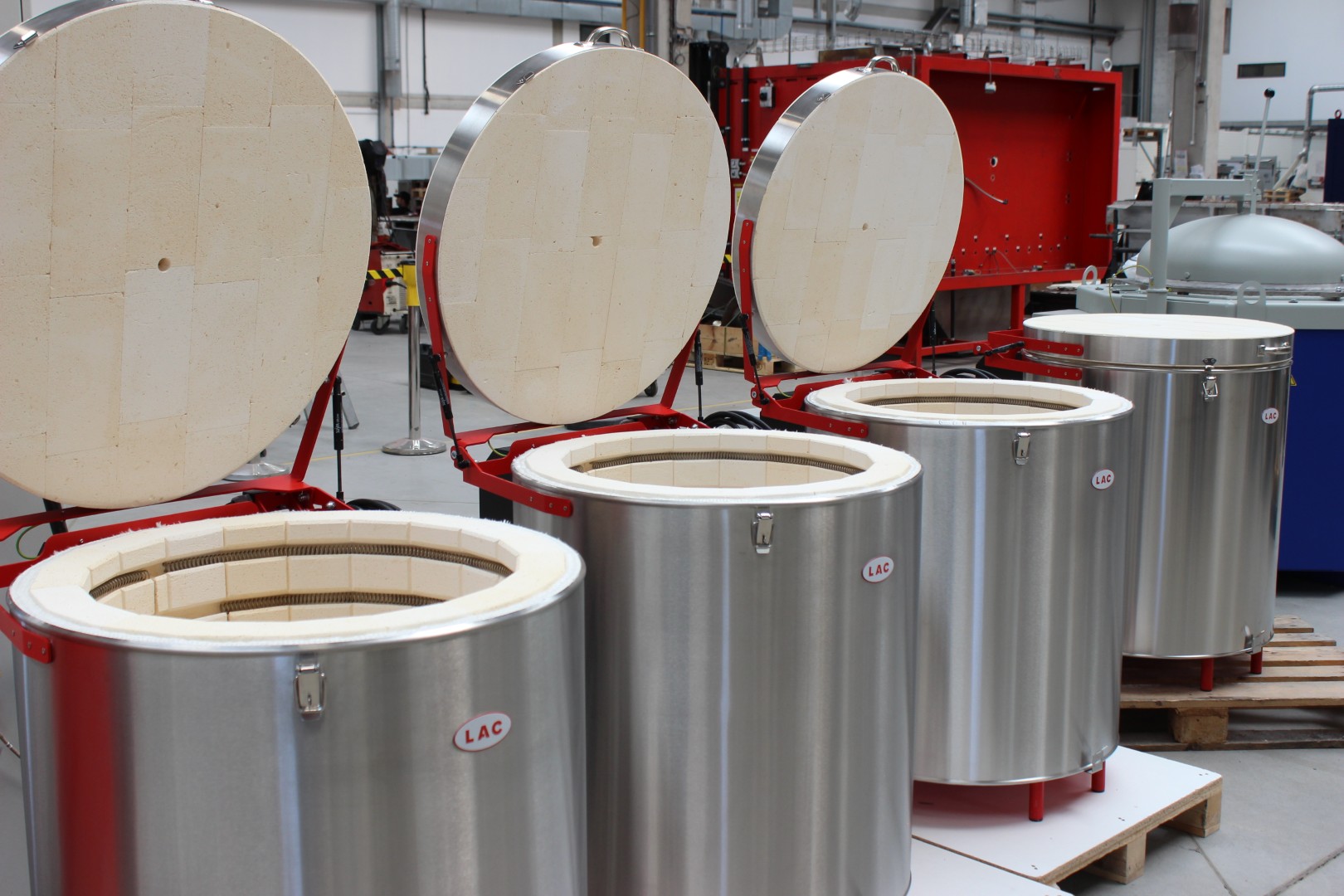
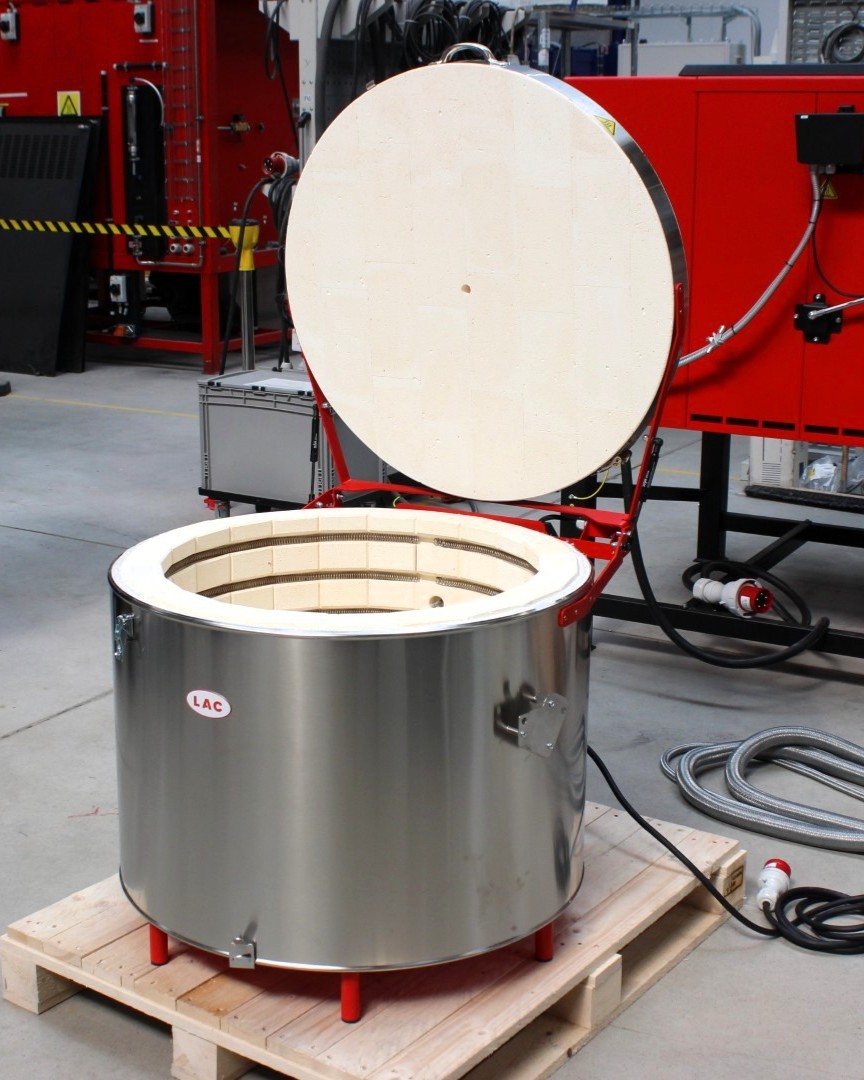
You will deal with the loading arrangement during every firing cycle. In top-loading kilns such as the LAC M series, ceramic pieces and kiln shelves are inserted from above. Consider whether you can comfortably reach the lower levels and safely handle the shelves and pieces you intend to use.
With a front-loading kiln, the chamber is accessed through a door. This design is available, for example, with LAC K chamber kilns. When comparing the two options, consider the loading height, chamber depth and the space required to open the door.
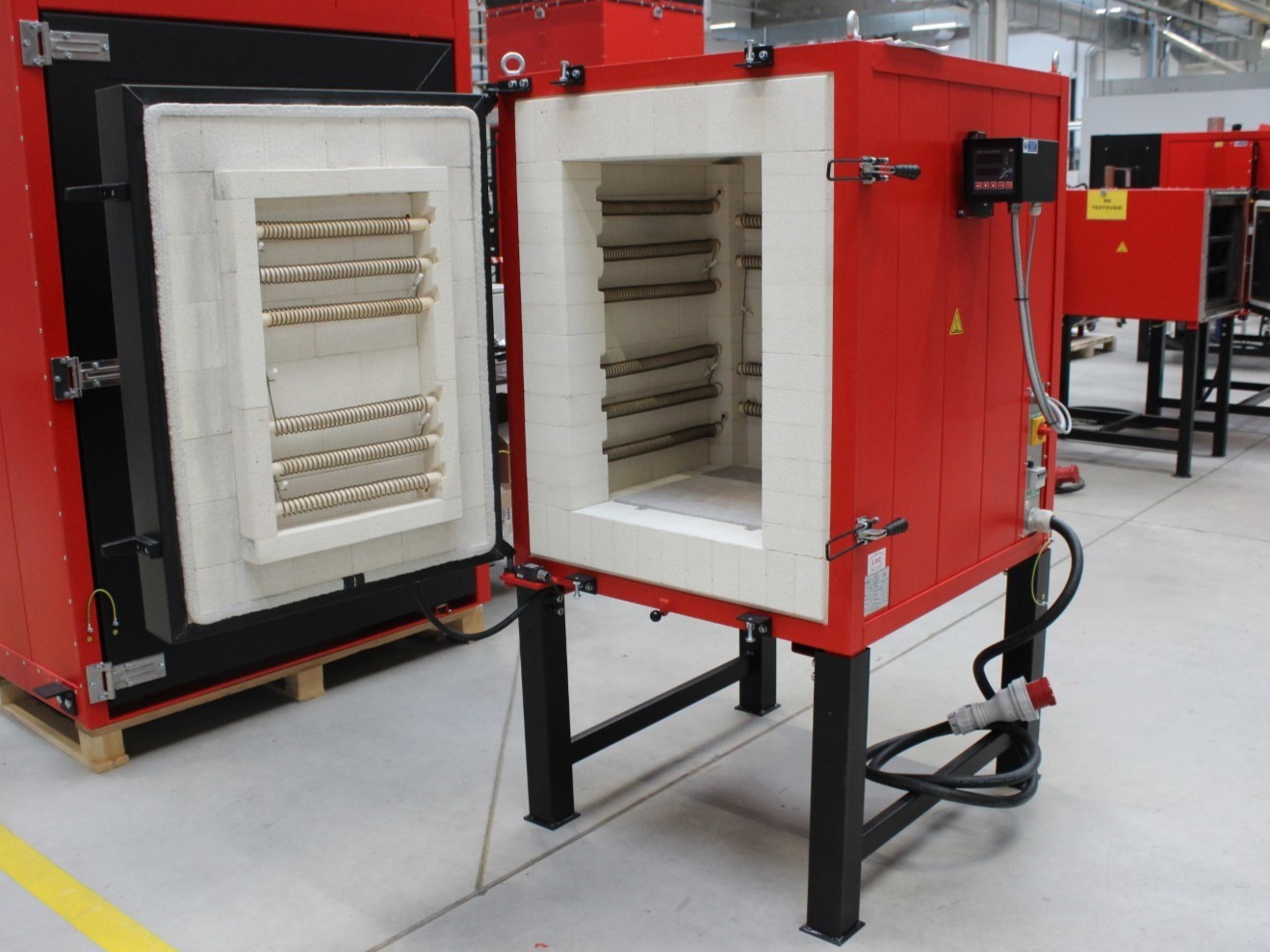
👉 View LAC K front-loading chamber kilns.
Think about everyday operation:
Choose the loading arrangement according to the people who will actually operate the kiln. If possible, test your reach into the chamber and practise handling a kiln shelf before buying. Particularly with larger models, this practical detail may be more important than a small difference in chamber volume.
5. Do you have a suitable location and electrical connection?
Check not only where the kiln will stand but also how it will be moved into position. Consider door widths, passageways, stairs and available handling options.
In addition to the external dimensions of the kiln, allow sufficient room for operation, opening the lid or door and maintaining the clearances specified by the manufacturer.
The electrical connection should also be considered before ordering. For example, the LAC M 60/13 has a chamber volume of 61 litres and is available as a 230 V version with an input power of 3.5 kW or a 400 V version with an input power of 5.5 kW.
The same chamber size does not necessarily mean the same electrical configuration.
Have the connection and electrical protection requirements of the selected kiln assessed by a qualified electrician. Consult the supplier about the suitability of the room and the required ventilation or exhaust system.
Having sufficient floor space or an available socket does not in itself mean that the workplace is ready for kiln installation.
6. What do you need from the kiln controller?
The controller allows you to set the firing schedule. Before choosing one, decide whether you will repeatedly use a small number of straightforward programmes or whether you require more firing steps, stored schedules and process records.
The LAC M series can be configured with controllers including the Ht40AL, HtCeramic, Bentrup TC75 and Bentrup TC95.
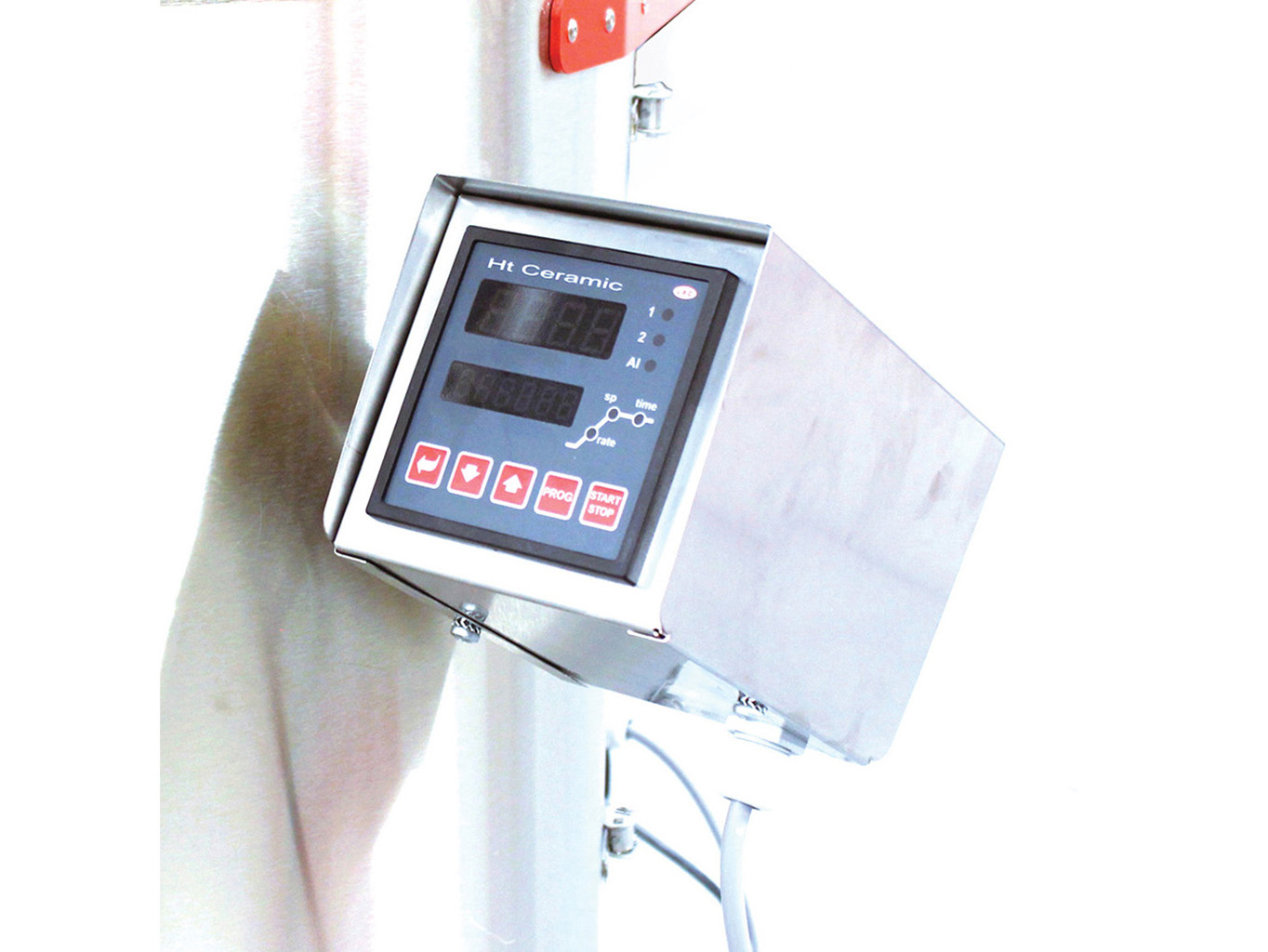
Examples of available controller functions
- Ht40AL: a straightforward programme with two temperature ramps and two dwell times
- HtCeramic: up to 20 stored programmes with 15 steps each and a memory for data logging
- Bentrup TC95: up to 20 programmes with 20 steps each and a graphic display
Additional functions are valuable only if you will actually use them. Ask for a demonstration of how a programme is entered, stored and started again.
If several people will operate the kiln, the clarity and ease of operation should also form part of your decision. The controller manages the firing process, but the selected programme must still be suitable for the materials and ceramic pieces being fired.
👉 Compare LAC kilns and available controller options.
7. What is included in the quotation, and what will you need in addition?
Compare complete kiln configurations. Check whether the quotation includes the selected controller, kiln shelves, spacing columns and optional wheels. When assessing kiln furniture, consider not only the number of components but also their dimensions and suitability for the intended firing processes.
Ask about transport, the scope of delivery, operator training, servicing and the availability of spare parts. A clear list of the included equipment and services will help you compare quotations without encountering unexpected costs after delivery.
Input power and energy consumption are different figures
When comparing operating costs, request consumption data for a specific firing cycle together with the conditions under which it was measured. Input power in kW is not the same as the energy consumed during a firing cycle in kWh. The exact cost of one firing cannot be calculated from input power alone without knowing the heating schedule and how the heating elements are switched during the cycle.
What to prepare before contacting a supplier
You do not need to have selected a particular model. The following information will make the initial consultation much more useful:
- The types of products you make, photographs and the dimensions of your largest pieces
- The clay bodies and glazes you use, their required firing temperatures and any established firing programmes
- The approximate quantity of ceramic work produced each week and the required firing frequency
- Your preference for top loading or front loading and information about the people who will operate the kiln
- The dimensions of the installation area and access route, together with the available electrical connection details
- Your budget for the kiln, including the controller, kiln furniture and related services
Choose a kiln that fits your studio
A well-chosen ceramic kiln should match your products, materials and workload. It should provide suitable dimensions and operating parameters together with controls that you can use confidently.
Are you choosing your first kiln or expanding your studio? Send us the dimensions of your ceramic pieces, details of the clay bodies and glazes you use and your expected firing frequency. We will help you assess the appropriate size, configuration and equipment for your LAC kiln.
Explore LAC ceramic kilns
Compare top-loading and front-loading ceramic kilns together with controller options for hobby, school, studio and professional applications.
👉 Explore LAC kilns and controllers
👉 View the complete range of LAC ceramic and fusing furnaces
Need help choosing the right ceramic kiln?
Tell us what you fire, the dimensions of your ceramic pieces, the temperatures you use and how frequently you plan to operate the kiln.
👉 Contact us and we will help you choose a suitable LAC kiln configuration for your studio.
What to remember
Do not choose a ceramic kiln according to chamber volume, maximum temperature or price alone.
The right kiln should match your materials, largest pieces, firing frequency, installation conditions and everyday way of working.